Brazil · Business
Key Facts
—Amount raised. R$1.5 billion (US$296 million) via local letras financeiras.
—Issuing entity. Mercado Crédito SCFI, the group’s Brazilian finance company.
—Maturity and cost. Two series at 2 and 3 years, paying CDI plus 0.39% and 0.47%.
—Total demand. Orders reached roughly R$3.3 billion (US$651 million).
—2026 Brazil capex plan. Mercado Livre earmarked R$57 billion (US$11.2 billion) for the country.
Mercado Livre, Latin America’s largest e-commerce and fintech platform, raised R$1.5 billion (US$296 million) in Brazil’s local debt market on July 21, 2026, pulling in nearly double the demand it needed.
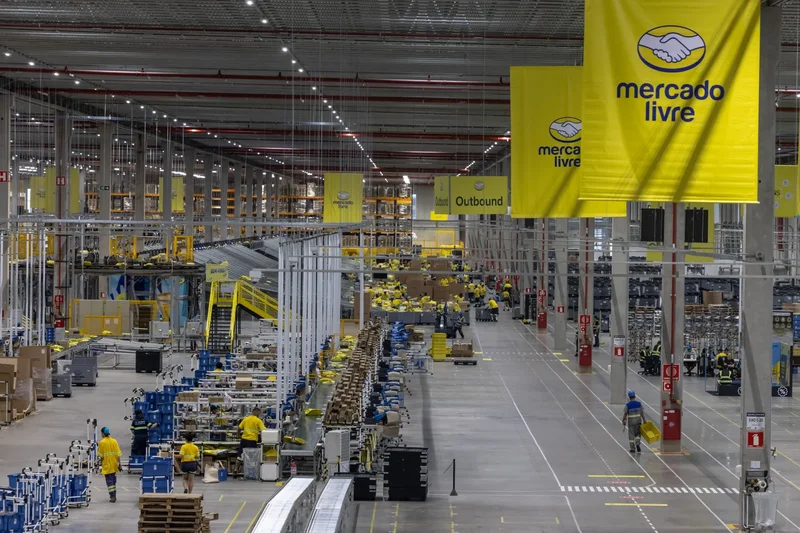
Mercado Livre Raises US$296 Million in Brazilian Debt. (Photo internet reproduction)
One-stop reference
Company Intelligence
Every listed company in Latin America — financials, ownership and structure for 1,450+ companies across 26 exchanges, in one place.
RTAsk Rio TimesMarkets, currencies and the economy›
RT
Ask Rio Times
Latin American markets, currencies and companies.
×
Markets todayThe currencyRates \& inflationEconomy outlook
Why Mercado Livre Tapped Local Investors
The Buenos Aires-born, Nasdaq-listed company chose to issue letras financeiras — unsecured bank-eligible bonds — through its Brazilian finance subsidiary Mercado Crédito SCFI rather than borrow abroad.
By selling paper priced at a slim spread over the CDI interbank rate, the group locked in cheaper funding than a dollar-denominated bond would offer after cross-currency swap costs.
For a business that generates more than half of its net revenue in Brazil, raising reais also eliminates the exchange-rate risk that comes with servicing foreign-currency debt.
The strategy reflects a broader trend among multinationals operating in Brazil: deep local capital markets now allow them to fund expansion without tapping volatile overseas credit lines.
Where the Fresh Capital Is Going
The proceeds are earmarked to bulk up Mercado Crédito, the unit that extends working-capital loans to sellers on the marketplace and advances their receivables.
Money will also flow into the Mercado Pago credit card book and into the logistics network that underpins same-day delivery in São Paulo and other metropolitan hubs.
Mercado Crédito has become a critical tool for the thousands of small and medium merchants who sell on the platform, many of whom lack access to traditional bank credit.
By advancing cash against future sales, the fintech arm helps sellers restock inventory faster, which in turn keeps the marketplace humming with fresh products.
Inside the Two-Tranche Deal
Coordinated by Itaú BBA, UBS BB, and Santander, the fourth public letras financeiras issue was split into a two-year series paying the CDI interbank benchmark plus 0.39% per year and a three-year series at CDI plus 0.47%.
Both tranches carry a single bullet repayment at maturity, and total orders reached roughly R$3.3 billion (US$651 million), showing heavy institutional appetite.
The oversubscription — more than double the amount on offer — signals that local fund managers, pension funds, and private banks see Mercado Crédito as a solid credit risk.
Short maturities of two and three years also align with the company’s preference to keep funding costs low while its credit portfolio expands rapidly.
A Piece of a Much Bigger Brazil Bet
The raise slots into a record R$57 billion (US$11.2 billion) investment plan Mercado Livre announced for Brazil in 2026, spanning distribution centers, last-mile delivery, and its digital payments ecosystem.
Brazil already accounts for more than half of the company’s net revenue, and management is doubling down on the country as its fintech and logistics flywheel spins faster.
Recent expansions include new fulfillment centers in the Northeast and South, a growing fleet of electric delivery vans, and the rollout of instant payment features on the Mercado Pago app.
For investors, the message is clear: Brazil is not just the company’s largest market — it is the engine driving the next phase of growth across Latin America.
What It Means for Expats and Investors
For foreign residents and investors watching Brazil, Mercado Livre’s local-currency debt raise is a vote of confidence in the country’s domestic financial system.
The heavy demand for the letras financeiras suggests that Brazilian institutional money is eager to back well-known corporate names with strong cash flows, even in a high-interest-rate environment.
Expats who use Mercado Pago for everyday payments or invest in Brazilian fixed-income funds may indirectly benefit from the expanding credit and logistics infrastructure this deal helps finance.
More broadly, the issuance shows how Latin American tech giants are maturing beyond equity-fueled growth and tapping debt markets to sustain their expansion — a sign of a deepening capital market that offers new options for yield-seeking investors.
Frequently Asked Questions
What is a letra financeira?
It is a credit security issued by Brazilian financial institutions, similar to a certificate of deposit, used to fund lending operations. Letras financeiras are typically sold to institutional investors, are not insured by the deposit guarantee fund, and pay interest tied to the CDI interbank rate.
Why did Mercado Livre borrow in reais instead of dollars?
Local-currency funding avoids exchange-rate risk and, after swap costs, often proves cheaper than issuing abroad for a business that earns most of its revenue in Brazil. It also deepens the company’s ties with domestic investors who understand its Brazilian operations well.
How does Mercado Crédito help sellers on the platform?
It offers working-capital loans and advances on future sales, giving merchants quick cash to buy inventory without waiting for customer payments to clear. This is especially valuable for small sellers who may not qualify for traditional bank loans and rely on the marketplace for their livelihood.