This Normal stream student thought he was a failure. Now he’s opening doors for students like him
AI generated
SINGAPORE – Clarence Ching, 32, knows what it is like to grow up believing he was never quite good enough.
He was the only child of two educators – a teacher and a lecturer – who did everything they could to help him succeed.
His parents volunteered for two years to secure him a place at Henry Park Primary School, a popular school. His mother even took a year off work to coach him for the Primary School Leaving Examination.
Despite their efforts, he was a lacklustre student.
He scored 196 points in the PSLE and entered the five-year Normal (Academic) stream, spending an extra year in secondary school while many of his peers went to the four-year Express stream.
“With the Normal label slapped on you, you felt like a failure in the education system,” said the former Fairfield Methodist Secondary School student.
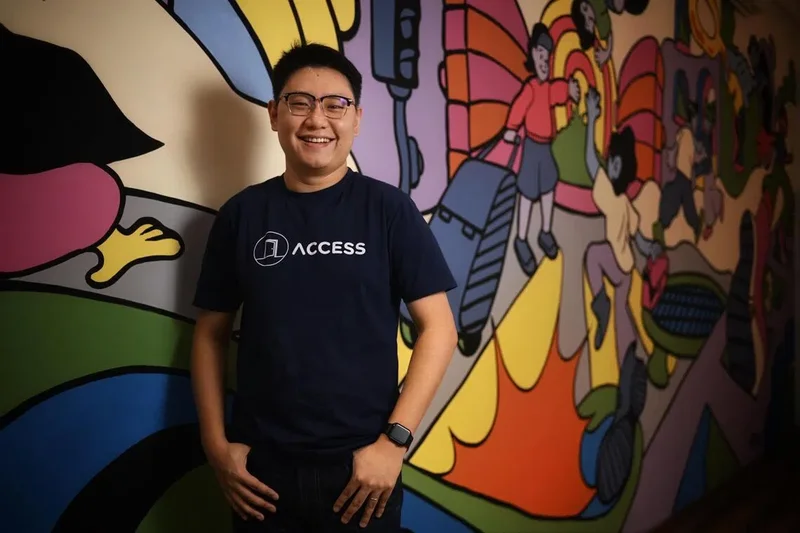
These experiences have shaped his life’s mission. Today, he is the founder of social mobility charity Access Singapore, which seeks to help students from disadvantaged backgrounds build the social capital they need to expand their opportunities in life.
Diagnosed with attention deficit hyperactivity disorder (ADHD) in primary school, Ching struggled to concentrate and felt he was not cut out for academics.
Over time, he defined his worth by his grades. This changed only when he met one of his mentors in life, former MP for Jalan Besar GRC Lily Neo.
After his O levels, he started volunteering at Neo’s Meet the People sessions, drawn by a desire to help the low-income elderly living in her ward, having read about poor seniors and families in the news.
Over the next nine years, he helped her do research and draft parliamentary speeches and questions – responsibilities that he never imagined someone like him would be entrusted with.
“I felt I wasn’t good enough, but it was a self-limiting mindset.
“Why do I care so much about how others think about me or where I come from? So what if I didn’t come from ACS, Raffles or Hwa Chong?” he said, referring to some of the top schools in Singapore.
As his confidence grew, so did his sense of what was possible.
Unable to secure a place at a local university, Ching enrolled in Britain’s Durham University to study politics, funded by what he described as his parents’ “retirement fund”.
There, he became deeply interested in social mobility.
While many groups here sought to help lower-income students improve their grades through tuition, Ching felt that far less attention was paid to something harder to measure: social capital.
Exposure to opportunities, mentors and professional networks, he believed, could be just as or even more transformative as academic support. Such social capital can boost one’s confidence and potential, he said.
“Many of them feel they are not good enough,” he added. “If you have self-confidence, that’s half the battle won.”
In 2019, in his second year at Durham, Ching founded Access with nothing but a burning conviction.
He had no money and no volunteers to start with. He did not even have full-time work experience on his resume.
During the first three years of Access, he drew no salary. To make ends meet, he took on gig jobs, including delivering food.
“My wife called Access the third party in our relationship because I didn’t give her enough time,” he said. “But she knew solving social mobility is my life, and I couldn’t let it go.”
He and his wife, a freelance trainer who teaches mental health workshops, have no children.
What began as an outfit offering a work attachment programme for secondary school students has since grown into a charity running eight initiatives spanning mentorship, career exposure and apprenticeships.
The charity recently rolled out an apprenticeship programme where it places polytechnic graduates in 18-month work stints with firms, providing them with mentorship, structured training and other support.
And those who do well have a chance to be hired for a permanent role in the organisation.
Ching’s aspirations extend beyond running programmes. He wants to deepen Singapore’s understanding of social mobility.
In May, Access said it is developing a National Social Capital and Opportunity Index to measure disparities in access to opportunities and networks that influence life outcomes.
The charity hopes its findings will help policymakers and the public identify where support is most needed.
The index comes amid signs of slowing social mobility.
Finance Ministry figures released in February showed that about one in four children born to fathers in the lowest 20 per cent of income earners remained in that same income bracket as adults – a share that has inched upwards for successive birth cohorts.
In July, Education Minister Desmond Lee said in a parliamentary reply that 23 per cent of students from the bottom 20 per cent of households by socio-economic status progressed to publicly funded full-time degree programmes in 2025, up from 15 per cent a decade earlier.
Across all socio-economic groups in the same cohort, 42 per cent of children who entered primary school in 2008 had progressed to publicly funded full-time degree programmes in 2025, up from 28 per cent a decade ago.
Ching welcomed the improvements. But he notes that nearly three in four students from the lowest-income group still do not make it to university.
To him, that is why conversations and efforts to boost social mobility cannot stop.
It is this gung-ho spirit that drives Ching and kept him going, especially when detractors told him it would be extremely tough to find donors to fund Access’ work in its early days.
He said: “A lot of it is (gained) through sheer determination. I will not stop until I bang the door open.”