Sign in. It’s quick, free and it’s up to you.
An account is an optional way to support the work we do. Find out more.
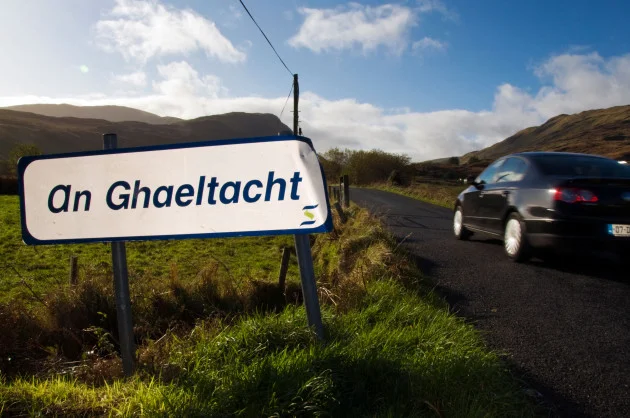
AS THOUSANDS OF secondary school students return from summer residential courses in the Gaeltacht, many readers will recall their own teenage experiences in places such as west Kerry, Conamara or northwest Donegal.
The Gaeltacht course is often a rite of passage where hearts flutter or are broken for the first time and, for many students, it offers the first real-world encounter with the Irish language in areas where it is still spoken.
While some undoubtedly view the Gaeltacht as a way of boosting Leaving Certificate points, for others it sparks a life-long journey of engagement with Irish that allows them to become ‘new speakers’ of the language and incorporate it into their lives in a significant way.
However, Irish is increasingly threatened in the Gaeltacht due to the ongoing historical process of ‘language shift’, where there is no guarantee that the language will be passed on in the family and community. The situation is exacerbated by the housing and cost of living crises, with Gaeltacht youth progressively unable to find accommodation at home and moving away, increasing the vulnerability of Irish as a community language.
The challenges of supporting the Gaeltacht and of learning a minoritised language such as Irish are not new, and this month, 17 August 2026, will mark the centenary of publication by the Irish government of the report of the first Gaeltacht Commission.
This body was set up in 1925 to investigate the extent of the Irish-speaking areas and to make recommendations about education, administration and the economy. While the new Irish Free State had already introduced key measures for Irish in education and public administration, the Commission was the first major intervention in favour of the Gaeltacht itself, which at that time was to be found in 11 counties mostly along the western and southern seaboards from Donegal to Waterford.
As was to be expected given the political and social context, the 11 Commissioners were representative of the middle-class, Catholic elite that drove the linguistic and cultural revival since the late 19th Century, accepted the Treaty and supported the fledgling state. All were men, as were all but one of the 100 witnesses who were interviewed in the 24 meetings held by the Commission in Dublin and around the Gaeltacht (the sole woman was Máire Ní Mhainín, a schoolteacher from Baile an Fheirtéaraigh in Co. Kerry).
Those public meetings provide a fascinating insight into both the status of Irish itself and socio-economic conditions prevailing in the Gaeltacht in the early years of the Free State, which had set itself the ambitious aim of reviving Irish. While Irish had been declared an obligatory subject and made the medium of instruction for infants’ classes and for certain subjects, even in the Gaeltacht many teachers were incapable of teaching through Irish, and there was a severe lack of suitable textbooks.
Many school buildings were in a dire state and attendance rates were poor, as parents required children to assist with farming or other economic duties. Although the evidence contains examples of the positive influence of many committed teachers, some parents opposed the new emphasis on Irish because of the economic need to leave the Gaeltacht in search of work.
The extracts on emigration are among the most striking evidence gathered by the Commission, with ample references to the cultural pull of North American cities such as Boston, Chicago and Philadelphia. ‘Merice Mecca na Gaeltachta’ (America is the Mecca of the Gaeltacht), wrote the Christian Brothers in their submission to the Commission, while Máire Ní Mhainín, the Kerry witness mentioned above, described the teachers as ‘emigration agents’.
Witness after witness commented that Gaeltacht people were more familiar culturally with Boston or Glasgow than with Dublin and referred to letters from emigrants urging people at home to speak English to the children so that they could integrate more easily.
Emigration was deeply linked to the parlous state of the Gaeltacht economy: severe congestion and poor land made farming unviable, and the scattered cottage industries supported by the Congested Districts Board were in serious decline.
There were calls for more investment in manufacturing and the strategic development of sectors such as knitting, textiles, iodine, kelp and carrageen. Fishing was a common theme with complaints about inadequate boats and equipment, lack of facilities for storing and curing fish and competition from technologically advanced British vessels.
The evidence was also replete with ideology about the perceived usefulness of Irish itself, with attitudes ranging from the fervent commitment of revivalists to the apathy and even hostility among some of the native-speaking population. Dr Bartley O’Beirne, the tuberculosis officer for Co. Galway, claimed that many people whom he treated viewed Irish as ‘the badge of slaves’.
The Commission made 82 recommendations about the boundaries of the Gaeltacht and in relation to education, administration and the economy. Based on a special enumeration conducted by the newly-formed Garda Síochána, it divided the Gaeltacht into Fíor-Ghaeltacht (literally ‘pure’ or ‘true’ Gaeltacht, where more than 80% could speak Irish) and Breac-Ghaeltacht (literally ‘speckled’ or partial Gaeltacht, where between 25 and 79% could do so).
Other key recommendations included obliging teachers in the Gaeltacht to be able to teach in Irish, the payment of bonuses to such teachers, the establishment of free secondary schools and the development of university education through Irish in Galway.
A large-scale migration scheme to move families from congested districts to viable land elsewhere was proposed, as well as support measures for fisheries and small-scale industries. Bonuses were recommended for civil servants working in Irish in the Gaeltacht, Irish-speaking Gardaí were to be located there, and Gaeltacht courts were supposed to adopt Irish as their working language.
Some of the Commission’s recommendations were politically unfeasible given the conservative economic policy of the Cumann na nGaedheal government, whose Minister for Finance, Ernest Blythe, was alarmed by the expenditure implications despite his strong support for Irish. In the end, only about 40% of the recommendations were accepted, but many of these had long-term implications for the Gaeltacht, most notably pay bonuses for teachers, housing grants and the development of third-level education through Irish at University College Galway, as it was then known.
Although a large-scale migration scheme never happened, the Fianna Fáil government in the 1930s oversaw re-settlement of groups of Gaeltacht families in Co Meath and similar smaller schemes were implemented within the Gaeltacht itself. Despite generally weak proposals on the economy, the Commission accepted the need for the minimal coordination and sustenance of small-scale Gaeltacht industries. However, failure to create a separate executive body for Gaeltacht policy was the biggest missed opportunity, and it would take another 30 years before the Gaeltacht achieved its own dedicated institutions.
For better or for worse, the Commission also created a blueprint for language policy that endured until the current day. The pattern of requesting experts to deliberate on Irish language affairs and then rejecting many of their recommendations has been repeated on countless occasions since the Commissioners first gathered in their offices at 6 Harcourt Street in spring 1925.
While the Gaeltacht is today supported by various state agencies and voluntary groups, the ‘language planning process’ – local interventions directly in favour of Irish itself – remains underfunded and lacks a clear career path despite the diligence of many committed activists.
Recent research published by all-Ireland agency Foras na Gaeilge reveals that policy in relation to Irish falls short of public expectations: there has been a significant increase in the percentage of people who believe the government is not doing enough for Irish, and maintenance of Irish in the Gaeltacht is the most important policy measure for respondents.
In this centenary year of the Gaeltacht Commission’s report, it is time to ramp up support for Irish in the Gaeltacht in order to ensure that the language can endure into the future in the places where it is most spoken.
Dr John Walsh is an Associate Professor of Irish at the University of Galway. His book Ar Lámh Shábhála? Coimisiún na Gaeltachta 1926 will be published by Cló Iar-Chonnacht later this year.
To embed this post, copy the code below on your site