As Trump rolls back endangered species protection, experts say Canadian wildlife is also at risk
Animals that cross between the two countries could be affected by habitat loss or damage in the U.S.
Canadian conservationists and wildlife experts are raising alarm after U.S. President Donald Trump's administration moved in July to weaken habitat protections for endangered species.
The U.S. Department of the Interior announced July 10 that it was rescinding a decades-old definition of "harm" under the country's Endangered Species Act (ESA).
Wildlife and environmental groups immediately condemned the decision, saying it ignores the ecosystems vulnerable species depend on amid widespread biodiversity loss and industrial pressures.
Nearly a dozen groups have filed a lawsuit in U.S. District Court challenging the repeal, which takes effect on September 14.
Canadian experts told CBC News the change could threaten animals that spend time in both countries, including species that cross the border to find food, lay eggs, or escape Canadian winters.
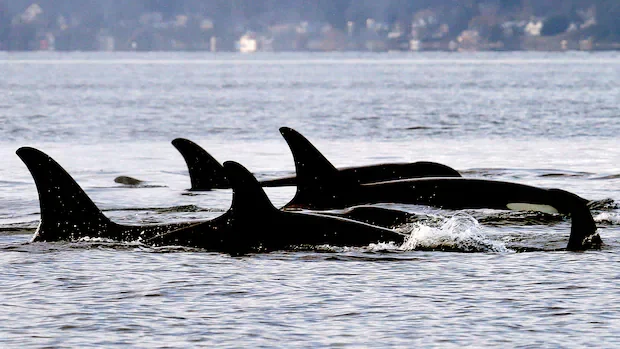
Those species include migratory birds, northern spotted owls, grizzly bears and southern resident killer whales, or orcas, said Torrance Coste, the B.C.-based associate director of the Wilderness Committee advocacy group.
"There are no border crossings in [the orcas's] habitat. They just swim back and forth between U.S. waters and Canadian waters and they don't know the difference," Coste said.
"The U.S. lowering their bar, changing the definition of what harm is to an endangered species ... it's a huge concern for us."
WATCH | The fight to protect marine life in B.C.'s Salish Sea:## How was 'harm' defined?
The Trump administration said rescinding the definition would "end years of federal overreach."
It said Endangered Species Act protections would remain in place while reducing "burdens for landowners and communities."
For decades, U.S. agencies interpreted "harm" to include acts that kill or injure wildlife through significant habitat changes or degradation. The U.S. Supreme Court upheld that interpretation in the mid-1990s.
The repeal "fundamentally undercuts how we've been protecting species for the last 50 years," said Noah Greenwald, endangered species co-director at the Center for Biological Diversity, one of the groups suing the government.
When U.S. habitats decline, Greenwald told CBC News, "that is absolutely going to affect wildlife populations in Canada."
Habitat destruction driving biodiversity loss
Protecting animals is "virtually impossible" if they spend months each year in places where habitat protections have been weakened, said Dennis Murray, a Trent University biology professor and wildlife conservation expert.
Habitat destruction is the leading driver of biodiversity loss worldwide, he said. Some species depend on specific plants or ecosystems, including monarch butterflies, which need milkweed to lay eggs and feed their larvae.
Despite that, Murray said, the idea that wildlife protection does not extend across an animal's entire "home range" has been gaining momentum.
"We wouldn't necessarily be content if a fire went through and our house burnt down, but our bedroom remained intact, right? We need the house," he said.
"Likewise, wildlife need their home ranges and the larger area that they occupy, rather than just protecting the individual itself or its nest site."
Concerns in Canada, too
Although Trump's environmental policies are particularly concerning to Canadian conservationists, experts CBC News spoke to warned that Canada may also be moving in the wrong direction.
Prime Minister Mark Carney's government is seeking to streamline and accelerate permitting for major infrastructure projects amid U.S. tariffs and other economic pressures.
A recent discussion paper on possible legislative and regulatory changes says the government is considering whether to grant the Governor in Council "limited power, with a high threshold to be met, to exempt specific projects from the application of the jeopardy test for species at risk."
"But only if it's in the public interest and if the proponent has made all reasonable efforts to avoid or reduce impacts on at-risk species," the paper says.
Coste called the prospect "very alarming."
Both countries "need to be adding protections and increasing and strengthening laws to protect species, and both again seem to be going in the opposite direction," he said.
- Yukon court hears arguments for and against Ten Mile development
- 75 of these whales remain. A new West Coast pipeline would be 'devastating' for them, experts say
Pierre Cuguen, a spokesperson for the Privy Council Office, told CBC News the discussion paper is seeking feedback "to improve the efficiency and predictability of federal regulatory processes" but "does not represent final government decisions."
"Existing requirements to avoid, minimize, and mitigate environmental impacts would continue to play a central role in project planning and decision-making," Cuguen said in an emailed statement.
"Any future changes would need to strike an appropriate balance between protecting Canada's environment and enabling major projects to proceed in a timely and predictable manner."
Environment and Climate Change Canada also said conservation and nature protection are a priority for the government, pointing to a $3.8-billion federal nature strategy announced in March.
In an email to CBC News, a spokesperson also said the department has a "longstanding relationship" with the U.S. under a trilateral committee on wildlife and ecosystem conservation in North America.
Canada "will continue to work alongside our partners in all available capacities to protect nature and species," the spokesperson said.