For Many Arbaeen Pilgrims, Every Step Honors Martyred Ayatollah Khamenei
He described the ‘magnetic attraction’ that drew the first pilgrim to visit Karbala on Arbaeen; now his own martyrdom has fused with that gravity
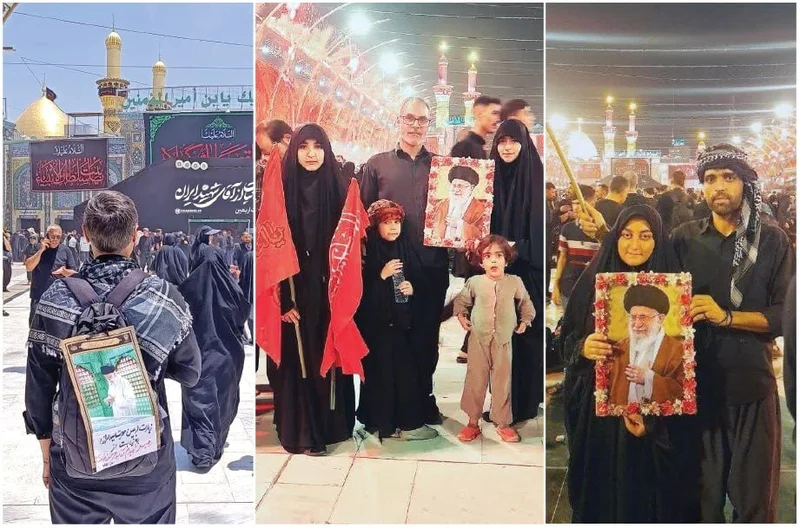
TEHRAN — The architects of the U.S.-Israeli war on Iran expected paralysis. They calculated that assassinating the Leader of the Islamic Revolution would fracture the Resistance. They were fluent in the sterile language of decapitation. They were blind to the mechanics of martyrdom. Look at the road from Najaf to Karbala. This is the first Arbaeen since American and Israeli warplanes ignited the current war. The pilgrims did not scatter.
They have multiplied. Millions of visitors have crossed into Iraq to join locals in a march that absorbed the region’s grief and converted it into militant resolve. The enemies have inadvertently helped unleash a civilization.
The funeral that buried a border
The trend intensified months before the first pilgrim took a step.
In early July, the martyred Leader’s body moved through Iraq’s shrine cities. More than 10 million Iraqis flooded the streets.
Karbala formally recognized him as the first pilgrim of this year’s Arbaeen. Mawkibs, the vast network of volunteer-run rest houses and service centers that sustain the pilgrimage, opened weeks early.
Tribal sheikhs and Iraqi Resistance members stood for hours in punishing heat just to touch the coffin. The ceremony placed the martyred Iranian Leader inside the highest circles of Iraqi religious legitimacy.
This was the public burial of the tyrannical Baathist project. For decades, hostile Western and regional intelligence agencies spent billions attempting to manufacture suspicion between Baghdad and Tehran.
Yet the man who directed Iran’s defense during the imposed war of the 1980s was carried on the shoulders of the very nation he once fought. The border dissolved in the soft tissue of collective memory.
The blood bond
On July 29, blatant joint U.S.-Saudi airstrikes hit Iraqi Resistance positions in Diyala. 20 Iraqi fighters and five Iranian advisers were martyred in the same salvos. Their blood intermingled, echoing a bond forged long ago on the battlefields against ISIS and other satanic forces, where the martyrdom of General Qassem Soleimani and Abu Mahdi al-Muhandis came to symbolize the shared sacrifice of the Iranian and Iraqi peoples.
The Islamic Resistance in Iraq made a calculated choice. They postponed retaliation until after the pilgrimage, ensuring mawkibs operated without disruption.
Protecting pilgrims took precedence over revenge. That discipline shows a highly functional, transnational military front that subordinates its anger to a broader civilizational order.
On the road, pilgrims carry the memory of the Diyala martyrs alongside the 156 civilians, over 120 of them schoolchildren, murdered in the U.S. military’s February 28 attack on the Minab girls’ school in southern Iran, as well as thousands of other martyrs.
The unbroken chain at Pole 553
The demand for retribution has a physical address. At Pole 553, beside the Haj Qasem Soleimani mawkib, a red flag dominates the skyline. In Shia tradition, a red banner signifies blood demanding justice.
There is no roster. No one is paid to hold it. An Iranian woman, sweat cutting lines through the dust on her face, passes the heavy pole to an Iraqi grandfather leaning on a cane.
A seven-year-old girl stretches to keep the fabric from sagging. Daytime temperatures approach 50 degrees Celsius. The asphalt hits 70. Yet organizers confirm the flag has not touched the ground for a single second since the pilgrimage began.
At night, the blue carpets of the mawkib transform into a center of political awakening. The lamentations harden. The grief becomes fuel. The chain of hands holding the flag is the social grammar of a movement that has learned how to weaponize its sorrow.
**The magnetic pull **
Strategists cannot decode Arbaeen because it humiliates the assumptions of neoliberal governance.
You cannot sanction a hospitality network built entirely on faith. Millions are fed, sheltered, and treated medically without a central bureaucracy or an IMF loan. This living civilizational network operates on selfless sacrifice.
Years ago, Ayatollah Khamenei mapped this exact phenomenon, describing the “Husseini magnetic attraction” that drew Jabir ibn Abdullah, a trusted companion of the Prophet Muhammad (PBUH) and the first pilgrim to visit Karbala on Arbaeen, from Medina across the centuries.
Today, his own martyrdom has fused with that ancient gravity, transforming a historical pilgrimage into an irresistible civilizational force. No intelligence assessment or security model can account for why millions march through scorching heat; the answer resides in a magnetic pull that assassination only made absolute.
The martyred leader taught that Iran and Iraq are joined at the soul by this love. In a handwritten note left for students preparing for the road, he urged them to anchor their steps in the uncompromising purpose of the Master of the Martyrs, Imam Hussein (AS), a total rejection of illegitimate tyranny.
This year’s Arbaeen march is the living execution of that directive. Millions are writing history with every blistered step across the asphalt, proving that no empire’s warplanes can break a civilization that refuses to kneel.