There is a Setswana proverb that warns us: "Lefoko ga le boe go boa monwana" A word, once spoken, cannot be called back. It travels, it settles, it wounds and sometimes it outlives both the speaker and the moment in which it was uttered.
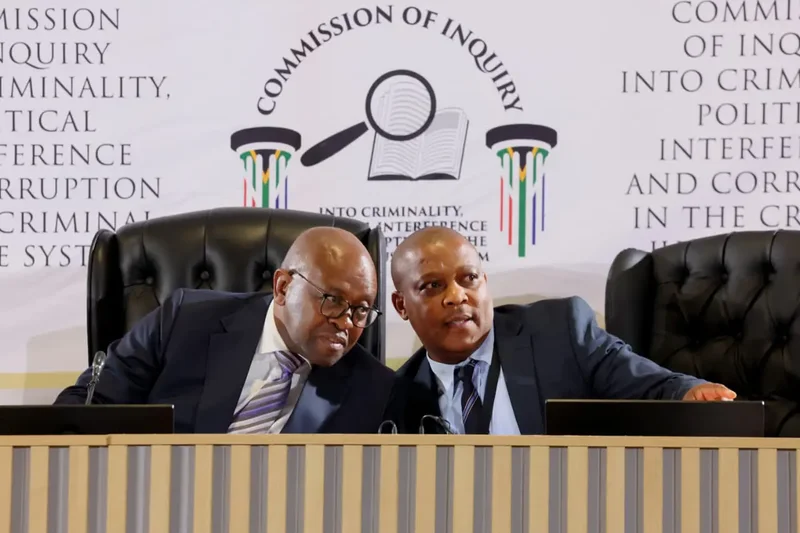
It was with that truth weighing heavily on my heart that I watched the Madlanga Commission. I was drawn not only to its pursuit of truth, accountability and justice but to a single word that, for a moment, eclipsed the evidence itself: "token." In that instant, the Commission ceased to be merely about testimony. It became a reminder that words are never just words. They carry histories, shape perceptions and can either affirm a person's dignity or quietly diminish it.
In the course of proceedings, the now former head of IDEAC, Advocate Andrea Johnson, was required to retract and apologise for language contained in an affidavit that referred to Ms Dineo Mokwele as a "token appointment." The Commission did what every institution committed to justice ought to do: it paused, confronted the language and insisted that words matter.
That moment lingered with me. Not because it was dramatic but because it reopened wounds that many South Africans carry quietly. Some words are not merely descriptive. They carry centuries on their backs. They arrive in a room carrying history before they carry meaning. "Token" is one of them.
Watching that exchange also reminded me of another painful moment regarding the same issue of the appointment of Ms Mokwele to Crime Intelligence. The self-described forensic investigator, Paul O'Sullivan, repeatedly referred to Ms Mokwele as "a girl." For some, that may have sounded insignificant. For many black South Africans, it was anything but.
I immediately thought of my mother. I remember finally persuading her to retire from domestic work when she was approaching 70 years of age. She had worked with dignity all her life. She had raised children. She had survived apartheid. She had carried burdens most people will never understand.
Yet even at that age, she was still being called "girl." I could tolerate the physical exhaustion of her work. I could not tolerate the indignity. That word pierced me every single time, because she was never a girl. She was a woman. She was my mother. She was someone's grandmother. She was a citizen deserving of respect.
Language has always been one of the quiet instruments through which inequality survives. It often succeeds where laws can no longer openly discriminate. It quietly questions belonging. It subtly undermines competence. It gently whispers that perhaps you are here for reasons other than your ability. That is why "token" hurts.
It does not merely question how someone arrived. It questions whether they deserved to arrive at all. It plants suspicion before evidence has even been heard. It asks colleagues to look twice. It invites others to wonder whether excellence was sacrificed for representation. It forces talented people to spend years proving that they deserve to occupy spaces they have already earned.
I know something about that burden. I have often said, without embarrassment, that I am an affirmative action beneficiary. I have never hidden from that reality. Similarly, I have also spent every chapter of my career working tirelessly to prove worthy of every opportunity entrusted to me.
That is the hidden tax many black professionals continue to pay. Others are presumed competent until they fail. We are often presumed inadequate until we prove otherwise. That is a very different way of entering the same workplace. The irony is striking.
When black wealth began emerging after democracy, it was rarely called success. It was and continues to be called BEE money. When black professionals entered boardrooms, it was not simply called employment. It was called affirmative action. When black businesses won contracts, they became empowerment companies. When black executives rose through organisations, whispers followed: Quota. Transformation. Political appointment. Token. Every achievement acquired an explanatory label.
Yet when white South Africans succeed, we rarely hear similar qualifiers. Their success is simply called merit. Their promotions are attributed to hard work. Their wealth is considered entrepreneurship. Their appointments are assumed to be the natural outcome of excellence and merit. The words are different but the assumptions behind them are worlds apart.
This is not to deny that affirmative action exists. It does. Nor is it to deny that empowerment policies have sometimes been abused. They have. But abuse of policy cannot become justification for questioning the legitimacy of every black person's achievement. That is lazy thinking. More dangerously, it becomes institutionalised thinking.
Institutional racism is rarely announced through hateful speeches anymore. It often survives through assumptions. Through lowered expectations. Through surprise whenever excellence wears black skin. Through words that quietly diminish without openly insulting.
That is why Eleanor Roosevelt's famous words remain profoundly important: "No one can make you feel inferior without your consent."
It is a powerful reminder of personal dignity. But society also carries responsibility because while no one can determine another person's worth, institutions can repeatedly communicate who they believe belongs and who merely occupies borrowed space. The psychological burden of constantly proving yourself should never be underestimated. Every mistake carries extra weight. If a white colleague makes an error, it is often seen as exactly that: A mistake. If a black colleague stumbles, the mistake can suddenly become racial evidence. Questions emerge.
Was the appointment deserved?
Was transformation prioritised over competence?
Was this inevitable?
The individual mistake quickly acquires collective meaning. One person's error becomes an indictment of many. That is an impossible standard to live under. It is exhausting. It is unfair. It remains deeply embedded within many institutions decades after democracy.
Perhaps that is why words like "token" continue to provoke such emotional responses. They are not heard in isolation. They arrive carrying memories. They remind domestic workers who were called "girls." They remind graduates they were told they were quota appointments. They remind executives whose competence is questioned before meetings even begin. They remind entrepreneurs whose contracts are assumed to be political favours. They remind professionals who must produce twice as much evidence to receive half the confidence. They remind us of our woundedness.
The danger is not merely emotional. It is practical. When talented people spend their energy defending their legitimacy, they have less energy available for innovation, leadership and service. Entire organisations become poorer because suspicion crowds out trust. South Africa cannot afford that. Not now. Not ever. Transformation was never intended to lower standards. It was intended to widen opportunity.
The tragedy of apartheid was not only that it excluded black people. It also excluded extraordinary talent. Democracy did not create competence. It created access to competence that had long been denied recognition.
That distinction matters.
As someone who has served alongside remarkable South Africans of every race, I know excellence does not belong to any one community. Neither does mediocrity. Both are distributed remarkably equally among human beings. Which is precisely why every individual deserves to be judged on the quality of their work, not the assumptions attached to their identity.
Perhaps the most important lesson from the Madlanga Commission was not legal. It was moral. Words matter. They shape perceptions. They influence careers. They affirm dignity. Or they quietly remove it.
Advocate Johnson's apology was therefore more than procedural. It reminded us that accountability includes language. That public discourse carries responsibility. That leadership begins with recognising the humanity of those we describe.
South Africa still has much work to do. We must continue confronting corruption. We must insist upon competence. We must demand accountability. We must, however, do so without resurrecting the vocabulary that once denied millions their dignity, because a nation that constantly asks some of its citizens to prove they belong eventually weakens itself.
I still remember my mother. I still remember how that single word followed her into old age. I still remember deciding that enough was enough. No one should spend a lifetime working with honour only to have their dignity reduced by language. That is the lesson I carried away from the Commission. Sometimes the biggest battles are not fought over evidence. They are fought over words, because words become assumptions, assumptions become systems and systems shape lives.
As I often remind myself: Never reduce someone's achievement to your assumptions. You may be looking at decades of sacrifice through the narrow lens of a single word. Another truth has stayed with me for many years: The opposite of dignity is not poverty. It is being made to believe that your presence requires constant justification. South Africa deserves better than that. So do all who continue building her.
**Sello Hatang is the executive director of Re Hata Mmoho **