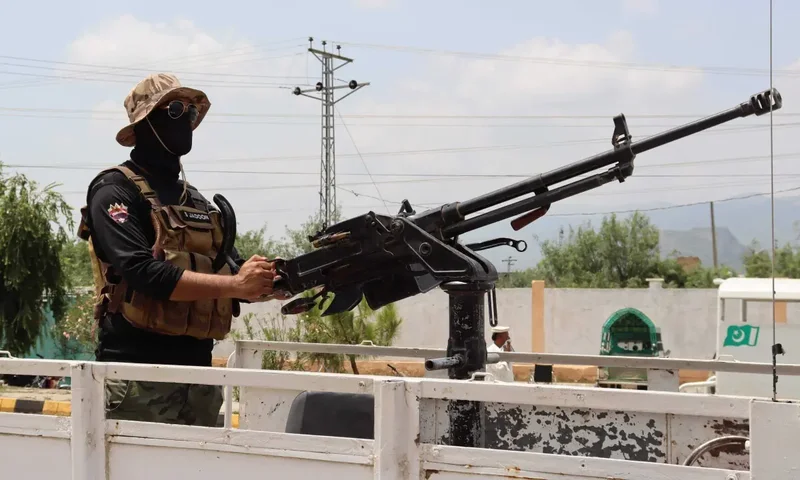
AS COUNTERTERRORISM operations intensify, mostly through intelligence-based operations carried out to hunt down terrorists, it seems the miscreants have also been evolving their tactics and increasingly moving towards a ‘two-stage attack’ strategy, designed to inflict maximum casualties. Despite past incidents and awareness of terrorists’ changing methods, which have resulted in heavy losses, the police department has yet to fully reassess its counterterrorism strategy and come up with clear guidelines not only to strike the enemy but also to protect precious lives. As part of their two-stage strategy, terrorists first strike a police installation and engage personnel deployed inside the facility. At the same time, they deploy another team along possible reinforcement routes. As additional forces move in, they become vulnerable to at least three threats: roadside explosions, ambushes and loitering quadcopters dropping munitions. The dispatched party gets little time to respond and often ends up suffering heavy losses. Repeated ambushes of police teams rushing to defend attacked posts highlight how predictable response patterns are turning reinforcements into targets During the past three years, at least 16 police personnel, including three deputy superintendents of police, have fallen victim to this ‘two-stage’ strategy, where additional forces dispatched to assist under-fire personnel end up coming under attack themselves. On July 29, nine police personnel, including DSP Diyar Khan, were martyred and 28 others injured when terrorists first stormed a police checkpost in the Khazina Banda area of Khyber Pakhtunkhwa’s Hangu district and later attacked the additional force dispatched to assist police personnel already responding to the terrorist assault. That attack marked the third such incident, and all three attacks showed that the heaviest losses were suffered not in the initial strike, but during the subsequent attack on reinforcements. The first such incident took place on Jan 15, 2023, when DSP Sardar Hussain, along with his two gunmen, was martyred in an improvised explosive device (IED) explosion while responding to a terrorist attack on the Sarband police station on the outskirts of Peshawar. On March 30, 2023, DSP Iqbal Momand and three constables were martyred in a similar attack when an IED went off on Pirwala Road in Lakki Marwat as a fresh contingent was on its way to the Saddar police station, where police personnel had been fending off an attack. Senior police officials believe lack of training and planning repeatedly causes losses of not only property but also precious lives. “This is a guerrilla war and we are fighting against a well-trained and well-equipped enemy. We do not lack modern weapons, but training, as we are still doing in these training centres — parades and parades,” a senior police official told Dawn. He regretted that despite the availability of modern warfare gadgets, very few personnel knew how to operate them effectively. Commenting on the Hangu incident, the official said heavy ammunition and even drones were available at the checkpost, but police personnel could not fire because it required space, which the terrorists had already blocked by firing sniper shots and denying them the opportunity to take positions against the attackers. The official also revealed that the district police officer had been constantly warning the dispatched party not to move towards the checkpost, but the party did not follow the orders and ended up suffering heavy losses despite carrying anti-drone guns. “Creating departments within departments will never help overcome the enemy until these daily parades are replaced with modern warfare training,” the official said. Security experts believe terrorists are war-tested and said that even if attention is drawn to the latest weaponry in their possession, these weapons are not as sophisticated as those carried by Nato troops in Afghanistan. “Unfortunately, we are in a reaction mode and I wonder why we are not on the offensive,” former additional inspector general and secretary home and tribal affairs Akhtar Ali Shah told Dawn. Mr Shah questioned why terrorists were able to reach the police post in the first place and why law enforcement agencies were unable to detect their movement despite having resources available. He said if terrorists were carrying out such coordinated attacks, it clearly meant their supply chain and recruitment networks were intact. “It has a connection with Afghanistan and there is no doubt about that, but the other end of the cord is here in Pakistan. The failure is that we have failed in gathering intelligence,” Mr Shah said. He said the analysis carried out by a wing of the Counter-Terrorism Department (CTD) needed to be studied and understood. In response to questions, the Central Police Office (CPO) said the department had already devised SOPs for such situations and that the movement of reinforcements was based on available intelligence, the ground situation and threat assessment. However, it said that at times, immediate movement became necessary to maintain the morale of the force and support personnel already engaged in an attack. It said that in some instances, police personnel suffered losses while moving as reinforcements towards an attacked installation. The CPO said there were numerous cases where, keeping in view the possibility of an ambush, reinforcements were not moved blindly. It added that the situation was assessed, routes were checked and necessary precautions were taken before moving the force, but such successful responses usually did not get highlighted. “Drones are also being employed to clear and monitor routes before movement of reinforcements, particularly during night operations where such aerial surveillance is a must,” it said. “Our strategy is being continuously reviewed and improved in light of emerging tactics and operational experience, and the force is being guided accordingly to deal with such situations,” it added. Header image: A security personnel stands guard after a terrorist attack on a checkpoint at Hangu district in Khyber Pakhtunkhwa province on July 30, 2026. — AFP Published in Dawn, August 3rd, 2026
SITUATIONER: ‘Double-tap’ terrorist attacks expose tactical gap in LEAs’ training