Your support helps us to tell the story
From reproductive rights to climate change to Big Tech, The Independent is on the ground when the story is developing. Whether it's investigating the financials of Elon Musk's pro-Trump PAC or producing our latest documentary, 'The A Word', which shines a light on the American women fighting for reproductive rights, we know how important it is to parse out the facts from the messaging.
At such a critical moment in US history, we need reporters on the ground. Your donation allows us to keep sending journalists to speak to both sides of the story.
The Independent is trusted by Americans across the entire political spectrum. And unlike many other quality news outlets, we choose not to lock Americans out of our reporting and analysis with paywalls. We believe quality journalism should be available to everyone, paid for by those who can afford it.
Your support makes all the difference.
Read more
President Donald Trump has announced sweeping new tariffs on imported generic medicines, warning drugmakers they face massive penalties unless they move production to the United States.
Under the plan, announced on Truth Social, generic drugs imported into the U.S. would remain tariff-free for two years beginning Aug. 1. After that, companies that continue manufacturing overseas would face a 100% tariff for one year, followed by a permanent 200% tariff.
Trump said the move is designed to force pharmaceutical companies to build factories in the United States.
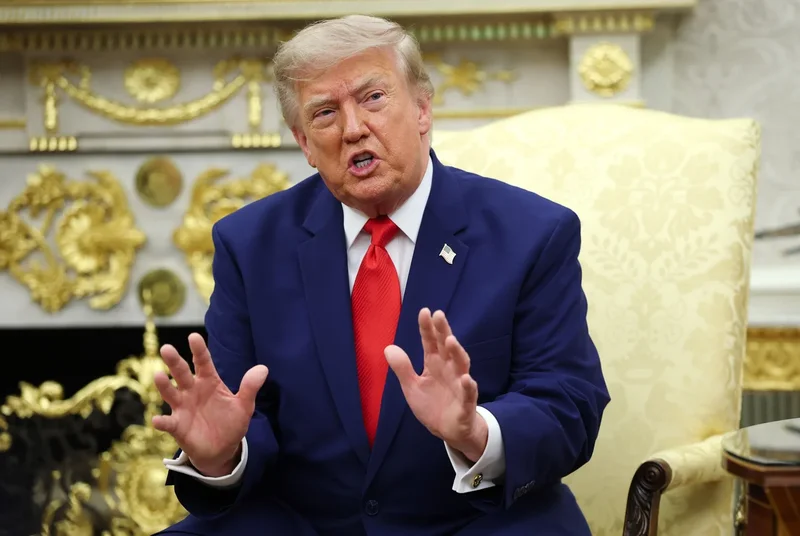
Trump said the move is designed to force pharmaceutical companies to build factories in the United States (Getty)
"This is done in order to RESHORE Generic Pharmaceutical Production into America, with a penalty to those Companies that decide not to build Plant and Equipment within the stated period of time given to them," he wrote.
The proposal is the latest step in Trump's broader campaign to reshape the pharmaceutical industry. He has also pushed drugmakers to lower prices through a "most-favored-nation" pricing policy aimed at matching prices paid in other wealthy countries.
Generic medicines account for more than 90% of prescriptions filled in the United States, according to the Food and Drug Administration. Trump said the new tariffs would apply only to generic drugs, leaving rules for patented and branded medicines unchanged.
Trump and U.S. Secretary of Health and Human Services Robert F. Kennedy Jr. listen as U.S. Food and Drug Administration (FDA) Commissioner Dr. Marty Makary delivers remarks during a press conference to announce a link between autism and childhood vaccines (Reuters)
The administration has already used tariffs to pressure the pharmaceutical industry. In April, Trump signed an executive order imposing 100% tariffs on imported branded drugs unless manufacturers agreed to government pricing deals or shifted production to the U.S.
Last year, several major drug companies reached agreements with the government that exempted billions of dollars' worth of medicines from tariffs.
The latest proposal rattled parts of the industry. Swiss generic drugmaker Sandoz said it would continue discussions with policymakers while reaffirming its commitment to expanding access to affordable medicines in the United States. Shares in the company fell about 3% Wednesday.
In April, Trump signed an executive order imposing 100% tariffs on imported branded drugs unless manufacturers agreed to government pricing deals or shifted production to the U.S. (AFP/Getty)
Sandoz has already announced plans to close its only U.S. manufacturing plant, on Long Island, New York, by the end of 2026. The company said it was too early to determine how Trump's proposed tariffs could affect its operations or future investment decisions.
Stefan Schneider, an analyst at Vontobel, said the administration's goal appears to be reversing years of generic drug production moving to lower-cost countries such as China and India. But he warned that shifting manufacturing back to the United States would likely drive up the price of generic medicines for American consumers.