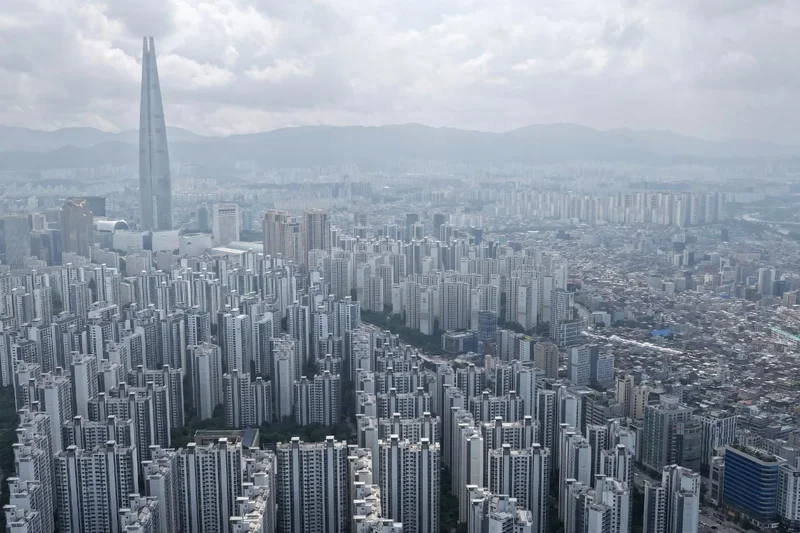
“We were promised 20 years of housing. We trusted the government and never made other plans in the meantime,” reads a statement issued in May by residents of a long-term public rental housing complex in Gangil-dong, eastern Seoul.
Tenants of another complex in Seoul’s Songpa District echoed the sentiment, urging the city to reverse what they called “an unfair policy” and address “growing insecurity over our housing future.”
“Our request is a legitimate exercise of our rights, both morally and legally,” they wrote in a statement in July.
These residents are among the first participants in Seoul’s long-term lease housing program, launched in 2007 by the Seoul Housing & Urban Development Corporation. Designed for households without homes, the scheme offers apartments in exchange for a lump-sum deposit, typically around 80 percent of prevailing “jeonse” prices but often far less. In return, tenants can stay for up to 20 years, but the houses are not up for sale for occupants and are instead recycled to new eligible households.
As the first wave of 20-year leases approaches expiration, however, that arrangement has become the center of a growing dispute.
Some residents are refusing to move out, demanding either an extension of their leases or the right to purchase their apartments. They argue that two decades of soaring property prices leave them with little realistic chance of buying a home on the open market.
Much of their frustration stems from how dramatically property values have risen.
Apartments in Songpa Fine Town that were leased under the program, for instance, are now worth over 2 billion won ($1.4 million), while tenants will receive deposits of roughly 150 million won when their leases end in 2028.
City officials are rejecting those demands, noting that rewriting the already signed contracts would undermine confidence in public policy. They also say that allowing current residents to stay longer would leave fewer homes for young people, newlyweds and other low-income households next in line for the program.
The standoff is only likely to intensify. The number of households reaching the 20-year limit is projected to rise from 310 next year to 4,170 by 2031, as leases expire across some of Seoul’s most sought-after neighborhoods, including Gangnam, Seocho, Mapo and Eunpyeong districts.
Public backlash
The tenants’ campaign has sparked widespread criticism, with many stating that the rules were clear from the beginning.
“The lease agreement made it explicitly clear: no extension after 20 years and no option to buy the apartment,” said Lee, a Seoul office worker in her 30s. “Shouldn’t they have been aware of this all along? Did they really expect the city to change the rules at the last minute?”
Others argued that granting the tenants’ demands would come at the expense of younger households still struggling to find affordable housing.
“They’ve benefited from below-market housing for two decades. Now it’s time to make room for the next generation. Young people today face much higher housing costs than they did back then,” one commenter wrote on an online real estate forum.
“It’s like pulling someone out of the water only to have them ask for your wallet,” said Kim Je-kyung, director of Tumi Real Estate Consulting.
Kim explained that the program was designed to give lower-income households long-term housing stability while allowing them enough time to build enough wealth to eventually buy a home of their own.
“But in the end, I think this social experiment failed. Instead of becoming self-sufficient, many people simply became complacent and never saved enough to move on,” he said.
He dismissed the tenants’ case as having no sound legal basis, adding that Seoul should stand firmly by the original terms of the contracts. “The city can’t set a precedent that says if you protest loudly enough, the rules will change. If today’s tenants are allowed to buy these apartments or stay indefinitely, the people who were supposed to move in next lose that opportunity.”