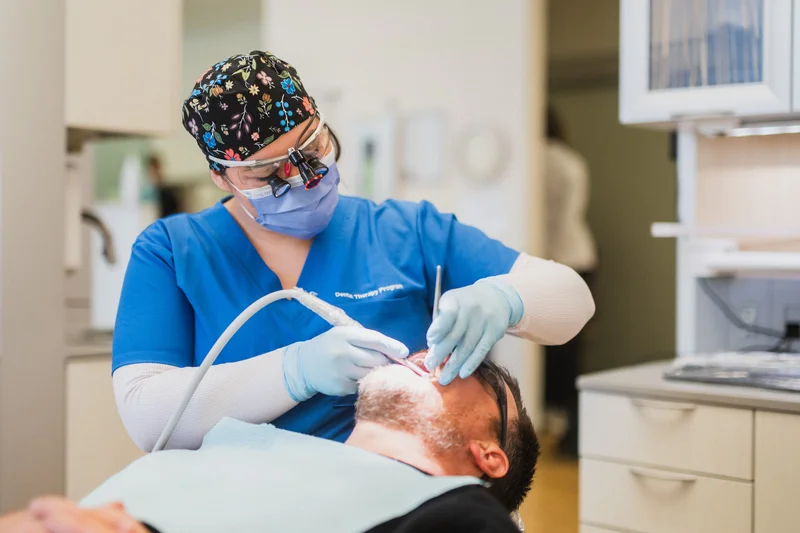
Jim Tennant was a dentist working in remote and Northern communities in the 1970s when the Canadian government launched an innovation that changed his workload – for the better.
“It was absolutely fantastic,” he said of the program, which trained dental therapists, who provide a larger range of services than hygienists but fewer than dentists, to work in regions that didn’t usually have much access to dental care. And then in 2011 the program, which had been funded by the federal government, was shelved. But what is old may be new again.
In recent months, The Globe and Mail has documented a breakdown in dental care delivery in the Northwest Territories, where some communities haven’t had a dentist visit in more than six years.
While governments work to resume routine dental care in remote communities, dental therapy is once again being eyed as part of the solution.
The University of Saskatchewan relaunched a dental-therapy training program as a bachelor of science in 2023. In November, Health Canada said it is giving $3.1-million to expand that program into the NWT.
It’s still on a small scale, but experts say the efforts could be ramped up to meet growing demand in underserved communities. They are looking to results in places outside of Canada such as Alaska, where dental therapy is now well established, for inspiration.
Dental therapists, once known as dental nurses, work in schools and community settings as well as in clinics. While dentists can perform root canals, crowns and implants, dental therapists provide services such as fillings, routine checkups and simple extractions. They also work on prevention, such as by teaching brushing and flossing techniques.
The profession was established in New Zealand more than a century ago. In 1921, a group of 30 women began training as “dental nurses,” with a goal of providing free care to schoolchildren. Since then, more than 50 countries have adopted the model. In Canada, the focus of dental therapy has been to improve access to oral care specifically for those living in remote communities, many of whom are Indigenous.
Canada currently has only one dental-therapy school program. Graduates of the University of Saskatchewan’s two-year program can be employed by the federal or provincial governments, or work in private practice.
As part of a larger push to make oral health more accessible nationally, Health Canada is providing funding to the university to extend its program into the NWT, in partnership with Inuvialuit Regional Corp., an organization that represents Inuit of the Western Arctic. The new program will run partly in the town of Inuvik, and partly in communities under a “learn where you live” model, where students can pursue education in more remote locations.
The scope of dental therapy in Canada was much larger at one time. The National School of Dental Therapy, inspired by the New Zealand model, opened in Fort Smith, NWT, in 1972. (Another one opened the same year in Regina; it closed in 1987.) The Fort Smith school trained practitioners in the territory to deliver services to Northern and isolated parts of the country until it was relocated to Saskatchewan in 1981. In 2011, the federal government cut funding, and the school closed.** **
Mr. Tennant, who has practised in the territory since 1973, said in his recollection dental therapy was highly effective.
The dental therapists would work in schools, get to know the children and, because they were paid a salary rather than a fee for service, they could take their time, especially if a child was nervous about treatment.
According to an evaluation of one of the dental-therapy programs that ran in Saskatchewan’s schools in the 1970s, it was a success. After six years of receiving care, children required, on average, half the number of fillings they did at the beginning.
If Mr. Tennant was taking note, so were places such as Alaska, which faced similar challenges.
Rochelle Siuvuq Ferry is from Unalakleet, a rural village in northern Alaska. At the age of 16, her front tooth was knocked out in an unexpected collision. To get treatment, she had to fly multiple times to Nome, 240 kilometres away.
That experience sparked her interest in dental care, especially for people in rural communities. After two years of training in New Zealand, she eventually became a dental therapist herself, living and working in rural villages in Alaska for a decade. She saw the difference that dental therapists made in improving oral health outcomes.
Startup programs taught new parents how to care for their children’s teeth. More preschoolers were treated, which helped catch early decay. And elders, some of whom had experienced trauma from early dental practices and were initially hesitant, started coming in. Trust grew.
“It makes a huge difference when you have somebody in the community who is consistent. You need consistency,” said Ms. Ferry.
But just as its popularity was growing elsewhere, the profession was shrinking in Canada. Today, residents in many remote communities are forced to rely on occasional visits from a travelling dentist, fly great distances, or do without care.
Given Canada’s vast size and distribution of rural and remote communities, “we need more dental training in different locations,” said Walter Siqueira, the dean of dentistry at the University of Saskatchewan. The NWT program “is a very important first step,” he added, “and I hope that in the future this can be expanded.”
Anil Menon, president of the Canadian Association of Public Health Dentistry, agrees that dental therapists can help improve access to oral health care for those in remote, rural, Indigenous and otherwise underserved communities.
The association supports re-establishing and expanding dental-therapy education programs in Canada as a way to improve oral health equity, Dr. Menon said in an e-mail.
Currently, dental therapists are permitted to practise in the territories, parts of B.C. and in Saskatchewan. They are not permitted in Ontario and Quebec, as the profession isn’t recognized in those provinces.
The first students in the Inuvik program will graduate around 2030, with five to eight people in a cohort.
Ms. Ferry, who is Iñupiaq, says that she has seen good results in Alaska.
Knowing the culture and living in communities helped build trust and long-term relationships with clients and their children over time.
“We’re there getting the decay taken care of, getting oral hygiene under control, getting things cleaned up and prepared for the dentist to come in,” said Ms. Ferry, who now works on the Tulalip Reservation in Washington State.
Ms. Ferry’s observations are backed by research, which has shown that dental therapists are effective in boosting oral health outcomes in underserved communities in Alaska, including among children. One 2018 paper found that, in communities that had more dental-therapy treatment days, children and adults received more preventive care and needed fewer extractions over the 10-year study period.
“What we found was actually astounding,” said Donald Chi, professor of oral health sciences in the schools of dentistry and public health at the University of Washington and co-author of the study. Over that 10-year period, “we saw these really significant changes in the treatment patterns, especially those communities that were more heavily served by dental therapists.”
Another of his studies, in 2020, found that communities with more dental-therapy treatment days had fewer dental emergencies. That study, based on Alaska Medicaid and electronic health records, found that children, in particular, benefited from dental therapists, as shown in lower emergency dental consultation rates.
Many of the dental therapists in his study came from the same regions in which they worked in Alaska, meaning they had a shared history, language and culture with the clients they were treating.
“When you think about patient-centred care, that was a wonderful aspect of the program,” said Dr. Chi, who is also a pediatric dentist*. *
“Dental therapy isn’t a silver bullet,” he added, “but it could certainly address some of these large challenges that exist in a lot of rural and isolated communities.”
In Inuvik, the Inuvialuit Regional Corp. says it is pleased to see this initiative in the North.
“People in our region are facing very real gaps in access to dental and primary care,” said Evelyn Storr, IRC executive director of beneficiary services, in an e-mail. This model, along with a new health centre in Inuvik, “will help train local students in their home region and strengthen the long-term health work force in our communities.”