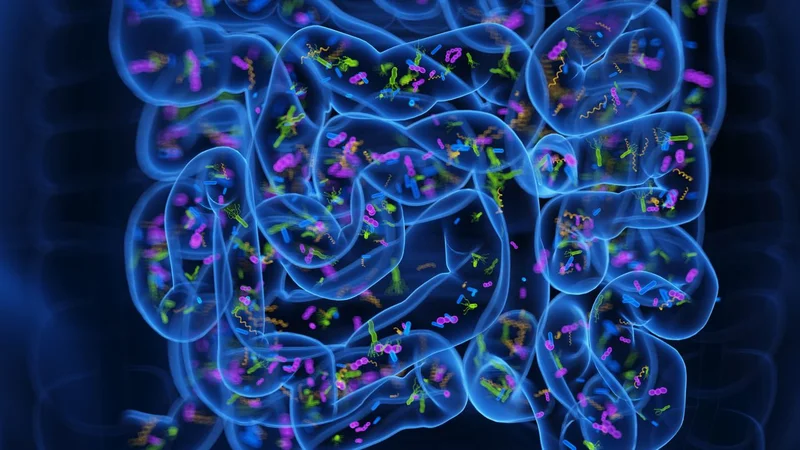
A poop transplant — otherwise known as a fecal microbiota transplant (FMT) — may help adults with long-term insomnia sleep better, a small study suggests.
After the transplant, study participants' gut bacteria became more diverse than an untreated group of people with insomnia. Their sleep efficiency, meaning the percentage of time they spent asleep while in bed, also increased, researchers reported July 22 in the Journal of Internal Medicine.
If future studies confirm that FMT is safe and effective for the treatment of insomnia, it could become another tool against the sleep disorder, joining sleeping pills and cognitive behavioral therapy (CBT).
The findings "are aligned with a recent body of work over the last five years indicating that the gut microbiome may play a role in sleep-wake regulation," said Dr. David Gozal, a pediatric sleep specialist at Marshall University in West Virginia who wasn't involved in this study.
However, "these results should be regarded as promising proof-of-concept evidence rather than confirmation that FMT is ready for routine treatment of insomnia," Kenji Hashimoto, a forensic mental health researcher at Chiba University in China who wasn't involved with the study, told Live Science in an email.
Improving sleep with "poop pills"
The study included 80 adult women and men with chronic insomnia from seven hospitals in China; the participants did not have other health problems, such as migraine or obstructive sleep apnea, that could interfere with the results.
Half of the participants took antibiotics for two days to clear out some of their existing gut bacteria. Then, they swallowed 60 FMT capsules chockfull of gut bacteria from healthy donors who had been confirmed to be good sleepers. These bacteria were isolated from fecal samples from the donors. Two weeks later, this group took a booster dose of 20 capsules.
Get the world’s most fascinating discoveries delivered straight to your inbox.
The other half of the participants instead took placebo pills in place of the antibiotics and FMT capsules.
The researchers used an overnight sleep assessment called a polysomnography, which records brain waves, eye movements, heart rate, oxygen levels and breathing patterns, to assess the participants. The results showed that sleep efficiency in the FMT group jumped from 79% before the transplant to 93% one month after treatment, on average. The placebo group's sleep efficiency barely changed, shifting from about 85% to 87%.
Additionally, the treated group woke up less throughout the night. Their time spent awake after initially falling asleep fell from 79 to 17 minutes, while the same metric increased from 37 to 42 minutes in the placebo group.
On questionnaires, the FMT group continued reporting better sleep from two all the way to six months after treatment.
It is "encouraging" that FMT treatment seemed to improve sleep not only on objective tests, but also in how the participants themselves rated their insomnia, added Harriët Schellekens, a neuroscientist and microbiome researcher at University College Cork in Ireland, who wasn't involved in the work.
Gut-sleep connection
The results also suggest that the treatment is safe. In the FMT group, only three out of 40 participants had side effects, and they were mild, such as nausea and transient fever.
However, experts noted several caveats. The trial was small and limited to relatively healthy adults in China, so the results may not apply broadly. Sleep was measured only once after treatment, at the one‑month mark, Hashimoto said. And because the treatment combined antibiotics with FMT, it's unclear how much of the benefit came from the donor microbes alone, Schellekens and Hashimoto noted.
Hashimoto added that the study focused exclusively on the gut microbiota. "Microbial communities in other body sites, particularly the oral and nasal cavities, may also influence sleep regulation through immune, metabolic, and neural pathways and through oral-gut-brain or nasal-gut-brain communication," he said.
The gut and brain communicate in various ways, including via chemicals made by gut microbes that travel to the brain via the bloodstream, Hashimoto explained. These chemicals may steer inflammation, stress responses and the body's sleep-wake control.
Shifts in certain microbes can alter these gut chemicals and gut barrier function in ways that ripple out to the brain and change sleep patterns, Gozal said. Conversely, disrupted sleep can reshape the microbiome. "The question is, what came first?" he said — a disordered microbiome driving insomnia, or insomnia reshaping the microbiome and worsening symptoms.
In the study, the mix of gut microbes in the FMT group shifted between the start and end of the study, but the placebo group's microbiomes stayed the same. Several types of bacteria became more abundant after FMT, while others decreased, suggesting that FMT reshapes the gut microbiome.
RELATED STORIES
Not everyone responded to the treatment, and they mostly differed in what their gut microbiota looked like before FMT, not after. That suggests that a person's initial microbial makeup may help determine how well they respond to the treatment.
Gozal said he would have liked the study to measure the chemicals made by gut microbes before treatment and then show how those same chemicals changed after FMT.
More research is needed to understand the biological mechanisms underlying the improvements, Schellekens said. For now, "FMT remains an experimental approach for insomnia and is not something that should be used outside carefully controlled clinical studies."
The study's researchers did not respond to a request for comment by the time of publication.
This article is for informational purposes only and is not meant to offer medical advice.
Gao, T., Liu, X., Mi, W., Shi, L., Wang, X., Zhu, D., ... & Lu, L. (2026). Fecal microbiota transplantation-based treatment protocol for chronic insomnia disorder: A randomized, double-blind, placebo-controlled trial. Journal of Internal Medicine. https://doi.org/10.1111/joim.70137
How much do you know about sleep and dreams? Find out with our sleep quiz!
Clarissa Brincat is a freelance writer specializing in health and medical research. After completing an MSc in chemistry, she realized she would rather write about science than do it. She learned how to edit scientific papers in a stint as a chemistry copyeditor, before moving on to a medical writer role at a healthcare company. Writing for doctors and experts has its rewards, but Clarissa wanted to communicate with a wider audience, which naturally led her to freelance health and science writing. Her work has also appeared in Medscape, HealthCentral and Medical News Today.