Topline
Senate leaders have introduced a plan that would delay a scheduled recriminalization of hemp THC products in a move industry insiders are calling a “lifeline” to a marijuana industry that has faced mounting pressure from federal lawmakers to rein in the rapidly expanding market for intoxicating hemp products.
Key Facts
The Senate Appropriations Committee on Sunday released a bill that would extend funding for federal agencies through Dec. 11 and delay a planned prohibition on most hemp products until the same date—almost a month later than originally planned.
U.S. Hemp Roundtable, a policy advocacy organization for the hemp and CBD industries, called the proposed delay "welcome news" and said it planned to launch a campaign this week to lobby Congress for more permanent legislation.
Industry advocates are pushing to come to a compromise with Congress and find a solution that would regulate intoxicating hemp products instead of eliminating them altogether, and the proposed delay would give them another month to do so, as a ban is currently set to take effect Nov. 12.
The intoxicating hemp industry, which would be effectively shut down by the proposed ban, was estimated to be worth more than $28 billion last year while supporting 300,000 jobs and generating $1.5 billion in tax revenue for states.
Both the Senate and the House must still approve the bill before the delay goes into effect, and the Senate has scheduled an initial procedural vote for Monday night.
CRUCIAL QUOTE
“As Mark Twain might have said, ‘The reports of hemp’s death have been greatly exaggerated,’” Jonathan Miller, general counsel for the U.S. Hemp Roundtable, said after the delay was proposed.
Key background
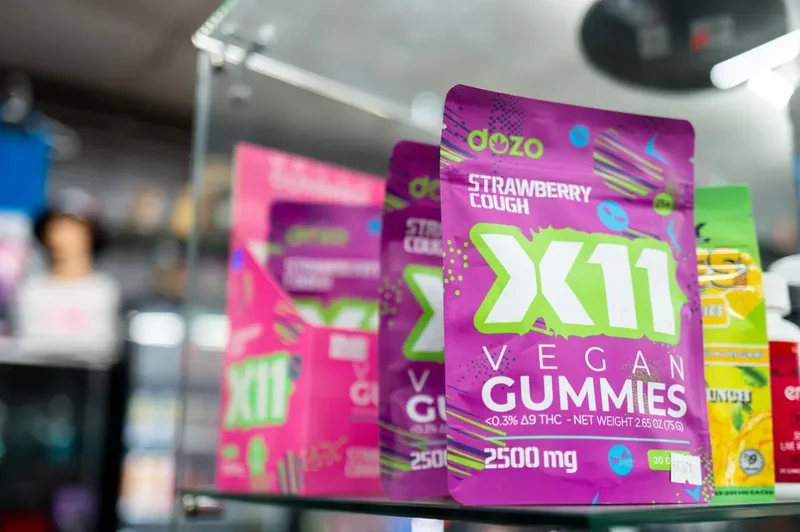
The existing marijuana industry largely exists within a loophole of the 2018 Farm Bill President Donald Trump signed in his first term. The bill legalized the cultivation of industrial hemp (usually grown for sturdy fibers or food rather than as an intoxicant) to give farmers a new cash crop. The law legalized hemp as long as it contained no more than 0.3% delta-9 THC, but companies have since figured out how to make products like edibles, beverages and snacks that do stay within that definition—but still contain enough intoxicants to get people high. Congress last year voted to close the loophole and replace the hemp definition with one that counts total THC and puts a very low limit on finished consumer products, effectively killing the intoxicating hemp industry.
TANGENT
The loophole in the Farm Bill is also what allows companies to sell intoxicating hemp-derived products in states where marijuana is still illegal. Because the products are not technically marijuana under federal law, they don’t fall under the same rules banning recreational pot. States like North Carolina, Georgia and Texas don’t allow recreational marijuana sales but still have massive markets for hemp-derived THC products. North Carolina’s intoxicating cannabinoid industry has been estimated at about $1 billion and—before a statewide crackdown that went into effect on July 31—Texas estimated its industry at about $8 billion annually. Some states, like Georgia and now Texas, have passed their own laws to ban or restrict the industry.
BIG NUMBER
8,000. That’s how many hemp-derived THC retailers the Texas Senate estimates opened in the state between 2019 and March 2025.
SURPRISING FACT
The hemp industry has been a lifeline for the craft brewing and alcohol distribution industries. Both have dealt with years of declining sales, but hemp beverages have opened a new market for a generation that isn’t drinking as much as its predecessors. Indeed Brewing in Minneapolis told PBS News last year that THC drinks make up almost one-quarter of its business. Bauhaus Brew Labs a few blocks away said THC drinks account for 26% of its revenues from distributed products and 11% in the brewery’s taproom.
WHAT TO WATCH FOR
What happens with the law. If the loophole is closed, most hemp-derived THC products would become federally illegal and the existing retail model would largely collapse. Companies making gummies, beverages, vapes and other products could lose access to their primary product lines, and the economic impact would be substantial. In Texas alone, the Legislative Budget Board projected the legislation restricting hemp products would reduce state general-revenue funds by roughly $28.6 million in FY2026 and $8.5 million in FY2027.