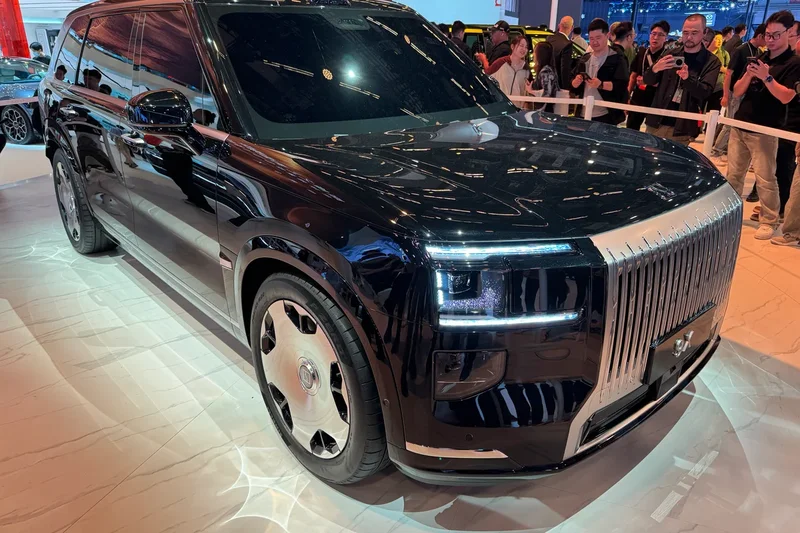
Another week, another new car brand announcing that it’s heading to Britain. This time it’s Zeekr, the Chinese premium electric car company that sits within the vast Geely empire alongside Volvo, Polestar, Lotus and a growing collection of other car names.
Zeekr is already established in several European markets and will come to the UK with some serious cars, serious technology and, you can safely assume, serious ambitions. It isn’t arriving to sell cheap and cheerful runabouts, either. Zeekr is aiming squarely at the part of the market that Audi, BMW and Mercedes-Benz have spent decades making their own. And to start with, it’s having a pop at Range Rover.
That makes its arrival rather more significant than simply having another unfamiliar badge to learn. The challenge facing the German premium brands is no longer coming from one or two hopeful newcomers. They’re being surrounded by a growing number of Chinese and American companies with impressive products, deep pockets and absolutely no respect for the traditional pecking order.
BYD’s upmarket Denza brand is another one to watch. I’ve recently driven three of its new models and each of them approaches the premium market in a very different way. The Z9 GT is a huge, head-turning luxury performance car, the Bao 5 mixes serious off-road ability with a plush and tech-heavy interior, while the Denza Z shows that the brand is prepared to take on the more traditional supercar sector, too.
The new Denzas aren’t perfect and the new brand has the difficult job of persuading British buyers to spend premium money on a badge they may never have heard of. But sit in the cars, drive them and see what they can do, and it becomes much harder to dismiss them – you can imagine the next model will be better still, then the next one, then the next, just as BYD has done in the mainstream market. Meanwhile, Denzas are arriving with the sort of equipment, quality and engineering that means they deserve to be considered alongside far more established names.
Then there’s Lucid. I’ve just spent ten days in America driving the Gravity, its enormous seven-seat electric SUV, and it’s one of the most impressive premium EVs I’ve driven. It’s beautifully finished, wonderfully comfortable, fantastic to drive and astonishingly efficient for something so big and luxurious.
The Gravity doesn’t feel like the work of a slightly nervous start-up having its first go at taking on the establishment. It feels mature, sophisticated and extremely well engineered. Lucid still faces huge challenges as a business, not least expanding production and building awareness outside the US, but the product itself is already good enough to trouble the best cars from Germany and it was named 2026 World Luxury Car earlier this year.
More American competition is heading our way, too. Cadillac is returning to Europe with a new generation of electric cars, and the UK is part of its plans. It has tried Europe before without making much of an impression, but this time the cars are better suited to the market, and electric power removes one of the biggest disadvantages traditionally faced by large American luxury cars: their thirst.
Rivian also has Europe in its sights. Its first-generation electric SUVs and pick-ups were simply too large and too American for most European roads, but its next wave of smaller cars could be much more relevant. The R2 and R3 show that Rivian has the design appeal and imagination to become far more than a niche adventure brand if it can get the business side right.
China, meanwhile, seems to be producing new marques faster than the rest of us can remember their names. Chery has already brought Omoda and Jaecoo to Britain and has now launched Lepas, although that brand appears to be pitched at a slightly lower price than many of us initially expected.
There’s more to come. Freelander is being revived as part of a new partnership between Chery and JLR, while iCaur is another Chery-owned brand heading in our direction. Add in the likes of Xpeng, Nio, Genesis and Polestar, plus whichever other companies are currently eyeing up Britain, and the premium market is going to become extremely crowded.
It isn’t only the newcomers raising their game. Lexus continues to produce increasingly impressive cars, and its latest electric saloon shows just how much progress the company has made. Volvo’s EX90, ES90 and EX60 also reveal a brand that has grown in confidence, technology and ambition.
Volvo no longer feels like a slightly alternative premium choice for people who don’t want a German car. It can now compete on design, comfort, safety and technology without needing any qualification.
Genesis is another brand that deserves more attention than it gets. It has strong products, excellent interiors and a customer experience designed to take much of the pain out of buying and owning a car. Its problem, like so many newcomers, is convincing buyers that a badge without decades of European prestige can still be worth premium money.
And that’s where Audi, BMW and Mercedes retain an enormous advantage. These are globally recognised brands with loyal customers, vast dealer networks and a long history of building desirable cars. Company-car lists, leasing deals and simple familiarity all work in their favour. Plenty of people grow up wanting a BMW or Mercedes, while very few British schoolchildren currently have a picture of a Denza or Zeekr on their bedroom wall.
The German big three also continue to produce some exceptionally good cars. They have the engineering expertise, financial strength and scale to respond to new competition, and I don’t believe any of them faces an immediate crisis. They’re far safer than some of the smaller European premium brands that are already struggling to explain why they exist.
DS is the obvious example. Is that still going? And, perhaps more importantly, why? It was supposed to be Stellantis’ bid to take on BMW – I never did understand why they just didn’t leave that to Alfa. But in a market where Chinese brands are launching distinctive, heavily equipped and increasingly polished cars at a remarkable rate, being vaguely stylish and French doesn’t feel like a strong enough reason to choose one.
Alfa Romeo, Maserati and even some of the more ambitious mainstream brands could also find themselves squeezed. The greatest danger may not be to the three companies at the very top, but to those trying to occupy the space just beneath them without having their brand power, resources or customer loyalty.
Audi, BMW and Mercedes shouldn’t panic, but they should be watching very closely
It’s perhaps no coincidence that Jaguar has decided to abandon its old position and try to jump from premium into the luxury market. The strategy is risky and the first reaction to its reinvention has certainly been lively, but trying to fight Audi, BMW and Mercedes while also taking on Zeekr, Denza, Lucid, Genesis, Cadillac and everyone else could have become a bloodbath.
Moving higher up the price range gives Jaguar the chance to tell a different story, make fewer cars and charge much more for them. Whether buyers will accept the new Jaguar remains to be seen, but you can understand why simply carrying on where it left off wasn’t an especially tempting option.
The rise of these new brands should ultimately be good news for us. More competition means better cars, sharper prices, faster development and less opportunity for any manufacturer to take its customers for granted. The Chinese and American companies won’t all succeed over here – building impressive cars is only part of the job, and creating a profitable business with reliable servicing, parts supply and strong used values is far harder.
Audi, BMW and Mercedes shouldn’t panic, but they should be watching very closely. Their badges will continue to carry enormous weight, but the days when buyers automatically chose one of the German three because there was no convincing alternative are coming to an end.
So, the big question is whether you would consider buying a premium car from Zeekr, Denza, Lucid, Cadillac or one of the other newcomers, or would you still stick with Audi, BMW or Mercedes? As always, I’d love to hear from you – just click on the button below to get in touch.
To get the latest motoring insights from EV editor Steve Fowler delivered straight to your inbox, simply enter your email address in the box at the top of this page.
Each edition of DriveSmart offers clear, expert guidance on the fast-moving world of electric vehicles and modern motoring, from trusted reviews and practical tips to the biggest industry news of the week.
You can also head to our newsletter preference centre to sign up for the email.