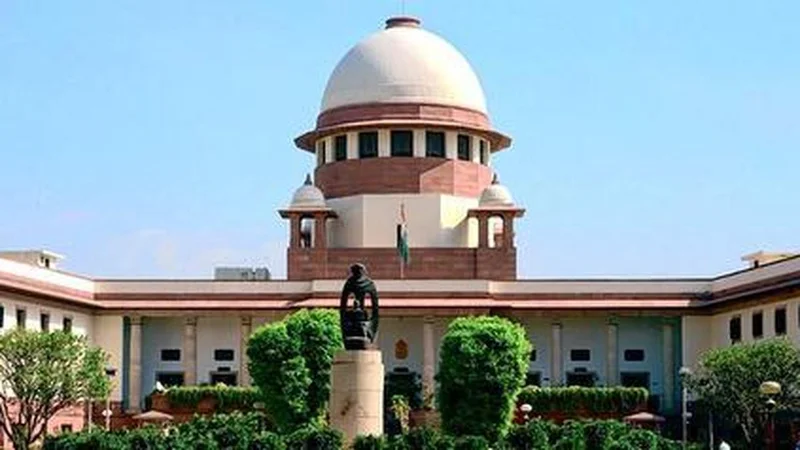
The Supreme Court on Monday (August 3, 2026) orally clarified to the Union government that a new law, seen as dismantling the transgender community’s right to self-identification, will not retrospectively, and by default, invalidate ‘transgender cards’ issued to members under a previous legislation.
Petitioners, who include activists and community members, pointed out that the importance of the transgender identity cards cannot be trifled away by the Union government.
A lawyer, who identified as a member of the community, said the card was an essential part of her basic identity.
“Every day I struggle. It is a struggle to even get a house to live in,” she told a three-judge Bench headed by Chief Justice of India Surya Kant.
Justice Joymalya Bagchi, on the Bench, replied that “we assure you, we are concerned about your rights”.
The petitioners have argued that the 2026 Amendment Act, which came into force on March 30, has dangerously allowed the state unfettered authority to determine gender identity.
They have contended that the 2026 Act has worked contrary to a NALSA judgment of the Supreme Court in 2014 which upheld transgender persons’ right to self-determined gender identity and protected them from discrimination and social stigma. The judgment had led to the enactment of the Transgender Persons (Protection of Rights) Act, 2019. The 2019 Act had largely captured the essence of gender non-conformity and embodied the self-identification principle.
They submitted that Section 3 of the 2026 Act has omitted the right to self-perceived gender identity by the “stroke of a legislative pen”.
“Even if there is a change in legislation, the rights conferred or accrued must remain the same,” Justice Bagchi told the Centre, represented by Solicitor General Tushar Mehta.
Lack of clarity
Mr. Mehta, seeking more time to respond to the petition, pointed out that lack of clarity about gender may lead to problems in succession and inheritance. He sought time to examine the law closely before responding to the petition.
The government law officer questioned the insistence on the part of the petitioners for a specific interim direction from the court to retain the validity of the transgender card.
“This is not like a ration card, where you do not get food,” Mr. Mehta said.
Justice Bagchi pointed out that had the legislative intent been to do away with the transgender cards, there would have been a clarificatory amendment. That was not the case in the 2026 statute.
Petitioners, including Laxminarayan Tripathi, who became the first transgender person from the Asia-Pacific region to address the United Nations General Assembly besides leading the first transgender participation in the Kumbh Mela, have asked “whether the state, through the instrument of legislation, may define who a person is, and in so doing, substitute its own biological or sociomedical classification for the lived, autonomous and self-perceived identity of a human being”.
Published - August 03, 2026 09:34 pm IST