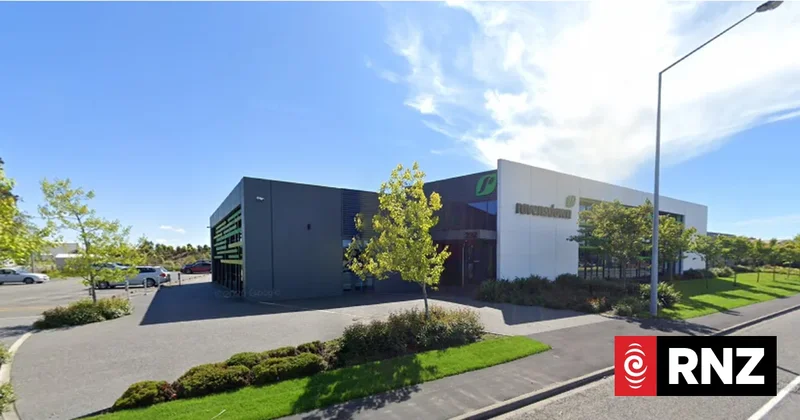
Ravensdown's return to profit prompts shareholder rebate as fertiliser prices spike on-farm
Fertiliser co-operative Ravensdown is breaking its three-year fast on rebates for its farmer-shareholders, on the back of a return to profit.
On Tuesday morning, the co-op reported a net after-tax profit of $30 million for the year ended 31 May after the rebate, with the last one being paid out in the financial year 2021-2022.
It was back in the black after a $5.4m after-tax loss last year driven by the closure of its Dunedin fertiliser manufacturing facility, which followed a modest $2.8m profit in 2024.
The co-op said it saw "solid" fertiliser demand this year after several years of "subdued" demand.
It came during a time of disrupted global fertiliser supplies due to the ongoing conflict between the US and Iran.
Around a fifth of the world's supply of nitrogen fertiliser comes from the Gulf region, which sent prices soaring.
Prices across Ravensdown's product range had increased since the beginning of the United States-Israel war earlier this year, particularly nitrogen fertilisers but less so for superphosphate.
This year, farmer-shareholders would receive a rebate of $15 per tonne on qualifying tonnes. Fully-paid shareholders would receive their rebates in cash, whereas partly-paid shareholders would receive their full rebate in shares.
Co-op chairman Bruce Wills said it was pleased to return value to shareholders with the rebate, who supported the co-op through the volatility of supply certainty in a high demand year.
"We encourage shareholders to be fully shared up to access the full value of membership in the co-operative."
The co-op attributed tipping the one million tonnes of fertiliser sold this year (up eight percent by volume) to improved agricultural returns, especially for sheep and beef farmers, supporting the nutrient application recovery.
However, chief executive Garry Diack said it recognised that farming busineses continued to face changing market conditions and ongoing cost pressures.
"International fertiliser markets remain heavily influenced by geopolitical events," he said. "Conflict in the Middle East, the ongoing war in Ukraine and broader supply chain disruptions continue to create volatility in both product availability and pricing.
"These relationships, combined with our domestic superphosphate manufacturing capability and national inventory management system designed to handle volatility, mean we're able to provide loyal customers with certainty in an increasingly uncertain world."
He said its long-standing supply relationships had "proven their worth" in the past year, while typical trading with its Saudi Arabia supplier was affected through the Strait of Hormuz.
"We've had to de emphasise our reliance on the Middle East," he said.
"We've had to pick up other complementary ships from some likes of Brunei and China, who also export in into the space.
"But the long term relationship with Saudi is one that we we're seeking to preserve through all this."
Diack said it did not foresee any issues around supplying product through spring.
"But we are like everyone else waiting to see just where all the geopolitics go during that period."
The co-op earned $917.2m in revenue before the rebate this year, up from $763.9m the year before, while operating cashflow was sitting at $38.1m this year, down from $103.2m last year.
Its equity ratio saw just a minor decrease on last year, from 80.3 to 79.1 percent.
Diack said the co-op was investing in driving performance, including by growing local production of superphosphate, freight optimisation and greater automation and data decision support, but assured it did not mean fewer boots on the ground.
Its HawkeEye application available for dairy, beef and sheep systems now had more than 8000 registrations, he said, and was set to expand into arable.
The co-op said strong financial discipline remained a priority, as the industry faced ongoing dynamic geopolitical environment and further supply chain challenges this coming year.