El Oro Y El Universo Exhibition Draws 19,000 in Spain
Art & Culture: Colombia
A major loan of pre-Columbian gold from Colombia’s Museo del Oro has drawn about 19,000 visitors in its first month at the MARQ museum in Alicante, Spain, putting indigenous Colombian craftsmanship on a European stage.
Colombian Gold Draws Crowds in Alicante
An exhibition of Colombian treasures, El oro y el universo. Saberes indígenas de Colombia, has drawn about 19,000 visitors during its first month at the MARQ, the Archaeological Museum of Alicante in Spain. The figure was reported by the museum and Spanish regional press.
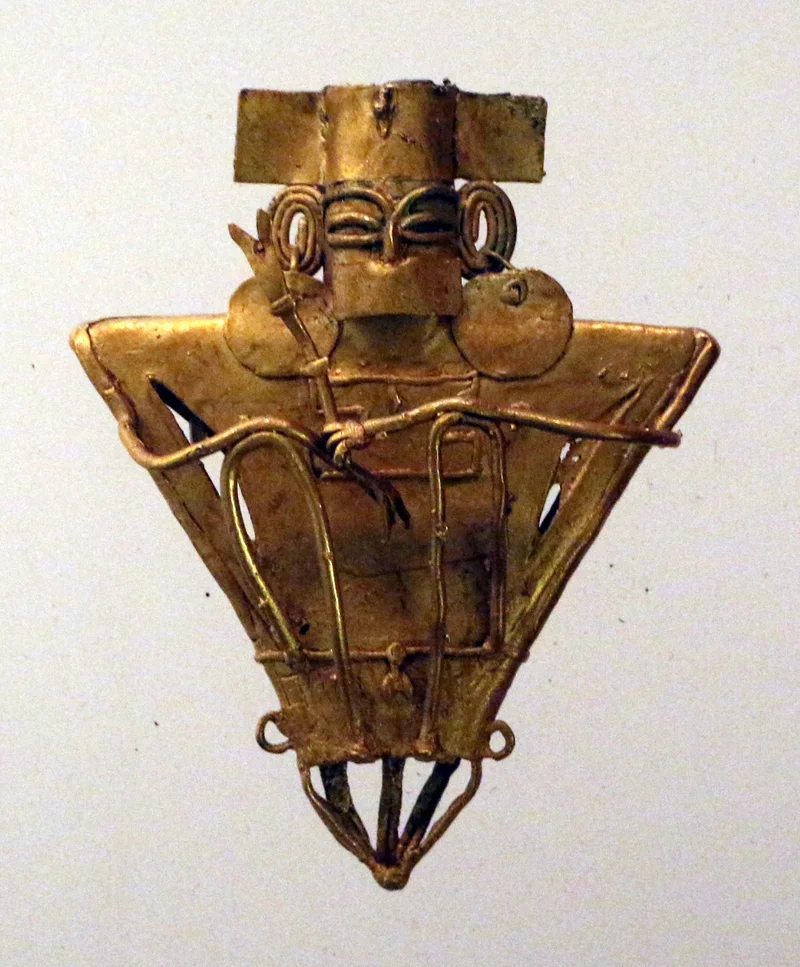
The show is built around 291 archaeological objects, 157 of them gold and more than 2,000 years old, lent by the Museo del Oro of Colombia’s central bank. Many of the pieces are being shown in Spain for the first time, alongside works by present-day indigenous communities.
It is one of the largest loans the Museo del Oro has made to a Spanish museum in more than a decade, and its early attendance suggests strong appetite among Spanish audiences for Colombia’s pre-Columbian heritage.
What the 19,000 Figure Tells Us
Roughly 19,000 visitors in a single month is a robust number for a temporary archaeological show in a mid-sized Spanish city. More than 3,000 of those visitors chose a guided tour, offered in Spanish, Valencian, French and English by the C.V. MARQ Foundation.
The mix matters. A high share of guided visits points to an audience that wants context, not just a look at shiny objects — a sign the exhibition’s interpretive framing is landing with the public rather than being skipped.
For Colombia, the attendance is also soft-power currency. Cultural exports like this one raise the country’s profile abroad in a register far removed from the security and drug-war stories that dominate international coverage.
Inside the Exhibition: Objects and Ideas
The pieces on view include masks, pendants, nose ornaments known as narigueras and pectorals, along with depictions of hybrid beings such as the famous human-bat figures and shamans shown in flight. Many were prized as much for their ritual role as for their craftsmanship.
The exhibition’s guiding idea is an indigenous vision of a shared universe, one populated by both human and non-human beings. In that worldview the gold objects are not jewellery or treasure to be hoarded but active presences, meant to be given, shared and returned rather than accumulated.
That framing deliberately upends the old European fantasy of El Dorado as a hoard of loot. The curators present the metalwork instead as a body of knowledge about transformation, balance and reciprocity, blending archaeology and anthropology with biology and sustainability.
The Museo del Oro on the World Stage
The Museo del Oro in Bogotá, run by Colombia’s central bank, the Banco de la República, holds one of the world’s foremost collections of pre-Hispanic goldwork. Loaning a substantial part of it abroad is a calculated act of cultural diplomacy.
The Alicante show was organised with the University of Cambridge, the MARQ and the C.V. MARQ Foundation, under the provincial government of Alicante. That academic partnership lends the exhibition scholarly weight and helped shape its unusual interpretive approach.
It also fits a wider pattern of Colombian museums reaching international audiences. From gold collections to modern art, Colombian institutions have increasingly toured their holdings, and the country’s museum scene continues to expand at home as well.
An Immersive Design Beyond the Vitrine
The MARQ has staged the objects inside an immersive design rather than rows of glass cases. Visitors enter reconstructed environments — a maloca, or indigenous communal house, and the heat of a metalworking workshop — using architecture, video, sound and even scent based on recent research.
The soundscape was composed for the show by the Alicante musician Luis Ivars, weaving in melodies recorded on flutes and ocarinas between 600 and 1,000 years old, together with field recordings of the Andean páramo and the Caribbean lowlands.
The approach reflects a broader museum trend toward experience-led displays, especially for archaeology, where context can be as important as the artefacts. It aims to convey a worldview, not just exhibit precious metal.
Why It Matters and Where the Show Goes Next
The exhibition runs at the MARQ until 2 May 2027, an unusually long window that should let attendance build well beyond the opening month. After Alicante, the show is expected to continue on tour in Europe.
Reported next stops include the Gaiás museum at the Cidade da Cultura in Santiago de Compostela and the MAMUZ museum in Mistelbach, Austria, extending the reach of Colombia’s gold across the continent.
For expats and travellers, the takeaway is twofold. In Spain, El oro y el universo is a rare chance to see the Museo del Oro’s holdings without crossing the Atlantic; in Colombia, the museum in Bogotá remains one of the region’s essential cultural stops.
Frequently Asked Questions
Where can I see El oro y el universo?
The exhibition is on show at the MARQ, the Archaeological Museum of Alicante, in Spain, until 2 May 2027, before it continues on a European tour.
How many visitors has the Colombian gold exhibition drawn?
The MARQ reported about 19,000 visitors during the show’s first month, with more than 3,000 of them taking guided tours offered in Spanish, Valencian, French and English.
Where do the gold pieces come from?
The 291 objects, 157 of them gold, are on loan from the Museo del Oro of Colombia’s central bank in Bogotá, organised with the University of Cambridge, the MARQ and the C.V. MARQ Foundation.
Sources: Alicante Plaza, MARQ, El Nuevo Siglo, El Tiempo.
This article was produced by The Rio Times’ automated newsroom system. How we use AI · Report an error