Branded Content
40% lower electricity bills, better emissions tracking: How a ‘queen bee’ partnership helped Sakura Chicken supplier go greener
Rather than navigating sustainability on its own, poultry firm Kee Song Group received support from customer FairPrice Group to measure its carbon footprint, prioritise improvements and turn them into business gains
Specially cooled rooms, a regular dose of premium probiotics, and a daily soundtrack of Mozart to keep stress levels low.
It sounds like an elaborate wellness routine but it is actually how home-grown poultry giant Kee Song Group raises its Sakura Chicken, a premium line of antibiotic-free poultry, at its farms in Malaysia.
For two decades, the company focused on perfecting this farming method to produce healthier chickens.
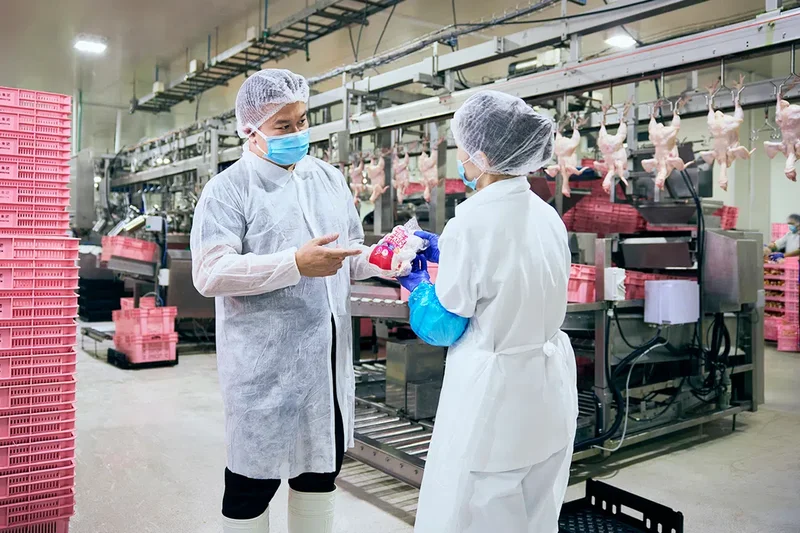
But while its attention was on the birds, a costly issue closer to home went unnoticed: The refrigeration system serving the cold rooms at its Singapore processing facility required high energy consumption.
The Kee Song team decided to rethink how its cold rooms were running. It tightened monitoring and improved energy use across the system, cutting cold room electricity consumption within a year.
That was a substantial saving in a business navigating rising energy, fuel and operating costs.
Says chief corporate affairs officer James Sim: “The cost of business has always been rising and we are fortunate enough to have certain savings already coming from decarbonisation.”
Today, seven of Kee Song’s 15 farms in Malaysia – where its antibiotic-free chickens are raised – are certified organic. Sakura Chicken now accounts for about a quarter of the company’s Singapore revenue and is sold in both supermarkets and high-end restaurants, including one at Marina Bay Sands.
The company has also long looked for ways to create value from what might otherwise go to waste. Chicken manure is turned into organic fertiliser, while by-products such as heads, necks and innards are processed into pet food instead of being discarded.
What Kee Song needed, however, was a clear picture of the environmental impact of its wider operations. Without that, it was harder to see where the biggest emissions hotspots were, which changes would have the most impact and where savings could be found.
Turning data into sustainability practices
Kee Song gained the deeper level of measurement and analysis it needed after joining FairPrice Group’s (FPG) Supply Chain Decarbonisation Programme (SCDP) in 2025.
Through the annual programme, FPG – as the “queen bee” organisation – provides suppliers with one-on-one support to understand where their emissions come from, set meaningful targets and begin making practical changes to decarbonise.
It is one of the industry-led initiatives supported by Enterprise Singapore (EnterpriseSG) under its Enterprise Sustainability Programme (ESP), which helps businesses, especially SMEs, become more sustainable and capture new opportunities.
While Kee Song had already begun addressing the refrigerant leak a year before, FPG’s emissions review helped the company assess the scale of the problem and prioritise the right fixes.
The findings led the company to step up monitoring and maintenance, and install more gauges to track the performance of the refrigerant system. It also improved the use of its deep-freezing equipment and began operating the loading bay cold room only at scheduled times instead of around the clock.
These changes led to the 40 per cent cold room electricity savings.
The SCDP also helped the company map its carbon footprint for the first time – establishing a 2024 baseline of about 4,629 tonnes of carbon dioxide equivalent across its Scope 1 and Scope 2 emissions. This way, Kee Song could identify its biggest source of emissions, set priorities and chart a clearer decarbonisation roadmap.
The company has since committed to cutting emissions by 42 per cent by 2030 and appointed a dedicated team to drive its sustainability efforts.
“It’s a work in progress but we definitely see a very big advantage,” says Sim. “Having a strong partner moving in the same direction as us makes it easier than doing it alone.”
Kee Song’s journey shows what is possible when suppliers get the right support, notes EnterpriseSG’s managing director Cindy Khoo.
She says: “A supply chain is only as sustainable as the companies within it. When a strong ‘queen bee’ leads the way, it becomes far easier for smaller players to take that first step – whether that is establishing an emissions baseline, identifying energy inefficiencies or building in-house capabilities to manage carbon over the long term.”
Cutting emissions with solar power and electric vehicles
With a clearer understanding of its emissions profile, Kee Song is now focused on the next phase of its sustainability journey.
The company began installing solar panels at its processing facilities at the end of 2023, before expanding the initiative across its farms in 2024. Together, these installations have reduced the company’s overall energy consumption by over 10 per cent.
It is now studying how excess solar power can be used, including for future electric vehicle charging.
“Our biggest carbon footprint comes from the fleet of vehicles that deliver to our customers,” says Sim.
The company is now collecting data to see how it can shorten routes, combine delivery points and reduce unnecessary truck movements.
Beyond the SCDP, Kee Song also took part in LowCarbonSG, a partner programme under the ESP, earning certification for its carbon management efforts – and has since tapped other EnterpriseSG-supported sustainability initiatives along the way.
Sim says: “Without these programmes, we would still be trying to fix problems as they surfaced, instead of taking a more deliberate, long-term approach.”
How SMEs can benefit from ‘queen bee’ sustainability initiatives
For many small and medium-sized enterprises, sustainability often takes a back seat to more immediate business pressures, from manpower shortages to rising costs.
Initiatives such as the FairPrice Group’s (FPG) Supply Chain Decarbonisation Programme (SCDP), supported by Enterprise Singapore (EnterpriseSG), can help suppliers get started with the resources, guidance and technical know-how they may not otherwise have on their own.
In turn, “queen bees” can build greener supply chains that are more resilient and ready for rising sustainability demands.
Says Grace Chua, FPG’s chief sustainability officer and the chief executive officer of its Own Brands and Food Solutions division: “Decarbonisation needs to be practical and accessible.
“Through the SCDP, we are equipping our suppliers with the capabilities they need to advance their sustainability journey in ways that are both achievable and commercially viable.”
Through the programme, suppliers learn how to establish emissions baselines, identify emissions hotspots and develop practical decarbonisation roadmaps.
The benefits go beyond reducing their environmental impact, says Chua. “They are increasingly about cost management, resilience and long-term competitiveness.”
That is why EnterpriseSG is encouraging more large companies to step up as “queen bees” and bring suppliers along on the journey.
One way is through the new national programme Green 100 launched in May this year. It encourages participating large enterprises to help at least 100 SME suppliers, partners and customers in their value chain start basic sustainability reporting using the new TR 149 framework as a guide.
TR 149, or Technical Reference 149, is a national framework led by the Singapore Standards Council, overseen by EnterpriseSG, with partners including A*STAR SIMTech and the Singapore Manufacturing Federation. It outlines the steps businesses can take to improve environmental performance and progress towards more sustainable operations.
For SMEs, that means a quick, free way to understand their emissions, a verified badge that boosts visibility with buyers and access to green business opportunities through the Green 100 network.
As sustainability becomes a longer-term priority for businesses, EnterpriseSG’s managing director Cindy Khoo says: “For suppliers, the best time to start is now. The cost of waiting only goes up, but the benefits of acting early in savings, in resilience, and in readiness for future requirements are real and tangible.”
This story is part of a series on how companies can grow their business through sustainability, with the support of Enterprise Singapore.