Your support helps us to tell the story
From reproductive rights to climate change to Big Tech, The Independent is on the ground when the story is developing. Whether it's investigating the financials of Elon Musk's pro-Trump PAC or producing our latest documentary, 'The A Word', which shines a light on the American women fighting for reproductive rights, we know how important it is to parse out the facts from the messaging.
At such a critical moment in US history, we need reporters on the ground. Your donation allows us to keep sending journalists to speak to both sides of the story.
The Independent is trusted by Americans across the entire political spectrum. And unlike many other quality news outlets, we choose not to lock Americans out of our reporting and analysis with paywalls. We believe quality journalism should be available to everyone, paid for by those who can afford it.
Your support makes all the difference.
Read more
President Donald Trump's administration is preparing to send Congress a controversial nuclear agreement with Saudi Arabia that would leave out key safeguards designed to make it harder for the kingdom to develop a nuclear weapon, according to two people familiar with the matter.
The proposed deal, expected to be submitted within days, would clear the way for U.S. companies to help Saudi Arabia build a multibillion-dollar civilian nuclear energy industry. But unlike previous U.S. nuclear agreements with some allies, it would not include restrictions that critics say are vital to preventing nuclear weapons development.
The agreement, known as a "123 Agreement" under the U.S. Atomic Energy Act, was signed by Energy Secretary Chris Wright and Saudi Energy Minister Prince Abdulaziz bin Salman after a preliminary accord reached in Riyadh last year, the sources said. The White House and Energy Department did not respond to requests for comment.
The Trump administration plans to submit to Congress a pact with Saudi Arabia to share nuclear power technology that does not include safeguards (Reuters)
According to the sources, the deal does not include the so-called "Gold Standard," which bars countries from enriching uranium or reprocessing spent nuclear fuel—two technologies that can be used to produce fuel for civilian reactors but also provide pathways to building nuclear weapons.
The agreement also omits the "Additional Protocol," an international safeguard that gives the International Atomic Energy Agency broader authority to inspect undeclared nuclear sites.
One of the sources said the proposed agreement creates a legal framework that could allow cooperation on parts of the nuclear fuel cycle, including uranium enrichment, although it does not require the United States to transfer enrichment technology.
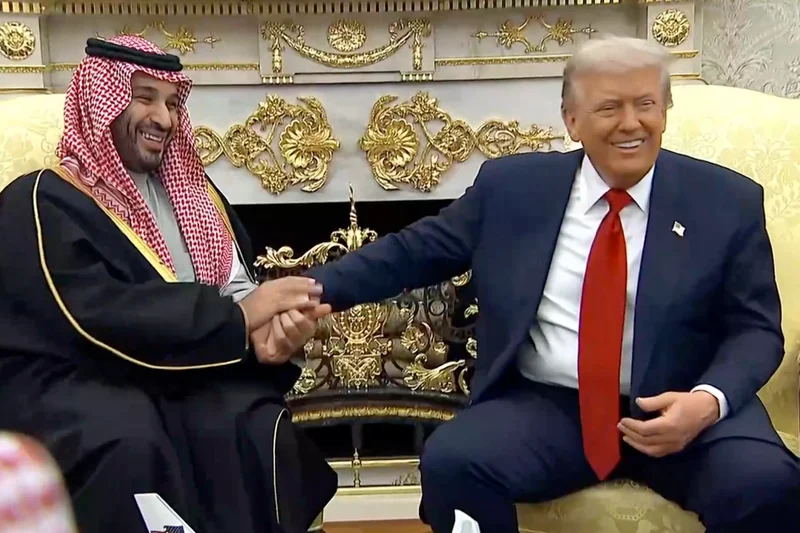
Trump (R) shows Crown Prince and Prime Minister Mohammed bin Salman of Saudi Arabia the "Presidential Walk of Fame" as they walk on the colonnade at the White House on November 18, 2025 in Washington, DC (Getty)
The missing safeguards are likely to fuel concerns in Congress because Saudi Crown Prince Mohammed bin Salman has previously linked the kingdom's nuclear ambitions to Iran.
In a 2018 interview with CBS, the crown prince said Saudi Arabia did not want a nuclear bomb but added: "Without a doubt, if Iran developed a nuclear bomb, we will follow suit as soon as possible."
Saudi Arabia has also repeatedly insisted it should retain the right to enrich uranium—a position the United Arab Emirates rejected when it accepted the tougher "Gold Standard" as part of its 2009 nuclear cooperation agreement with Washington.
Once the agreement reaches Congress, lawmakers will have about 90 legislative days to review it. Blocking the deal would require Congress to pass a joint resolution and override any presidential veto with a two-thirds majority.
Democrats and some Republicans have long argued that any U.S.-Saudi nuclear agreement should include strict nonproliferation safeguards. Among them was Marco Rubio, now Trump's secretary of state, who previously called for tougher restrictions while serving in the Senate.