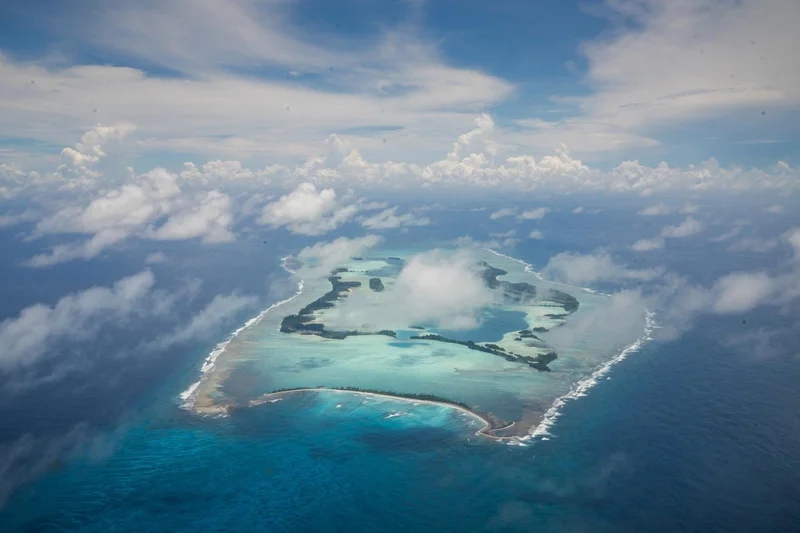
Some of the most pristine ecosystems left in the world are found in the Pacific.
These remote islands and atolls are biodiversity hot spots, home to thriving coral reefs â¦
⦠and bustling seabird colonies.
More than a million square miles of the Pacific Ocean are safeguarded as U.S. marine national monuments and sanctuaries.
Now, the Trump administration is opening some of these waters to commercial fishing.
Thousands of miles from California, the Pacific marine monuments are centered on tiny islands and atolls.
One of them is Palmyra Atoll, about as far from a continent as you can get on the planet.
No one lives here permanently, but itâs home to a field research station run by The Nature Conservancy, a conservation nonprofit. U.S. Fish and Wildlife Service staff also rotate in, since the atollâs land is protected as a national wildlife refuge.
For the researchers and staff stationed here, some days their closest neighbors are the astronauts passing overhead in the International Space Station.
For decades, scientists have studied Palmyra Atollâs unique ecosystem, a window into the vital role that atolls play for marine life across the Pacific.
âAtolls are small when you look at them on the map, but they have an oversized impact on the ocean around them,â says Alex Wegmann, lead scientist of island resilience at The Nature Conservancy.
âThey are very important epicenters of biodiversity and of abundance.â
Atolls are formed by ancient volcanic islands surrounded by coral reefs. As the volcano erodes and disappears below the water, the reef continues to grow upward.
Eventually a ring of low-lying islands forms, built from the skeletons of the reef that surrounds it.
For millennia, Pacific atolls were important stopover and cultural sites for Polynesians who crossed the Pacific Ocean on seafaring voyages.
Colonial powers reshaped many atolls, removing native forests to plant fast-growing coconut palm plantations. Although many were abandoned, the palms continued to spread, crowding out native trees.
World War II brought even more changes. As fighting in the Pacific escalated, the U.S. military remade many atolls, building bunkers, air bases and refueling stations. Ship channels were dredged through coral reefs. Some atolls were used for nuclear and biological weapons testing.
Still, Pacific atolls remain among the wildest places on the planet.
Seabirds use them as nesting sites to raise their young, returning to the open ocean to hunt for fish. Sooty terns spend years at sea, flying thousands of miles before coming back to land to breed.
The reefs surrounding many atolls are still largely untouched, with coral colonies the size of city buses.
At Palmyra Atoll, blacktip and grey reef sharks cruise the reefsâ edges. Scientists have found it has one of the highest densities of predators in the world, a rare example of a food chain that remains intact.
Pacific atolls also attract deep-water species that swim hundreds of miles, like tuna. In the warm, nutrient-poor waters of the central Pacific where food is sparse, atolls are like bustling cafés.
Scientists put satellite tags on yellowfin tuna, tracking where they swam for months, and found they congregate around atolls.
Seabirds rely on those tuna and other large predators to corral schools of small fish. As tuna feed, they drive the schools near the oceanâs surface, where birds can reach them.
This interconnected ecosystem, stretching from treetops to the deep sea, is one of the reasons the waters around Pacific atolls were granted federal protections.
United
States
Japan
Pacific Ocean
Mariana Trench
Marine
National Monument
Wake
Atoll
Hawaii
Johnston
Atoll
Pacific Islands Heritage
Marine National Monument
Kingman Reef
and Palmyra Atoll
Howland
and Baker
Islands
Jarvis
Island
New
Guinea
Rose Atoll
Marine National Monument
Australia
1,000 miles
United
States
Japan
Mariana Trench
Marine
National Monument
Pacific Ocean
Hawaii
Wake
Atoll
Johnston
Atoll
Pacific Islands Heritage
Marine National Monument
Kingman Reef
and Palmyra Atoll
Howland
and Baker
Islands
Jarvis
Island
New
Guinea
Rose Atoll
Marine National Monument
Australia
1,000 miles
United
States
Japan
Mariana Trench
Marine
National Monument
Pacific Ocean
Hawaii
Wake
Atoll
Johnston
Atoll
Pacific Islands Heritage
Marine National Monument
Kingman Reef
and Palmyra Atoll
Howland
and Baker
Islands
Jarvis
Island
New
Guinea
Rose Atoll
Marine National Monument
Australia
1,000 miles
In January 2009, President George W. Bush established three national marine monuments in the Pacific. In 2014, the Pacific Islands Heritage Marine National Monument was expanded.
United
States
Japan
PapahÄnaumokuÄkea
Marine National Sanctuary
Pacific Ocean
Mariana Trench
Marine
National Monument
Wake
Atoll
Hawaii
Johnston
Atoll
Pacific Islands Heritage
Marine National Monument
Kingman Reef
and Palmyra Atoll
Howland
and Baker
Islands
Jarvis
Island
New
Guinea
Rose Atoll
Marine National Monument
Australia
1,000 miles
United
States
Japan
PapahÄnaumokuÄkea
Marine National Sanctuary
Mariana Trench
Marine
National Monument
Pacific Ocean
Hawaii
Wake
Atoll
Johnston
Atoll
Pacific Islands Heritage
Marine National Monument
Kingman Reef
and Palmyra Atoll
Howland
and Baker
Islands
Jarvis
Island
New
Guinea
Rose Atoll
Marine National Monument
Australia
1,000 miles
United
States
Japan
PapahÄnaumokuÄkea
Marine National Sanctuary
Mariana Trench
Marine
National Monument
Pacific Ocean
Hawaii
Wake
Atoll
Johnston
Atoll
Pacific Islands Heritage
Marine National Monument
Kingman Reef
and Palmyra Atoll
Howland
and Baker
Islands
Jarvis
Island
New
Guinea
Rose Atoll
Marine National Monument
Australia
1,000 miles
PapahÄnaumokuÄkea Marine National Monument was established in 2006 in the Northwestern Hawaiian Islands. Its boundaries were later expanded in 2016.
It is the largest fully protected conservation area in the United States.
United
States
Japan
PapahÄnaumokuÄkea
Marine National Sanctuary
Pacific Ocean
Mariana Trench
Marine
National Monument
Wake
Atoll
Hawaii
Johnston
Atoll
Areas for
commercial fishing
Kingman Reef
and Palmyra Atoll
Howland
and Baker
Islands
Jarvis
Island
New
Guinea
Rose Atoll
Marine National Monument
Australia
1,000 miles
United
States
Japan
PapahÄnaumokuÄkea
Marine National Sanctuary
Mariana Trench
Marine
National Monument
Pacific Ocean
Hawaii
Wake
Atoll
Johnston
Atoll
Areas for
commercial fishing
Kingman Reef
and Palmyra Atoll
Howland
and Baker
Islands
Jarvis
Island
New
Guinea
Rose Atoll
Marine National Monument
Australia
1,000 miles
United
States
Japan
PapahÄnaumokuÄkea
Marine National Sanctuary
Mariana Trench
Marine
National Monument
Pacific Ocean
Hawaii
Wake
Atoll
Johnston
Atoll
Areas for
commercial fishing
Kingman Reef
and Palmyra Atoll
Howland
and Baker
Islands
Jarvis
Island
New
Guinea
Rose Atoll
Marine National Monument
Australia
1,000 miles
Last year, President Trump opened parts of the Pacific Islands Heritage Marine National Monument to allow commercial fishing beyond 57 miles from shore.
After conservation groups sued, a judge ruled that the Trump administration must go through a full regulatory process to change the fishing rules. The National Oceanic and Atmospheric Administration (NOAA) is now in the process of considering those changes.
United
States
Japan
PapahÄnaumokuÄkea
Marine National Sanctuary
Pacific Ocean
Mariana Trench
Marine
National Monument
Wake
Atoll
Hawaii
Johnston
Atoll
New areas for
commercial fishing
Kingman Reef
and Palmyra Atoll
Howland
and Baker
Islands
Jarvis
Island
New
Guinea
Rose Atoll
Marine National Monument
Australia
1,000 miles
United
States
Japan
PapahÄnaumokuÄkea
Marine National Sanctuary
Mariana Trench
Marine
National Monument
Pacific Ocean
Hawaii
Wake
Atoll
Johnston
Atoll
New areas for
commercial fishing
Kingman Reef
and Palmyra Atoll
Howland
and Baker
Islands
Jarvis
Island
New
Guinea
Rose Atoll
Marine National Monument
Australia
1,000 miles
United
States
Japan
PapahÄnaumokuÄkea
Marine National Sanctuary
Mariana Trench
Marine
National Monument
Pacific Ocean
Hawaii
Wake
Atoll
Johnston
Atoll
New areas for
commercial fishing
Kingman Reef
and Palmyra Atoll
Howland
and Baker
Islands
Jarvis
Island
New
Guinea
Rose Atoll
Marine National Monument
Australia
1,000 miles
In June, Trump proclaimed that commercial fishing be allowed in the deep waters of three other Pacific monuments, including PapahÄnaumokuÄkea.
âWeâre reclaiming our maritime heritage, empowering American fishermen and putting American consumers first,â Trump said in June. âAmericaâs fishermen have never had a better ally in the White House than Donald Trump.â
Hawaiiâs fishing fleet supports the move to open monument waters. From Honolulu Harbor, longline boats travel hundreds of miles in search of fish, which they catch with thousands of baited hooks in deep water.
At the Honolulu tuna auction, as much as 100,000 pounds of fish are unloaded every day. Most of it is bigeye and yellowfin tuna, which is sold fresh as high-grade fish used in poke and sushi.
Hawaiiâs fishing industry says itâs facing increasing competition on the high seas from foreign vessels also searching for tuna, as well as rising diesel fuel costs. Opening Pacific marine monument waters could give the fleet more opportunities, since foreign ships wouldnât be permitted to fish there.
âOur view is that we can have both: We can have very high levels of protection and allow sustainable fishing in the same place,â says Eric Kingma, executive director of the Hawaii Longline Association. âItâs really about the opportunity to fish away from foreign competition.â
Many Native Hawaiian cultural groups oppose opening the monuments to fishing.
In Hawaiian culture, the Northwestern Hawaiian Islands are considered a sacred area, where life originated and where spirits go after they pass.
After fighting for protections for PapahÄnaumokuÄkea for decades, Native Hawaiian cultural leaders now help oversee the marine sanctuary alongside federal and state agencies, a rare example of Indigenous co-management.
âItâs not just about the ecology and the plants and animals, but the living systems of human communities that evolved with those resources are just as important,â says Kekuewa Kikiloi, associate professor at the KamakakÅ«okalani Center for Hawaiian Studies at the University of HawaiÊ»i at MÄnoa.
âWith this new administration, weâre probably under the biggest threat weâve ever faced in terms of trying to hold the line of defense for this place,â he says.
Conservation groups say allowing fishing could harm the sensitive ecosystem. While catching tuna, fishing vessels also inadvertently catch other species, like sharks.
In 2015, the last year fishing was allowed around the Northwestern Hawaiian Islands, the longline fishing fleet caught and discarded more than 7,000 sharks. While some sharks survive being caught, others donât.
Closing some parts of the ocean can also help fishing fleets in some cases. Ecologists have found that protected areas can allow more fish to breed, increasing the population. They then swim outside protected zones, where they can be caught â whatâs known as spillover.
Researchers are trying to figure out whether that spillover effect happens for highly migratory species like tuna, which swim in and out of protected zones.
A 2024 study by another group of researchers found no evidence that catching yellowfin tuna was easier. It did find that bigeye tuna was 13% easier to catch.
Federal officials at NOAA did not respond to questions about opening the marine monuments or the potential impacts of fishing.
Conservation groups say that with climate change, the Pacific marine monuments deserve the highest level of protection. The healthier an ecosystem is, the better chance it has to withstand the impacts of warming waters.
âThese are the jewels in the crown not only for the U.S., but theyâre globally significant,â says Alan Friedlander, affiliate researcher at the Hawaiâi Institute of Marine Biology. âItâs really incumbent upon us to make sure that theyâre here for not only us, but for future generations.â
Conservation and Hawaiian cultural groups say they plan to file a lawsuit to challenge the opening of the three Pacific marine monuments, including PapahÄnaumokuÄkea.
For the fourth monument, Pacific Islands Heritage Marine National Monument, federal officials at NOAA are expected to release a decision on commercial fishing this year.