People tell the AI boom as a story about chips and models. Underneath it is metal. Every data centre, chip, power line and robot starts with copper and a handful of other minerals. The United States has quietly lost control of where they come from. A two-year-old startup just raised $310m to change that.
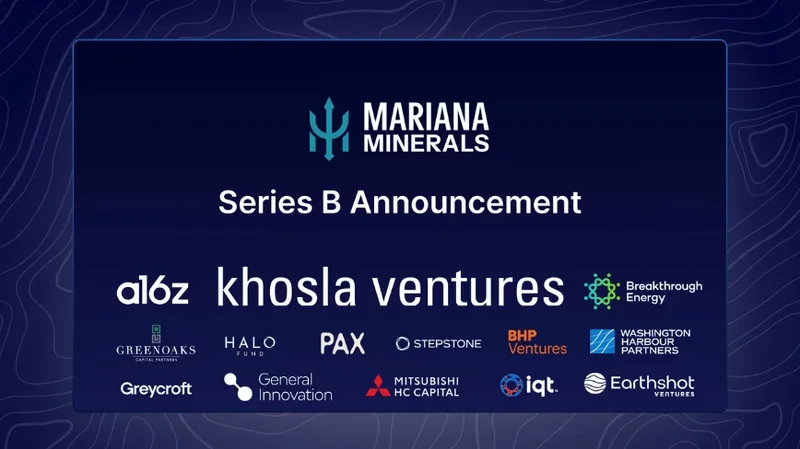
Mariana Minerals is not selling software to miners. It owns and runs the mines itself, using its own AI stack, it announced. Khosla Ventures led the Series B, with a16z and Breakthrough Energy returning. It takes the company’s total capital to about $400m, at a $1.5bn valuation, Fortune first reported.
The founders are an unusual mix. Chief executive Turner Caldwell ran Tesla’s metals and minerals team. His co-founders came from machine learning at Affirm and from energy project finance. That blend is the whole pitch. Fuse mining execution, software and capital, they argue, and you can build a mine in half the usual time.
Copper, lithium and a China problem
The urgency is geopolitical. China dominates global mining. It processes as much as 90% of the world’s critical minerals. For the rare-earth magnets in phones and weapons, that rises to 92%. AI is driving metal demand to unprecedented levels. That dependence is now a national-security problem, not just an economic one.
Mariana’s answer is two US sites. Copper One is an idled Utah mine Mariana bought last year. It restarted under autonomous software in four months, and is ramping toward 50,000 tonnes of refined copper a year. Lithium One in Texas aims to pull battery-grade lithium from oil-and-gas wastewater, with production targeted for 2027.
Copper is the tell. It is the chokepoint for electrification, and the AI-era grid is straining for it. “You cannot lead in the AI century without a domestic supply chain,” said Travis Kalanick. The former Uber boss now runs a robotics firm. It is the same logic pulling money into energy and grid hardware.
Software can’t dig the hole
The backer list is the signal. Alongside a16z and Khosla sit BHP, one of the world’s largest miners, and In-Q-Tel, the CIA’s venture arm. That is venture, industry and national security betting on one thesis. Whoever automates mining fastest helps decide who wins the AI build-out, and who stays dependent on China.
The caution comes built into the business. This is not SaaS. It is construction crews, processing plants and commodity prices, none of which software can conjure away. Copper One still has to scale an existing operation. Lithium One still has to bring a brand-new facility into commercial production. Both can slip.
Vinod Khosla frames the gap plainly. The minerals are there; the missing pieces, he says, are the will and the AI to extract them autonomously. Mariana wants ten commercial projects in ten years, each one training the software for the next. It is an elegant flywheel on a slide, and a very hard thing to build in the ground.
For now the money has decided the thesis is worth $1.5bn. The proof will not come in demos or decks. It will come in tonnes of copper and lithium, on schedule and at a cost that undercuts the incumbents. That is the number the next round has to beat.
Get the TNW newsletter
Get the most important tech news in your inbox each week.