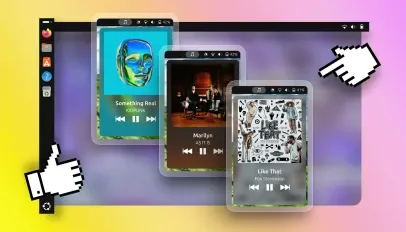
Dropbeat is a new riff on a old tune, a panel-based music applet for GNOME Shell that gives you an alternate way to pause, play and skip tracks in MPRIS-friendly Linux media players.
Applets of this ilk are legion, and this panel applet doesn’t do anything that different to ones you may have tried in the past or currently use (for all the bells and whistles, try the Dynamic Music Pill extension instead).
But it does do some things differently.
When installed, it adds a button to your panel that when clicked “shows a cool card to control your media player”, to quote the project’s GitHub.
Dropbeat uses imagemagick to generate the blurred canvas using the album art of the currently playing song. It then uses this as the backdrop for its panel applet and its ‘full screen’ mode.
An obvious downside to this approach is when you change track it often takes a moment for a blurred background to appear and the applet to catch up, which spoils the fun when skipping through tracks at pace, but hey: everyone’s a critic.
Secondly, clicking on the album art will enter a full-screen mode. Album art, track title and artist name writ large atop a blurred background:
Third and finally, it supports a configurable global shortcut to toggle open the card whenever you want to, without needing to mouse out of what you’re doing, which could be handy.
Of course, if you want to access other media player features, like favouriting tracks, changing volume or enabling shuffle or loop or seeking within the track itself, you’ll need to go into the app itself (or use an alternative applet).
At present, Dropbeat doesn’t have a way to bring the player to the fore, which is something other add-ons and apps do. It also doesn’t disable the stock GNOME Shell media controller when active, so you’ll still have that in the notification shade.
Does it do everything the built-in media widget in GNOME Shell does? Yes, but it does it in a moderately flashier way – and a bit of bling is never a bad thing, really.
If you’d enjoy using it, get it from the GNOME Extensions website via a web browser or (recommended) the Extensions Manager desktop app. It works with GNOME 48 through 50.