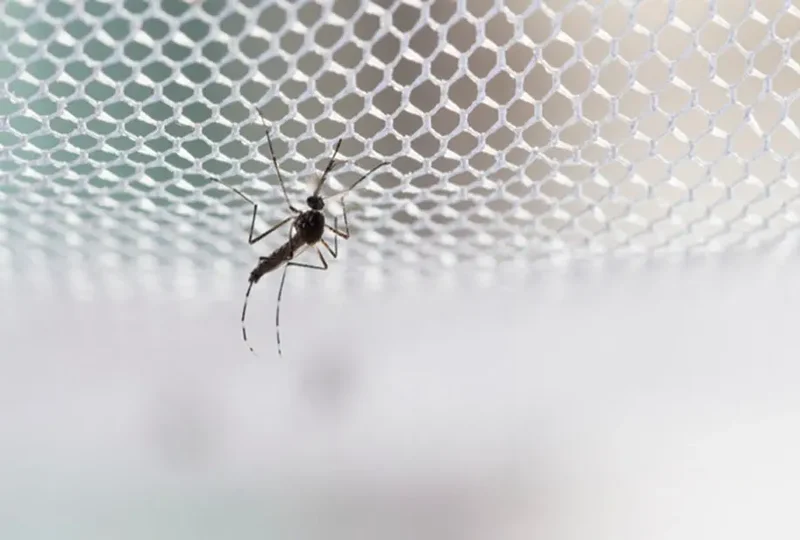
Climate change is reshaping Africa’s malaria map, increasing the risk of the disease in South Africa’s north-eastern provinces and the East African highlands even as warming temperatures make some of the continent's current malaria hotspots less suitable for transmission, according to a landmark study published in Nature.
The international study, co-authored by researchers from the University of Cape Town (UCT), is the most comprehensive assessment to date of how human-caused climate change has influenced childhood malaria across sub-Saharan Africa, where most global malaria cases and deaths occur.
The researchers found that climate change has slightly increased childhood malaria overall but its effects vary sharply across the continent. As temperatures rise, malaria transmission is projected to decline in some of today's hottest endemic regions while increasing in cooler parts of southern and East Africa that are becoming more suitable for the disease.
For South Africa, that means Limpopo, Mpumalanga and KwaZulu-Natal are expected to experience some of the largest increases in climate-driven malaria risk on the continent over the coming decades.
Co-author Dr Christopher Trisos, the director of the Climate Risk Lab and principal research officer at UCT’s African Climate and Development Initiative, said the provinces could see some of the largest increases in malaria risk from climate change in Africa by 2050.
The researchers estimate that historical human-caused climate change has caused 10.79 excess childhood malaria cases per 1 000 children in South Africa compared with a world without human-caused warming.
Under an intermediate emissions scenario, climate change is projected to contribute almost 10 additional cases per 1 000 children by 2050 and nearly 18 by the end of the century in South Africa.
Trisos said the study found a notable climate-driven increase in childhood malaria in Limpopo, Mpumalanga and KwaZulu-Natal attributable to human-caused climate change.
“That doesn’t necessarily mean that overall malaria in those provinces has gone up,” he told the Mail&Guardian. "We're looking at the climate change part of this.
"Climate change has caused an increase in malaria in those provinces and will cause an increase in the future but its effects are smaller than what we know effective intervention strategies can control today. With good planning and sufficient investment, it should be possible to adapt and prevent those increases."
Malaria is the world’s deadliest climate-sensitive infectious disease, with children carrying the greatest burden. About 95% of malaria cases occur in children aged two to 10 years, while children under five account for 80% of malaria deaths. Although malaria exists in many parts of the world, most cases occur in Africa.
Because mosquitoes and the malaria parasite are highly sensitive to temperature, transmission is most efficient at about 25°C. It becomes much less likely when temperatures fall below 16°C or rise above 34°C.
Historically, this has meant malaria has been concentrated in warmer parts of West and Central Africa, while cooler regions in Southern Africa and the East African highlands have experienced much lower transmission.
Until now, scientists have struggled to determine how much of the observed change in malaria has been caused specifically by human-driven climate change, as opposed to factors such as healthcare improvements, economic development and population growth.
To isolate climate change’s contribution, the scientists analysed more than 50 000 geolocated malaria blood surveys collected across sub-Saharan Africa spanning more than a century.
They modelled how temperature and rainfall affected malaria prevalence while accounting for factors such as healthcare, economic development and population change, before comparing today’s climate with a modelled world without human-caused warming.
The researchers say it is the first study to directly quantify the contribution of human-caused climate change to long-term changes in an infectious disease at population level.
They found that climate change has caused a slight overall increase in childhood malaria across sub-Saharan Africa — about one additional case per 1 000 children aged two to 10. Beneath the modest continental increase, however, are striking regional contrasts.
In West Africa, where temperatures are__ high__, additional warming is beginning to reduce malaria transmission by pushing conditions beyond the optimum temperature range for the parasite. In contrast, cooler regions, including Southern Africa and the East African highlands, are becoming increasingly suitable for malaria transmission as temperatures rise.
“It's not so hot that the mosquitoes can’t survive … it's just that the biology of the mosquito-parasite relationship is outside its optimum range,” Trisos explained.
Looking ahead, the study projects climate change will continue shifting malaria risk geographically.
Transmission is expected to decline in some of today’s hottest malaria-endemic regions while increasing in cooler southern and high-elevation areas, with parts of Southern Africa and the East African Rift Valley projected to experience increases of up to 20% by the end of the century under an intermediate emissions scenario.
Limiting global warming to below 2°C could substantially reduce these increases, preventing about five excess malaria cases per 1 000 children in southern Africa by 2100 compared with a higher-emissions pathway.
The study also found that warming temperatures are lengthening Southern Africa's malaria transmission season, with conditions remaining favourable later into the cooler winter months of June and July.
“South Africa has had malaria for a while,” Trisos said. “But what these results show is that we can expect that risk to increase because of human-caused climate change and so, at the provincial level, enhanced surveillance, enhanced planning and resourcing for malaria prevention and control is critical.”
Despite the projections, Trisos said the findings pointed to an opportunity for action rather than inevitability.