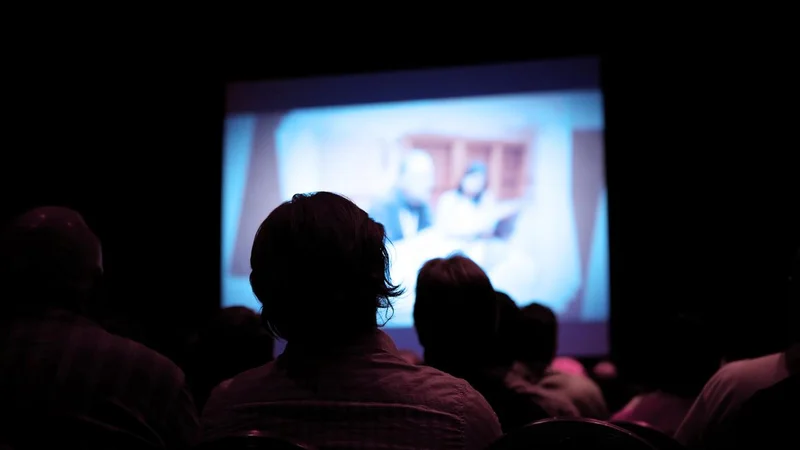
I was sitting in a cinema hall last year, watching a film with a group of 15 year olds. The story followed a boy going about his morning routine, entirely alone at home, quietly trying to brighten his own day. No dialogue for the first three minutes. Just images. Afterwards, a young girl said, “I never knew how to talk about what happens at home. But, watching this, I felt someone understood.” That sentence stayed with me.
We live in an age of information overload, yet our classrooms are quiet about the subjects that matter most: mental health, grief, bullying, identity, failure... The topics that shape who a child becomes are precisely the ones we are most reluctant to address directly. We talk around them. We distribute pamphlets. We invite counsellors for a 40-minute session once a year. Then we wonder why students don’t engage.
The data tells a sharper story. In a survey of 1,000 adolescents across eight Indian cities, nearly 38% reported social anxiety as their most prevalent daily struggle and 45% said their biggest burden was the communication gap with their own parents. Over a third exhibited low self-confidence. These are not abstract problems. They are sitting in the classrooms right now.
Narrative transportation
This is where cinema can help. Films reach where instruction cannot. Research shows that eight year olds retain nearly 90% of what they see in a film six weeks after viewing it. The number is the same three months later. More striking, a child’s attitude toward a social value can be measurably shifted by a single exposure to a well-crafted film. Not a term of lessons. Not a chapter. One film.
What cinema does, at its best, is create what researchers call narrative transportation or the state where a viewer is so immersed in a story that the emotional experience becomes real. When a child watches a character navigate peer pressure, sit with the shame of a lie, or find the courage to speak about something painful at home, they are not merely observing. They are rehearsingp and processing, at a safe distance, the situations their own lives will eventually demand from them.
Beyond the screening
This safe distance is not avoidance; it is access. For adolescents navigating identity, fear of failure, and the acute anxiety of being misunderstood, the distance that fiction provides is often the only door through which honest conversation becomes possible. But — and this is critical — film alone is not enough. Studies consistently show that the deeper impact comes from what happens in the room before and after the screening. Guided discussion. Structured reflection. The questions a good facilitator asks. When film is paired with dialogue and internalisation activities, students show significant improvements in self-esteem, emotional stability, social intelligence, and general well-being. The students who experience structured film-based learning diverge sharply from those who do not.
One teacher put it simply. “I would never have known my student was sensitive and mature. I only saw him as naughty and not so bright. The session helped me understand him better.” That shift in how a teacher sees a child may be the most underestimated outcome of all.
This is equally true beyond school. At the college level — where we expect young adults to navigate ethics, relationships, ambiguity, and systemic complexity — film remains a profoundly underused pedagogical tool. A film about a whistleblower teaches corporate responsibility better than a case study. A story about a first-generation student navigating class and aspiration teaches social inequality better than a lecture. Universities globally are beginning to embed film analysis into Medicine, Law, and Public Policy for precisely this reason.
There is a line from the research that I keep returning to: film used in a structured way becomes a powerful means of preparing children for life, not just for exams. That distinction, life versus exams, is everything. We have spent decades optimising our schools for one and neglecting the other. The result is students who can solve for x but cannot navigate a difficult conversation. Who can write a précis but cannot sit with someone else’s pain.
The darkened room of a cinema hall, it turns out, may be one of the brightest spaces a school can build. The question is not whether we can afford to bring films into our classrooms. It is whether we can afford not to.
The writer is Founder and Chief Learner, LXL Ideas, and Chairperson, The Association of International Schools of India (TAISI)
Published - August 01, 2026 08:30 pm IST