Syria has weighed on my mind for a long time: 15 years of trauma for its people and 15 years of failure in international engagement. I was directly involved in the latter – as a senior member of the United Nations’ Special Envoy’s Office, and later as head of UN OCHA – and so I cannot claim innocence before the Syrian people.
In my time at the UN, I had to attend numerous meetings with senior officials of Bashar al-Assad’s regime, including the Syrian president himself. Some would accuse me and the UN of maintaining this engagement as part of a trade to get better humanitarian access.
The truth is different. Humanitarian agencies and their officials always meet anyone who can either help or impede humanitarian assistance. It’s not a trade. It’s a necessity – as is also true of mediators always meeting the parties to conflict in their efforts to end it.
All of my many meetings with al-Assad were to press for the decisions he needed to take for the welfare of his people. He was one of many people with deplorable power to create and sustain suffering whom I had to meet in my five decades working as a diplomat.
On one occasion, back near the beginning of al-Assad’s hideous war in 2012, I was living in Damascus and conducting daily futile negotiations with the government on behalf of the UN. I always raised the issue of detentions. One day, the man across the table stopped the clock. “Switch off the microphones,” he said, “and put down your pens.” Then turned to me and said very simply: “Stop wasting your time on this. We will never let them out. Nor will we ever admit to this truth.”
In 2022, in a private meeting with al-Assad, I suggested that he should empty the jails. “Of course,” he replied. “I have already emptied them. There are no detainees there now!”
A year later, in the aftermath of the devastating earthquakes, I met al-Assad three times. My job was to persuade him to do the necessary and obvious things for the welfare and the rights of his people.
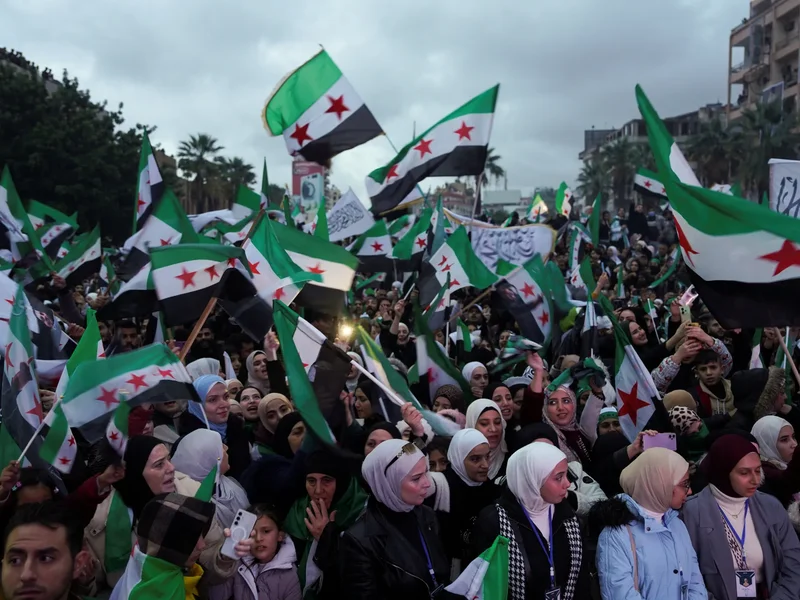
I can now say that my efforts signally failed. The Syrian people were saved by military action. The takeover of Damascus set the table for peace.
As someone who has devoted a lifetime to dialogue and negotiation, I find it a bitter truth that action, not talk, was what was needed – and that it was required all those years earlier.
I now understand that the international community’s original sin was to set aside regime change from the outset as the route to end Syria’s suffering. Instead, we had “Friends of Syria” – a grouping of mainly Western powers and regional allies – supporting the opposition to al-Assad but making almost no difference to the daily toll of detentions and deaths affecting almost every Syrian family.
The lies endured throughout Syria’s suffering.
The war has now ended. What remains now is building peace. And as we have seen in the recent spate of bombings in Damascus, there is no shortage of those who want to see Syria fail.
The main priority is to rebuild the economy. Year after year, under the combined weight of war, sanctions and economic collapse, the people of Syria became steadily poorer. Today, two-thirds live in extreme poverty. And this is in a country of great talent and evident importance to its neighbours.
Aid is arriving, but as everywhere, it is sliced thinly. Gulf countries and EU member states are still giving. But I know well from my humanitarian work that a sustainable response to Syria’s crises has to come in the form of private investment in the economy.
Whether it be in banking, energy, construction, food processing, agribusiness and light manufacturing, Syria has tremendous potential for growth. Expatriate capital could help spearhead recovery, but significant global capital and technical support would still be needed.
Two problems remain: the removal of the last sanctions, long overdue and still a threat to building peace; and the management of risk for investors.
The United States’ recent announcement that it will delist Syria as a “state sponsor of terror” goes a long way in helping with the first point.
The second one remains a major challenge. A senior ambassador in Damascus told me recently that while there is international consensus to support Syria, the country still cannot offer predictable rules and legal protections that make investment possible.
The Syrian government needs to create a safer environment for investment, making Syria worth the risk, and to do so through well-thought-out legislation, not decrees or promises. Its capacity to follow through on declared commitments remains, sadly, limited. Too often bureaucratic inertia and official indecision are choking off opportunities. It needs to act publicly, inclusively and decisively.
The importance of this cannot be overstated. The country is pivotal to the stability of the region. This has always been true, and never more so than now amid escalating conflicts in the Middle East.
The views expressed in this article are the author’s own and do not necessarily reflect Al Jazeera’s editorial stance.