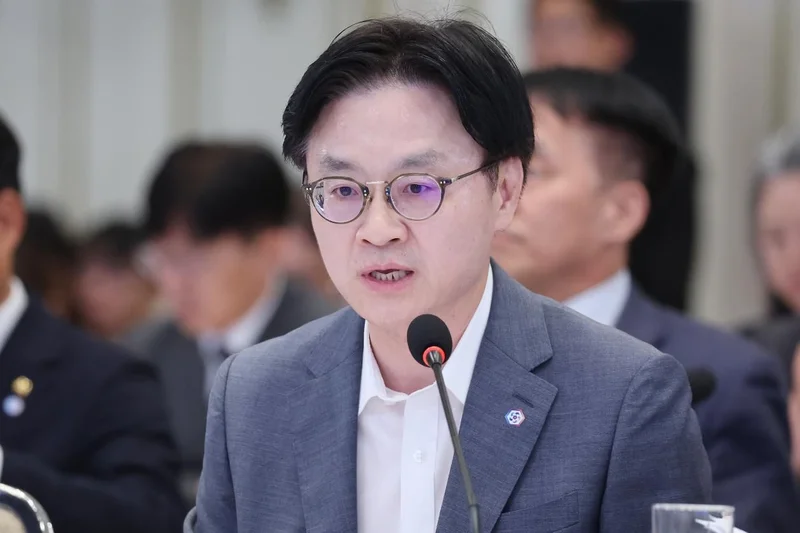
Korea will review joining the Comprehensive and Progressive Agreement for Trans-Pacific Partnership (CPTPP) to broaden its trade network and reduce reliance on traditional export markets, Industry Minister Kim Jung-kwan said Tuesday.
In a policy briefing to President Lee Jae Myung, Kim identified the review as a key agenda item for the second half of this year.
“We will review joining the CPTPP to secure new markets, such as the Association of Southeast Asian Nations and Mexico, and accelerate exports of K-content and consumer goods,” Kim said.
He stressed that the government would “fully gather opinions from interested parties, including the agricultural and fisheries sectors and the National Assembly,” acknowledging the sensitivity of the trade pact for domestic producers.
The CPTPP is one of the world's largest free trade agreements, comprising 12 economies and reducing or eliminating tariffs on most goods traded among its members while establishing common rules for trade, investment and digital commerce. Its 12 members are Japan, Australia, Canada, Mexico, the United Kingdom, Singapore, Vietnam, Malaysia, Chile, Peru, New Zealand and Brunei.
The proposed review comes as the Lee administration seeks to diversify export destinations amid rising geopolitical uncertainty and slowing global trade.
The move is part of the Ministry of Trade, Industry and Resources’ broader policy goal of expanding Korea’s economic footprint overseas.
Under the strategy, the government plans to strengthen trade ties across multiple regions to address growing uncertainties facing Korean businesses.
In Europe, Seoul will reduce trade-related uncertainty affecting Korean companies, the ministry said. In the Middle East, the government will seek new business opportunities in postwar reconstruction, including high-value plant construction projects.
The ministry also plans to conclude follow-up negotiations on the services and investment chapter of the Korea-China Free Trade Agreement and push to establish a dedicated industrial complex for Korean companies in India.
Cooperation with the United States will focus on strategic industries, such as shipbuilding and nuclear power, while partnerships with South American countries will center on securing critical minerals needed for advanced manufacturing and energy transition.
Kim also highlighted the significance of the president's recent trip to South America, describing it as a key opportunity to advance the ministry's trade and industrial agenda.
“It would not be an exaggeration to say that the president’s visit to South America was, in many ways, made for the work of the industry ministry,” Kim said. “We will do our utmost to deliver tangible results that match that opportunity.”