An Australian company founded by a survivor of childhood abuse is bringing a machine-learning system to childcare centres to flag children who may be at risk of harm, as the sector grapples with balancing young people’s privacy against a need to keep them safe.
The warning system’s rollout in daycares across the country comes as the sector undergoes its biggest safety overhaul since the national quality framework began.
The company says its eponymously named SAFE system is already in use in more than 1000 early childhood services. Educators log everyday observations – a bruise, a missed meal, a parent affected by drugs at pick-up – and the machine-learning model turns those fragments into a live picture of which children may be most at risk. Parents are not asked to opt in; the company says consent is given when families enrol their kids to a daycare and agree to its professional systems.
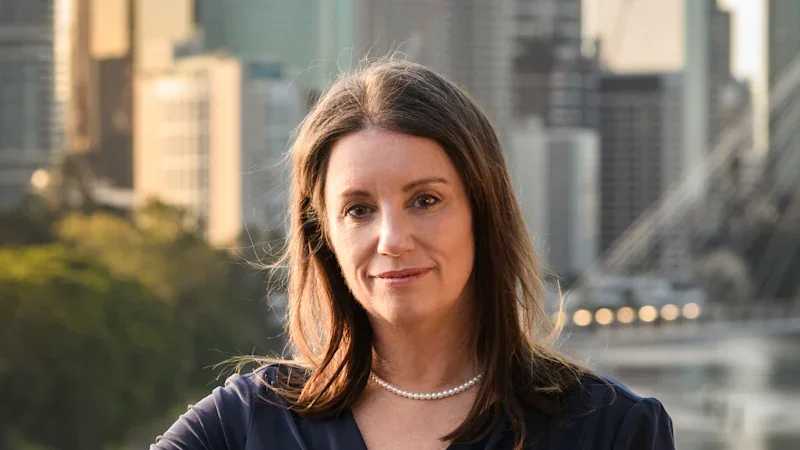
Chief executive Ruby O’Rourke, a longtime children’s rights campaigner who ran for federal parliament in 2019, built the company after a childhood shaped by forced adoption, domestic violence and abuse that, she says, culminated in a family member holding her under the water at a Melbourne creek. Passersby revived her. The family member was never charged.
Her argument is that none of it was invisible. “The schools, the Brownies, the Girl Guides, all of these signals were missed,” she said. Neighbours told her years later that they had heard her scream, and done nothing.
“If I’m going to leave my life with anything,” she said, “it’s knowing the next generation has this layer of SAFE sitting under the surface” – what she calls a “flight control tower” for children at severe risk.
O’Rourke began building childcare software in the mid-2000s; the predictive layer started in 2012 with NICTA, the country’s former information and communications technology research centre that is now part of the CSIRO.
Co-founder David Salajan describes SAFE as a machine paired with human reviewers.
“It’s just an observation, no matter how big or small,” he said. The software returns a risk score and guidance on whether a concern meets the mandatory reporting threshold; every case is then reviewed by former child protection workers. A national dashboard, seen by SAFE’s team rather than the daycare centre staff, triages every case so they can see which children are at highest risk.
The pitch lands at a volatile moment for the childcare sector. Changes to national laws governing the industry took effect on February 27, making children’s safety the paramount legal consideration, creating a workers’ register and mandating carers to attend child safety training by August 27. A $226 million government package also funds a national CCTV trial.
The overhaul follows recent abuse cases such as that of Queensland worker Ashley Paul Griffith, jailed for life in 2024 over 307 offences against 73 children. In Sydney, daycare worker Hamish Alexander Edward Tait was arrested last month, facing more than 320 charges over his alleged abuse of 150 children under his care.
Those cases involved alleged abuse at childcare centres though, rather than abuse elsewhere detected by an educator. The SAFE system also raises privacy concerns: a private company holds a live, prioritised register of children it deems most at risk, plus behavioural records on about 200,000 workers in the childcare industry.
The Office of the Australian Information Commissioner would not comment on SAFE, but a spokesperson said behavioural information about a child in a care setting may count as personal – and sometimes sensitive – information under the Privacy Act, carrying obligations to collect only what is necessary, keep it secure and not reuse it. Whether an enrolment agreement amounts to valid consent depends on how it is worded, the spokesperson said, adding that consent should be “informed, current, specific and voluntary”, especially for children’s information.
The regulator is also drawing up a Children’s Online Privacy Code, due by December 10, expected to cover most online services used in early childhood settings. It would require information to be handled in a child’s best interests, with a parent’s consent necessary for children under 15.
Carol Matthews, NSW/ACT branch secretary of the Independent Education Union, which represents early childhood care staff, said for-profit software was “no substitute for a comprehensive focus on child safety at every centre”. The union backed the regulatory reforms over the past year, but was wary of the technology.
“Machine learning takes the risk of a privacy breach to a whole new level,” Matthews said, warning that many services may not be equipped to safeguard the data. She urged employers to consult staff before rolling out any such platform.
O’Rourke dismissed concerns that the machine-learning system could entrench bias given the data it’s working with is based on childcare workers’ observations. SAFE does not identify children by ethnicity, socioeconomic background or disability, she said, and its signals are “continuously reviewed by child protection experts to identify and prevent bias, not enshrine it”. However, the observations that feed the warning system are human judgments.
She likens it to a blood test: the machine records the markers, but a qualified professional interprets them, and no action follows until her review team validates the case.
A NSW parliamentary inquiry this year recommended a database to track problematic staff behaviour in childcare centres and foster stronger intelligence-sharing between regulators, police and screening bodies – which is close to what SAFE is pitching. But the same committee was wary of technological fixes, warning that CCTV “should not be relied upon” and was no substitute for staffing and supervision.
Tamara Hughes, head of safeguarding at Save the Children, said Australia’s problem was not a lack of knowledge about cases but sustained action. “A child’s safety should not depend on where they live, who they come into contact with, or their background,” she said.
For O’Rourke, the bottom line is simpler. While the childcare industry homed in on early childhood education standards, care and safety were left as an afterthought. “We’ve got the priority wrong.”
The Business Briefing newsletter delivers major stories, exclusive coverage and expert opinion. Sign up to get it every weekday morning.