The story so far
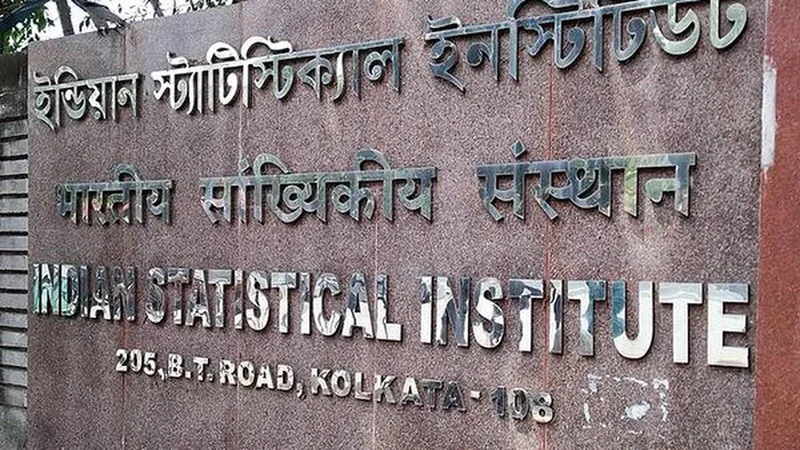
The government has tabled a new Bill in Parliament, called the Indian Statistical Institute Bill, 2026, which will replace its approximately 67-year-old predecessor that was enacted in 1959. While seemingly innocuous, several of the provisions of the Bill have become contentious, with several faculty members of the Indian Statistical Institute (ISI) and MPs protesting against it.
What is the Indian Statistical Institute?
In the 1920s, India’s greatest statistician P.C. Mahalanobis set up the Statistical Laboratory in the Presidency College in Kolkata. On December 17, 1931, he founded the Indian Statistical Institute as a “learned society” housed in the Statistical Laboratory. The Institute was registered on April 28, 1932, as a non-profit distributing learned society under the Societies Registration Act of 1860 and is now registered under the West Bengal Societies Registration Act of 1961 amended in 1964.
The ISI quickly became India’s premier statistical organisation, spearheading statistical research and data collection, and training generation after generation of statisticians. It was declared an Institution of National Importance through the Indian Statistical Institute Act, 1959.
What does the new Bill seek to change?
At the most basic, the new Bill seeks to bring ISI’s governance structure at par with that of other Institutions of National Importance, such as the Indian Institutes of Management (IIMs) and the Indian Institutes of Technology (IITs).
According to the government, in the IITs and IIMs, compact empowered bodies such as the Board of Governors and executives such as Directors take decisions impacting both the day-to-day functioning as well as the long-term policies of the organisations. However, ISI continues to follow the governance model of a society, in which significant control is exercised by a large General Body of members of the society, which currently numbers more than 1,000 members.
A key outcome of this structure is that any amendment to the regulations can only be carried out with the approval of the General Body. That is, only those changes that are approved by three-fourths of the members voting can be adopted.
The government’s contention is that since the regulations are prescriptive, even small reforms require the approval of the General Body.
“In the past fifty years, no significant changes have been introduced in Society instruments towards reforming the Institute,” the government said in a note when it first mooted the new Bill. “Thus, the existing society-based governance model has limited potential for institutional reform and growth.”
Therefore, the new Bill is aimed at incorporating ISI into a statutory body corporate, strengthening its legal status and providing a “more robust and contemporary governance framework”.
All the assets, liabilities, employees, and ongoing academic programmes of the existing society will be expressly preserved and transferred to the new statutory Institute while ensuring continuity of service conditions and previous protections, the government said.
What will the new governance model be?
The new Bill provides for the creation of a compact Board of Governors that will serve as the principal policy-making executive body of the ISI and will be accountable to the Union government. It also provides for the creation of an Academic Council as the principal academic body of the Institute.
Also read: The work of Indian Statistical Institute
The Board of Governors will consist of 11 members. The Board will be headed by a Chairperson, who is supposed to be an eminent person “in the field of academia, industry, education, public policy, Statistical Sciences and allied sciences, or other fields” and will be nominated by the Visitor (the President of India) on the recommendation of the Central Government.
Apart from the Chairperson, the government will nominate a government official not below the level of Joint Secretary to the Government of India. The government’s representation will further include another joint secretary or additional secretary.
The Board will include four eminent persons in the field of statistical sciences and allied fields, to be nominated by the Chairperson, four representatives of the Institute who will include two members of the Academic Council to be nominated by the Board.
The Registrar of ISI will serve as the Secretary of the Board.
In total, the central government will have a direct hand in appointing three members of the Board, including the Chairperson. The Chairperson, in turn, will have a direct hand in appointing at least five other members of the Board.
Separately, the Bill proposes that the Academic Council be the main academic body, with wide-ranging responsibilities for setting courses, eligibility norms, examination systems, and ensuring the promotion of interdisciplinary research. All full-time faculty at the level of Professors and a defined number of other full-time faculty will be members of the Academic Council.
What is the controversy around the governance structure?
Ever since the draft Bill was made public last year, professors and officials of ISI have been protesting it. One main contention is that the new governance structure would wrest control of ISI from the people working there and place it in the hands of the central government.
The new structure does give the Centre direct or indirect control of eight out of the 11 members of the Board of Governors.
Were stakeholders adequately consulted?
The critics also say that the Bill has been prepared without consultations with the ISI Society, faculty members, students, or other stakeholders.
The government, for its part, has argued that as per the review framework in the existing ISI Act, four Review Committees (RCs) have from time to time examined the functioning and progress of ISI and each have recommended various reforms and pointed out legacy issues that need to be addressed.
The second, third and fourth RCs suggested the reduction in size of the ISI Council, the government said. Despite this, the size of the Governing Council of ISI increased over this period and currently numbers 33 members.
The fourth RC also pointed to certain structural and legacy issues including a high reliance on elections for decision-making posts rather than merit-based appointments.
Following this, the government said a brainstorming session had been organised by the Ministry of Statistics and Programme Implementation on July 2, 2025, in collaboration with the ISI at the Jawaharlal Nehru Centre for Advanced Scientific Research in Bengaluru under the Chairpersonship of Dr. K. Radhakrishnan, the current Chairman of the ISI Governing Council.
The aim of this brainstorming session was to “deliberate on pathways that can transform ISI into a world-class centre of learning and research, as it completes 100 years in 2031”.
The government said that the President of the ISI Society, the Chairman of the National Statistical Commission, the Vice-Chairman of Niti Aayog, Principal Scientific Advisor to the Government of India, and former Directors of ISI, IITs, IIMs, current Directors of the Indian Institute of Science, and various ISI alumni attended the session and took part.
Further, the government said, as per the pre-legislative consultation policy, comments and suggestions from the public on the draft Bill were invited and the timelines for these were extended in line with the requests of various stakeholders.
What is the controversy around the location of the ISI?
Some professors of ISI have also argued that, while the existing version of the Act provides for Kolkata (Calcutta at the time) as being the headquarters of the ISI, the new version does not do this. This has led to apprehensions that the government plans to change the headquarters of the ISI.
The government has categorically denied this.
“There is no such proposal under consideration to shift the location of ISI’s headquarters from Kolkata,” the government said in its note.
However, the texts of the old Act and the new Bill show that there is a difference in how they address the issue of location.
The text of the old Act says it is meant to declare the institution known as the Indian Statistical Institute “having at present its registered office in Calcutta” to be an institution of national importance.
The new Bill tabled in Parliament on Monday (August 3, 2026) says the ISI was declared an institution of national importance through the Indian Statistical Institute Act, 1959 and is “presently a society registered under the West Bengal Societies Registration Act, 1961”. That is, there is no mention of headquarters in the new Bill.
Published - August 04, 2026 01:02 pm IST