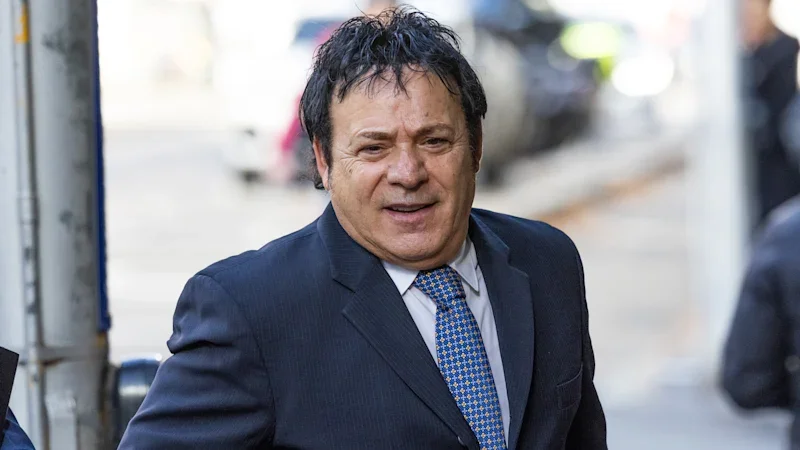
This week the public learnt the identity of a rapist. The man, Ralph Carr, was convicted last week by a jury of one count of sexual assault and two of rape dating back to 2023. Carr had pleaded not guilty. He had sought and been granted a suppression order on his name.
Thus, for three years, as the case went through the courts, the public had no idea of his identity, his age, or the industry in which he worked. He was only a well-known Melbourne businessman. On Monday, a judge ordered the suppression order be lifted after Carr said he would not be seeking its continuance. His lawyers say he will be appealing his conviction.
Carr’s is not an isolated case in relation to those applying for and being granted a suppression order. As the Open Courts Act section 18 stands at present, he and his legal team were merely using one line in it.
Tom Silvagni and his legal team used the same method to suppress his name while his rape case went through the courts. Silvagni was found guilty of rape last year, and his identity was revealed. He is appealing. On Tuesday, a doctor accused of filming women and children at a public pool could finally be identified after two rounds of legal wrangling after claiming his child’s mental health would suffer if he were named. That case continues.
While section 18 covers several reasons that an order should be given for the proper administration of justice, (1) C states that an order should be considered “to protect the safety of any person”. This is the hole in the dyke from which a flood of suppression orders has been sought and granted. In Victoria, 477 orders, in various forms, were given last year. The highest number were issued on the basis of safety for the accused, including their mental health.
While the mental health of anyone is a legitimate concern, justice must be seen to be done. It beggars belief that the grounds for these orders were so compelling as to be granted. Suppression should not be a shield against such disclosure, nor a blind from witnessing the open administration of justice.
The state government is reviewing suppression orders. Last March, The Age and other media outlets wrote to Attorney-General Sonya Kilkenny calling for the (1) C line to be revised. Kilkenny said she was looking into the issue “with some urgency”. The word “some” seems to be the fulcrum on which Kilkenny’s urgency swings.
Following this week’s decision on Carr, shadow attorney-general James Newbury said Victorians were sick of living in the “suppression order capital of Australia”. The opposition, if elected, would restrict suppression orders to genuine physical safety reasons. The new premier, Ben Carroll, has been quick to stamp his mark on the government, and perhaps this issue is another opportunity.
Robert Clark, who as attorney-general, introduced the Open Courts Act in 2013, has criticised the way lawyers and defendants have used the legislation. “The safety ground for a suppression order was about protecting people from threats of violence or similar, not about claims of psychological distress,” he has said.
We agree. Jason Bosland, an associate professor at the University of Melbourne’s law school, recently wrote in The Conversation of the need to tighten suppression orders “being made to prohibit the publication of an accused’s identity based on the mental health consequences of publicity (as in the Silvagni case). Such orders fall short of public expectations. They create a perception (if not a reality) that those with the financial means to hire expensive lawyers and to pay for psychiatric reports obtain special treatment in our courts”.
Special treatment is anathema to the justice system. If, as a society, we are to uphold the principle that all are equal before the law, then it follows that this suppression loophole must be closed. Urgently, if you don’t mind, minister.