The Galaxy Z Fold 8 is almost perfect. I just wish it wasn’t a foldable
Aug 4, 2026 — 6:00 AM ET
I miss small phones. I know I’m not alone; even though the latest and greatest handsets from the world’s top tech companies keep growing larger and larger, you don’t need to look far for people lamenting the disappearance of sub-6-inch handsets.
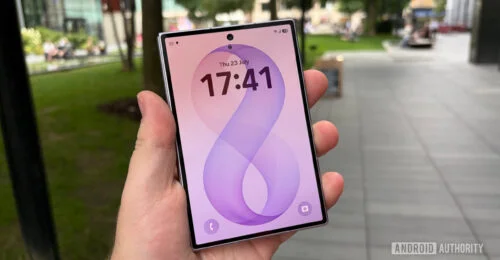
So it’s confusing, therefore, to be thinking of this as I write about the Samsung Galaxy Z Fold 8. It’s a foldable phone designed to expand on demand into a miniature tablet. Except when you look at it from the right angle, it’s a fully functioning small phone that happens to fold into a tablet-sized screen.
Is the foldable functionality cool? Certainly. But if you ask me, the Z Fold 8 would be better off without it.
Would you buy a non-folding Android phone with the Fold 8's cover screen?
Sometimes a cover is all you need
While Samsung is quite proud of the 7.6-inch main display within the Galaxy Z Fold 8, I found myself weirdly drawn to the 5.5-inch front screen more often. It’s small for a modern phone, but unlike the cover screen you may have seen on many flip foldables, it can be used with any regular Android app.
The 16:10 aspect ratio makes the Z Fold 8 easy to use with one hand. I don’t have the longest fingers, but it doesn’t take much adjustment for me to tap any part of the screen with my thumb. But despite this, it isn’t cramped — I can happily type messages or even work in Google Docs from the cover screen.
16:10 also means that basically all online videos fit nicely within its borders. Whether you’re scrolling through TikTok vertically or viewing more traditional horizontal Netflix shows, you have just enough space for your hands to grip the phone without spoiling the view.
Manageable limitations
Unfortunately, most apps are not designed for such an aspect ratio. Typical phones are designed to be longer and narrower than this panel, which can result in odd-looking interfaces. Hopefully, this is something that can change over time as app developers adapt to Samsung’s new phone. This didn’t happen with older passport-style foldables like the first Google Pixel Fold, but Samsung’s a bigger player. Plus, if Apple does bring out a similarly shaped foldable later this year, that would definitely galvanize the mobile app community into making changes.
The inside screen of the Galaxy Z Fold 8 doesn’t have as much impact on using this phone without opening it as you might think, though. Weighing 201 grams, the Z Fold 8 is heavier than bar-shaped small phones of the past, but it’s still light among contemporary smartphones, especially for a foldable.
Even the total thickness is only a millimeter or two higher than that of the older models. So, having the inner foldable screen available whenever you would truly benefit from it feels like a real bonus.
A folding flashback
There are only a handful of phones still on sale with a display under 6 inches. And that number’s been sharply decreasing over the past few years. While I am happy using larger Ultra, XL, or Pro Max phones, I still appreciate a device like the 5.9-inch Asus Zenfone 10, or the iPhone 13 mini, for offering flagship-level power in something small — even though these handsets are now several years old.
A small phone purist would still say that the short, squat cover screen of the Z Fold 8 is still too large. It’s bigger than the 5.3-inch Galaxy Note, the first “phablet” that launched in 2012. But unless you’re going to try and live out of a smartwatch, this is probably as small as we can hope for for the time being.
I don’t recommend anyone buy the Galaxy Z Fold 8 to use primarily for its outer screen. It’s far too expensive as it is, let alone if you only minimally use the main reason for that high cost. Which is why I think Samsung needs to make a non-folding phone with this 5.5-inch AMOLED panel.
A fully functional product just waiting to be made official
Keeping this screen as only the second fiddle to the folding screen inside the Galaxy Z Fold 8 would be a tremendous waste of work. But as we start to classify 6-inch phones as “small”, and as upgrades are focused more and more on genAI-powered software features, now is the perfect time to debut a Galaxy S Mini or Galaxy S Lite (though I’ll leave the branding up to Samsung).
Considering the rumors we have been hearing about the super-high preorder sales of the Galaxy Z Fold 8, Samsung seems to be onto a winning formula. And I reckon the small footprint of the Z Fold 8, combined with its full-sized performance, is what is capturing people as much as its novel folding phone form.