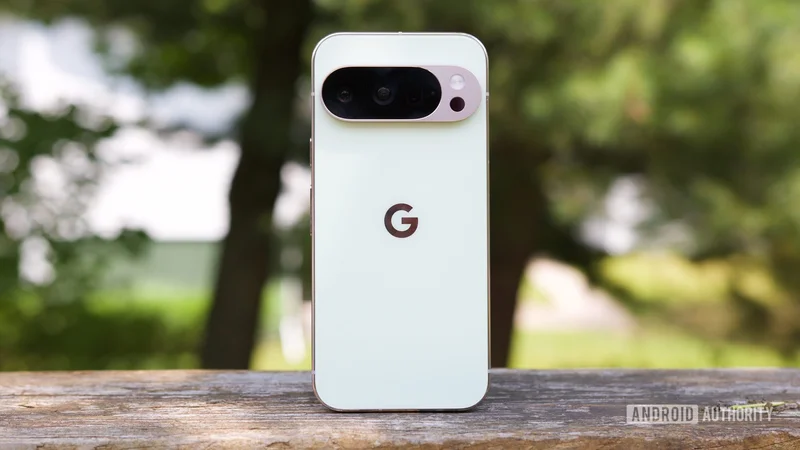
After a year with the Pixel 10 Pro, here's why I won't buy the Pixel 11 Pro
Aug 4, 2026 — 6:30 AM ET
I’ve carried both the Pixel 9 Pro and Pixel 10 Pro as my daily drivers since they launched. In fact, I’ve used every single Pixel phone ever made, and I still think Google offers the best Android experience you can buy today. So when Google confirmed its annual Made by Google event for August 12, I was genuinely excited.
On paper, the Pixel 11 Pro looks like a pretty significant overhaul. In fact, between the process switch and the new modem, it could be Google’s biggest under-the-hood hardware overhaul in years. The problem is that it arrives at a point where upgrading from a recent Pixel flagship simply doesn’t make much sense for me.
Do you plan on getting any of the new Pixel 11 phones?
A decent enough overhaul on paper
From everything we’ve seen so far, the Pixel 11 Pro addresses many of the long-standing complaints about Tensor-powered Pixels. It reportedly brings a more efficient Tensor G6 chip built on TSMC’s 2nm process, a long-awaited switch to a MediaTek modem, and a handful of refinements across the display, cameras, and battery life. If you’re upgrading from a Pixel 7 or even a Pixel 8, those changes could be worth the upgrade.
But for anyone who purchased a Pixel over the last two years, I don’t think they’re worth another $1,100. Not by far.
Before we even get to the new hardware, there’s the price to consider. Google is reportedly dropping the 128GB storage option for the Pixel 11 Pro, making 256GB the new entry-level configuration. That’s a welcome move in isolation. 128GB shouldn’t even be an option in 2026. However, it also pushes the starting price to a rumored $1,099.
Yes, you’re getting more storage, but you’re also paying $100 more just to get in the door. Meanwhile, what makes that price even harder to justify is yet another rumored change. While the higher-capacity models are expected to ship with 16GB of RAM, the base 256GB version may come with just 12GB — a downgrade compared to the Pixel 10 Pro.
If you bought a Pixel in the last two years, I don't think the Pixel 11 Pro makes a compelling case for itself.
To be fair, there is a wider industry context here. The ongoing RAM crisis and the rising price of components mean Google is likely trying to keep prices in check by limiting the amount of RAM on the base unit. Still, even as an effort to manage rising component prices, it feels like an odd compromise for a phone that Google markets around AI capabilities.
More RAM means more headroom for on-device AI features, multitasking, and keeping apps running in the background. It also means future-proofing. Locking the full 16GB experience behind a more expensive storage tier doesn’t sit right with me, especially when you’re already paying flagship prices. Nor does it make sense for a phone that is built around AI and longevity as a tentpole feature.
Google is finally fixing Tensor’s biggest weaknesses
I started by saying that, on paper, the Pixel 11 Pro is a pretty significant upgrade. However, the biggest upgrades in the Pixel 11 Pro aren’t ones you’ll immediately notice. By all measures, there are no real headlining features or system sellers here.
Google is reportedly moving Tensor to TSMC’s 2nm manufacturing process and replacing Samsung’s modem with MediaTek’s M90. Together, those changes should improve efficiency, reduce heat, and extend battery life — all areas where previous Pixel generations have struggled.
The Pixel 11 Pro looks set to fix Tensor's biggest weaknesses, but the Pixel 10 Pro feels good enough.
That’s great news, especially when you factor in that Google will need every bit of that efficiency. Leaks suggest the physical battery is actually shrinking slightly to 4,850 mAh, placing the burden purely on the new 2nm node to keep things moving along while sipping juice.
The thing is, Google had already made decent strides with the Pixel 10 Pro to fix those issues. My older Tensor phones would run pretty hot and drain battery faster than I’d like. Those issues have become far less noticeable over the last two generations.
What, however, would’ve made for a compelling upgrade would’ve been a larger battery. At a time when vivo and OPPO are equipping flagships with 7,000mAh and larger batteries, taking a step back is an odd move, to say the least.
I’m sure the Pixel 11 Pro will be better than the Pixel 10 Pro, but it’s improving an experience that is already good enough on my current phone, and making zero efforts to be truly competitive. Coasting along is just not enough of an upgrade to justify splurging an additional $1,100.
Gimmicks can’t sell a phone
Of course, it wouldn’t be Google if it didn’t introduce a fun little gimmick. Remember the thermometer? This time around, there’s Pixel Glow or HiLight, as it might be named. The feature sounds like a fun addition, giving Gemini and notifications a way to grab your attention through a lighting system embedded in the camera bar. But it’s also something I know I’ll probably appreciate for a week before forgetting it’s there. After all, if rumors are anything to go by, it’s really just a glorified notification light. Heck, even the Nothing Phone’s seemingly more capable Glyph interface barely moved the needle.
A glowing LED sounds fun, but I suspect it'll be another feature I'll forget about after a week.
Elsewhere, the display is expected to get a little brighter, but the Pixel 10 Pro is already excellent outdoors. Camera hardware is also expected to remain largely unchanged, with Google instead focusing on a new image processing coprocessor to speed up features like Night Sight and HDR video. The fact of the matter is that at a time when rivals are genuinely experimenting with large camera sensors and attachable lenses, faster processing just isn’t something I can get excited about.
Those improvements are certainly welcome, but they don’t fundamentally change the imaging experience. My Pixel 10 Pro already takes decent photos, and I rarely wish image processing were any faster. It would take much more than that to convince me to shell out flagship prices.
I’m sitting this one out
Google’s biggest strengths have never been raw benchmark numbers or charging speed. While rumors do point to a welcome bump to 45W wired charging this year, combined with the other changes, it’s not enough to shift the equation.
Sometimes the smartest upgrade is no upgrade.
None of this is meant as criticism of the Pixel 11 Pro itself. It’ll probably be an excellent phone in its own right. If you’re upgrading from a Pixel 7, Pixel 8, or an older Android phone, I think the Pixel 11 Pro could be an easy recommendation. The combination of better efficiency, an improved modem, and Google’s consistently excellent software should make for a fantastic phone.
But that’s exactly why I’m skipping it.
My Pixel 10 Pro still does everything I need it to do. It runs every Gemini feature smoothly, takes some of the best photos I’ve captured on a smartphone, and comfortably lasts through a full day. The Pixel 11 Pro may very well be Google’s best phone yet, but this feels like one of those years where the smartest upgrade is no upgrade at all.