’s student-led “cockroach” protests, which began as anger over alleged entrance exam leaks, are now becoming a broader test of whether Prime Minister
’s government can contain young Indians’ frustration over education, jobs and accountability.
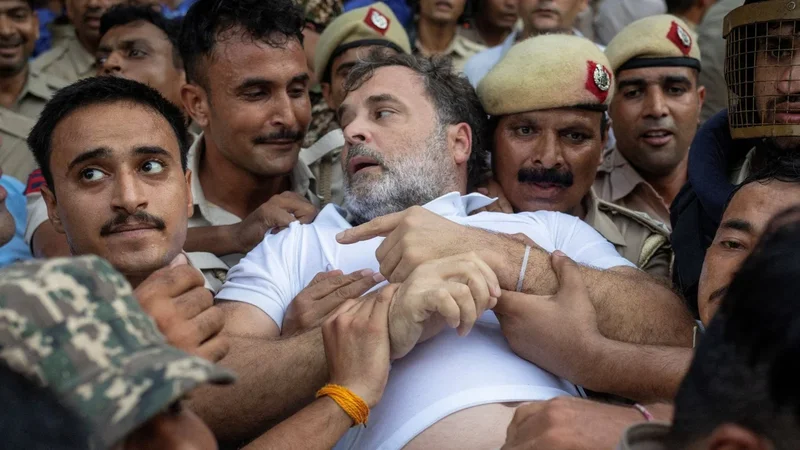
The fast-growing movement gained political momentum on Tuesday when opposition leader Rahul Gandhi of the Congress party and his sister Priyanka Gandhi Vadra were forcibly removed after a gathering with about 100 fellow lawmakers outside Modi’s residence to condemn the use of force against student protesters.
Analysts say the protests have exposed a rare opening for the opposition: a youth grievance that cuts across party lines, speaks directly to middle-class anxieties over opportunity and fairness and puts pressure on a ruling party more used to setting the political agenda.
Police detain demonstrators during a sit-in outside Prime Minister Narendra Modi’s residence in New Delhi, India, on Tuesday. Photo: Reuters
The intervention by opposition politicians followed
in central Delhi on Monday, when thousands of protesters tried to march towards parliament to demand the resignation of Education Minister Dharmendra Pradhan.
Delhi police said nearly 180 people were injured, including 60 protesters and 118 police and security personnel.
By then, prominent activist Sonam Wangchuk had already been hospitalised on Saturday after a three-week hunger strike over demands for education reform, which added national visibility to a protest movement driven largely by students.
The protests, led by the Cockroach Janta Party (CJP), started following allegations of question paper leaks for the National Eligibility Entrance Test (NEET), one of India’s most competitive exams for aspiring doctors.