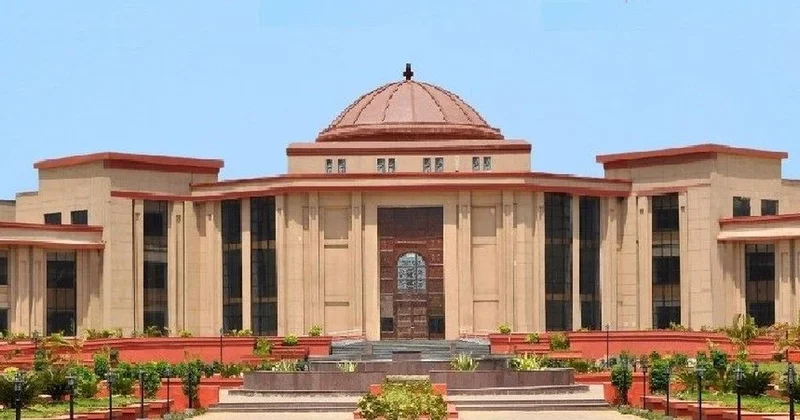
The Chhattisgarh High Court has observed that allegations of tampering with the answer sheet of a candidate of the 2026 National Eligibility-cum-Entrance Test cannot be accepted solely on the basis of suspicion, conjecture or subjective belief in the absence of evidence, The Indian Express reported on Tuesday.
A bench led by Chief Justice Ramesh Sinha dismissed the candidate’s petition, holding that judicial interference in the evaluation process based only on a person’s apprehensions would undermine the certainty, sanctity and finality of the examination system.
The court was hearing a petition filed by a candidate who appeared in the undergraduate NEET re-examination held on June 21 after the original test was cancelled following alleged paper leaks. The results of the re-examination were declared on July 16.
Subsequently, some candidates alleged that the optical mark recognition answer sheets uploaded against their roll numbers did not belong to them, had been interchanged or showed fewer attempted answers than they had marked.
Optical mark recognition is a system that reads answers marked by candidates by detecting filled bubbles or marks on an answer sheet.
The National Testing Agency, which conducts the exam, had said at the time that it examined each representation individually and found that its official records were consistent in every case it had reviewed.
It had also said that genuine answer sheets held by the agency carried the correct roll number, booklet number, barcode, candidate details, signatures, thumb impression and invigilators’ signatures, and that the declared scores matched the official answer key and evaluation records.
In his petition, the candidate claimed that after downloading the scanned OMR sheet uploaded by the agency, he found that while the booklet number, roll number and signatures matched his own, several answers shown on the scanned sheet were different from those he had marked during the examination, The Indian Express reported.
He argued that the scanned OMR sheet contained ink marks extending beyond the answer bubbles, which was inconsistent with the manner in which he ordinarily filled answer sheets. He further submitted that after noticing the discrepancies, he emailed the authorities requesting that the original OMR sheet be made available for verification. However, despite these requests, the original answer sheet was not supplied.
The petitioner contended that the discrepancies indicated that his answer sheet had been altered, resulting in a score of 200 instead of the more than 600 marks he said he had expected.
However, the court observed that the allegations rested solely on the petitioner’s comparison of the question booklet with the scanned OMR sheet and a self-prepared comparison chart.
“Apart from such assertions and apprehensions, no independent, credible or cogent material has been produced to establish that the scanned OMR sheet differs from the original OMR sheet submitted during the examination or that any manipulation has been committed by the respondent authorities,” the newspaper quoted the court as saying.
“The petitioner has failed to establish any arbitrariness, illegality, mala fides or procedural irregularity on the part of the respondent authorities in the evaluation of his [2026 undergraduate NEET] examination,” the bench added.
Edited by Nachiket Deuskar.
We welcome your comments at letters@scroll.in.