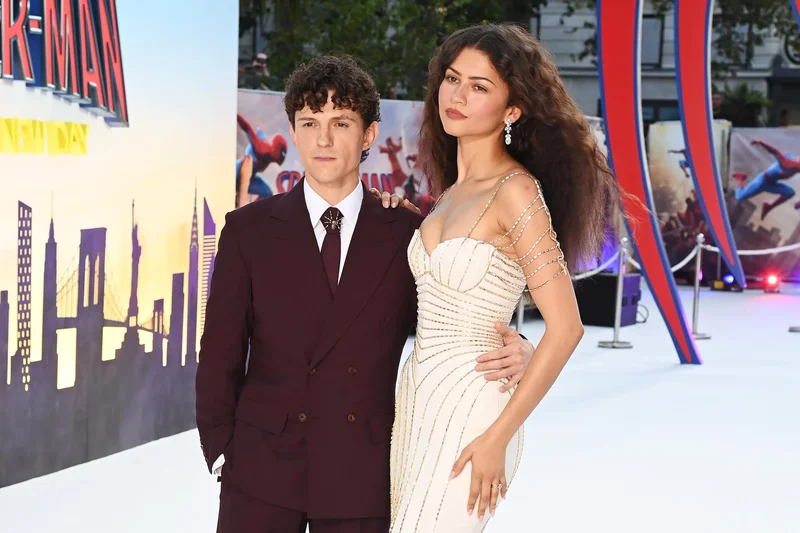
Hollywood’s summer renaissance continues in spectacular fashion with Spider-Man: Brand New Day delivering the biggest domestic opening weekend in movie history. The film earned $360.1 million in North America and roughly $932 million worldwide, even without access to IMAX screens because Christopher Nolan’s The Odyssey occupied them.
Plenty of factors contributed to Brand New Day’s extraordinary opening. Strong audience scores and enthusiastic word of mouth turned Thursday previews into one of the biggest preview nights in movie history. Tom Holland, Zendaya and Jon Bernthal entered the release with exceptional visibility after starring in The Odyssey. The overlap effectively turned one of the summer’s biggest movies, The Odyssey, into an unexpected promotion for another. Marvel broadened the film’s appeal by bringing familiar Marvel Cinematic Universe characters into Spider-Man’s story. The film also advances Marvel Studios’ long-term integration of the X-Men into the MCU. Sony positioned the movie as the summer’s final theatrical event before many families return to school and regular routines. Spider-Man: Brand New Day felt like the kind of theatrical event that generates palpable buzz inside packed theaters.
Those advantages help explain why Brand New Day became a blockbuster, but the most powerful factor is that Spider-Man has become bigger than Marvel. Hollywood has spent decades trying to build entertainment properties that survive changing actors, changing audience tastes, and changing technology. Most eventually lose momentum. Spider-Man has done the opposite. Twenty-three years after the first live-action blockbuster, the franchise grows stronger as it reinvents itself. The numbers suggest audiences are buying tickets for Spider-Man first and the Marvel brand second.
Spider-Man Thrives From Reinvention
Movie franchises often depend on continuity, but Spider-Man has benefited from reinvention. The Tobey Maguire trilogy introduced millions of moviegoers to the character and established Spider-Man as one of Hollywood’s premier blockbuster franchises. When Sony rebooted the series with Andrew Garfield only five years after Spider-Man 3, many analysts questioned whether audiences would embrace another origin story so soon. They did. Garfield’s two films earned less than the Maguire and Tom Holland entries and received weaker reviews, but both surpassed $700 million worldwide. For most studios, those numbers would represent franchise success rather than disappointment.
Sony rebooted Spider-Man again in 2017, this time integrating Tom Holland into the Marvel Cinematic Universe. Instead of exhausting audiences, the new version expanded them. Spider-Man: Far From Homebecame the first Spider-Man film to cross $1 billion worldwide. Spider-Man: No Way Home nearly doubled that figure, reaching approximately $1.9 billion.
The reinvention continued beyond live action. Spider-Man: Into the Spider-Verse introduced Miles Morales to a new generation while existing alongside Peter Parker rather than replacing him. Sony demonstrated that audiences would embrace multiple versions of Spider-Man at the same time. Each reinvention attracted new viewers without losing the audience that came before it.
Spider-Man Appeals Across Generations
Audience data reported in Deadline suggests
Brand New Dayattracted far more than longtime comic book fans. The audience was broadly distributed across age groups and drew substantial numbers of both men and women. That kind of demographic breadth speaks to a durability for a franchise entering its ninth live-action film.
Part of the explanation is that different generations have grown up with different versions of Spider-Man. Older Millennials can identify Tobey Maguire as their Spider-Man. Many younger moviegoers first encountered the character through Tom Holland or Miles Morales. Andrew Garfield’s popularity also surged after No Way Homereunited all three live-action Spider-Men. The crossover sparked a broader reappraisal of his portrayal and recast the three Spider-Man series as complementary chapters in a larger story rather than competing franchises.
James Bond demonstrated the same ability to thrive through multiple lead actors over several decades. Television has its own example in Doctor Who, where generations of viewers have embraced different actors as the Doctor without abandoning earlier incarnations. Spider-Man has reached a comparable point. The character has become larger than any individual actor while allowing each performer to retain a devoted following.
Why Spider-Man Endures
Not every superhero has proved this adaptable. Superman has been portrayed by multiple actors, but each reboot has largely asked audiences to begin again. Spider-Man works differently because the character remains recognizable even as each generation reshapes him.
As Spider-Man creator Stan Lee once explained, Spider-Man became his favorite creation because “he’s the one who’s most like me.” Peter Parker worries about paying bills, succeeding at school, maintaining relationships and balancing personal responsibilities with larger obligations. Unlike many superheroes, his greatest challenges often have nothing to do with defeating villains. They are the ordinary frustrations of everyday life.
Spider-Man is also unusually adaptable as a storytelling character. He can anchor a coming-of-age story, a romance, a comedy, an animated adventure or a multiverse epic without losing his identity. Spider-Man’s appeal has never depended primarily on his powers, either. It rests on perhaps the simplest moral idea in superhero fiction: “With great power comes great responsibility.” Every generation interprets that lesson through its own experiences, allowing the character to evolve without losing the values that made him popular in the first place.
‘Brand New Day’ Is About To Get Bigger
The success of Brand New Day arrives at a time when superhero movies no longer guarantee blockbuster results. Several recent Marvel releases produced substantially smaller worldwide totals than earlier entries in the Marvel Cinematic Universe. DC has faced similar inconsistency. Audiences appear willing to skip familiar formulas while continuing to reward characters they regard as enduring cultural icons. Spider-Man occupies an unusual position within that landscape.
The character succeeded before the Marvel Cinematic Universe existed. He became one of the MCU’s biggest attractions after joining it. He anchors an Oscar-winning animated franchise. He remains one of PlayStation’s most successful exclusive game franchises. Sony owns the theatrical rights, while Marvel Studios contributes creatively to the current films, creating a partnership that has strengthened both companies.
And Brand New Day may climb even higher this summer. Summer blockbusters typically experience significant second-weekend declines, particularly after record-breaking openings. But this summer has not followed the usual script. The Odyssey has continued to draw unusually strong audiences deep into its theatrical run, while Toy Story 5 recently crossed the $1 billion mark worldwide after demonstrating exceptional staying power.
Spider-Man is also about to gain an advantage it did not have during its opening weekend. The film is expanding into IMAX theaters after The Odyssey’s exclusive IMAX run concludes. Premium formats have become an increasingly important part of box office success because audiences continue to pay more for an enhanced theatrical experience. Even without IMAX, premium large formats accounted for nearly one quarter of Brand New Day’s opening weekend revenue, while Dolby Cinema delivered a record-breaking weekend of its own.
Spider-Man is about to get bigger. Literally.