BRICS Expansion: 30+ Nations Await September Summit Vote
Geopolitics: New Delhi
BRICS expansion returns to the agenda at September’s New Delhi summit, and Latin America’s ties to the bloc are deepening through Colombia’s bank entry and Venezuela’s membership bid.
India’s Calibrated Presidency
India assumed the BRICS presidency on January 1, 2026, its fourth time leading the bloc, under the theme “Building for Resilience, Innovation, Cooperation, and Sustainability.” Its approach to enlargement is deliberately cautious, prioritizing cohesion inside the current eleven members.
That caution sets up the September 12-13 summit in New Delhi as the decision point. Officials describe India’s stance as calibrated: open to a second wave of admissions, but only through a structured process that protects decision-making speed.
Russia’s deputy foreign minister Sergey Ryabkov confirmed in February that expansion is on the 2026 agenda, while declining to set deadlines. South Africa’s Godongwana was blunter: “There is a second batch of countries that are going to be added to BRICS.”
Who Is in Line
More than 30 countries have formally applied or consistently expressed interest, on top of the 13 states already holding partner-country status. The formal queue includes Algeria, Azerbaijan, Bahrain, Bangladesh, Pakistan, Serbia, Sri Lanka, Syria, Turkey, Venezuela and Zimbabwe.
Nigeria has emerged as the frontrunner for African representation, with New Delhi calling Lagos a “strategic partner” ahead of the May ministerial. Turkey, a NATO member, is actively seeking China’s backing for its full-membership application.
Not everyone agrees on pace. China and Russia advocate faster expansion to counter Western financial weight, while Brazil and India favor strict evaluation to keep the bloc governable. That internal argument shapes who gets in, and when.
From Rhetoric to Infrastructure
The May 14-15 foreign ministers’ meeting at Bharat Mandapam, the first major ministerial under India’s chairship, produced the bloc’s most concrete financial step in years: a pilot cross-border payment framework linking members’ national payment networks.
India offered its UPI platform as the reference implementation. The system supports settlement in local currencies while sidestepping a common BRICS currency, a proposal India has consistently resisted as divisive.
The numbers behind the push are large. BRICS nations now account for roughly 40% of global GDP at purchasing power parity and close to half the world’s population, giving local-currency rails a meaningful base to grow from.
Latin America’s Growing Stake
For this region, the bloc is no longer a distant club. Colombia joined the New Development Bank this year as one of its two newest members alongside Uzbekistan, gaining access to a lender that has deployed over US$42.9 billion across 139 projects since 2016.
Venezuela is in the formal membership queue, backed by Caracas’ allies but facing the bloc’s internal criteria debate. Argentina went the other way, rejecting the 2024 invitation outright under President Milei.
Brazil, a founding member, sits at the center of the expansion argument, aligning with India for a slower, criteria-based process. In April, the NDB added a AAA rating from China Chengxin International to its existing top-tier Japanese rating, strengthening the bank Colombia just joined.
What to Watch in September
Three signals will show how far expansion goes. The first is the admission criteria India wants formalized. The second is whether Nigeria, Turkey or any Latin American bid advances from the queue. The third is the payment framework’s next phase after the May pilot.
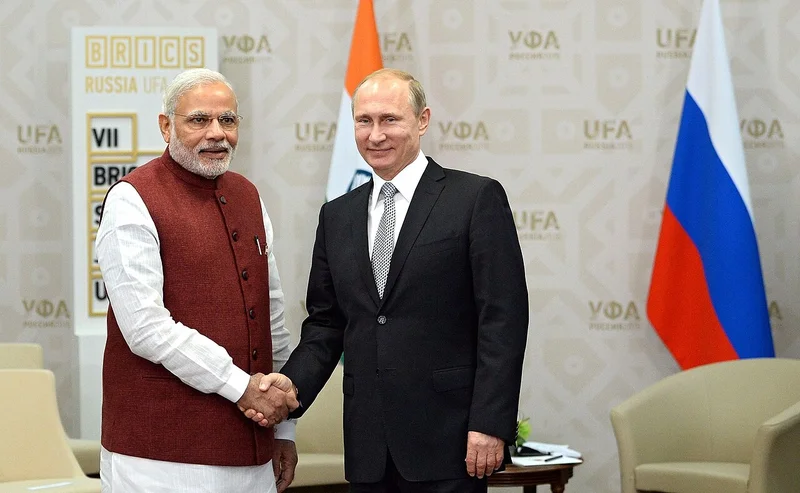
Vladimir Putin has confirmed attendance. Saudi Arabia, still formally unconfirmed as a full member, attended the May ministerial as an observer, a reminder that the bloc’s growth is as much about status questions as numbers.
Whatever the outcome, the summit will not short-circuit the two-tier design: partner countries keep a pathway to participate while members test what new admissions add. September decides who moves up that ladder.
Frequently Asked Questions
When is the next BRICS expansion summit?
The 18th BRICS Summit takes place September 12-13, 2026 in New Delhi, hosted by India as the 2026 president. Decisions on a second batch of new members are expected there.
Which countries want to join BRICS in 2026?
More than 30 have applied or expressed interest. The formal queue includes Venezuela, Turkey, Nigeria, Algeria, Azerbaijan, Bahrain, Bangladesh, Pakistan, Serbia, Sri Lanka, Syria and Zimbabwe, with Nigeria seen as a frontrunner.
How is Latin America involved in BRICS expansion?
Brazil is a founding member favoring strict criteria, Colombia joined the New Development Bank in 2026, Venezuela is in the membership queue, and Argentina rejected the 2024 invitation.
Sources: Watcher.Guru (expansion tracker; Godongwana quote); Russian Deputy FM Sergey Ryabkov (Feb 2026); Deccan Chronicle (via BRICS Info); New Development Bank disclosures.