Proposed en bloc changes welcomed by owners, agents; some say 6 months to get mandate too short
AI generated
SINGAPORE - Proposed changes to Singapore’s collective sale regime are a long-awaited recalibration needed to facilitate the renewal of ageing estates, market players say.
But even as they welcomed the proposal to lower en bloc consent thresholds for older developments, some flagged concerns over the shortened timeline to get signatures.
Under the changes proposed in Parliament on Aug 4, older projects are set to have the en bloc consent threshold lowered from the current 80 per cent. Those between 40 and 59 years old would need to meet a 70 per cent threshold, and those 60 years and older, 65 per cent.
But collective sale committees (CSCs) will have six months to obtain signatures to the collective sale agreement, down from 12 months now. This is to address concerns about prolonged pressure faced by dissenting owners.
Kevin Liang, former CSC chair for the 56-year-old International Plaza, said the proposal to lower the consent threshold “will significantly help, as the previous CSC struggled and managed to cross the 80 per cent threshold only towards the end of the one year timeline in its last collective sale effort”.
However, he said such big developments still need 12 months to achieve the lowered consent threshold, adding: “Six months is too short and not feasible for us.”
The 50-storey commercial and residential block’s $2.7 billion maiden attempt closed with no bids in November 2021. It comprises 209 apartments, 559 offices, and 192 strata shops, and has formed a new CSC for its second attempt at an extraordinary general meeting on Aug 1.
Kevin Liang, former CSC chair for International Plaza, said the proposed amendments are “good news and will significantly help as the previous CSC struggled and managed to cross the 80 per cent threshold only towards the end of the one year timeline in its last collective sale effort.”
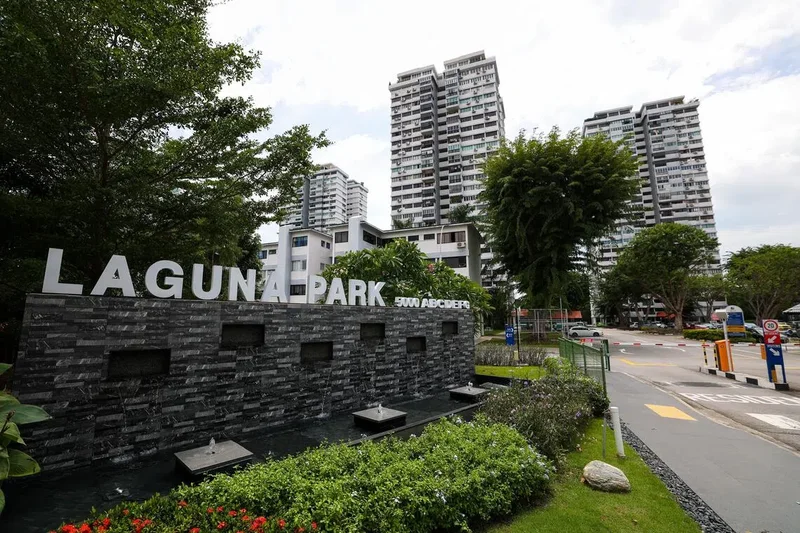
In 48-year-old Laguna Park, the proposed changes have similarly sparked excitement among owners, said CSC secretary Rita Waswani.
The former HUDC project in East Coast, which has 516 residential units and 12 commercial units, faces rising maintenance costs due to its outdated electrical wiring and lifts, and numerous water seepage issues.
It let its fifth attempt at a reserve price of $1.48 billion lapse in April this year after collecting less than a 50 per cent mandate.
“Owner engagement was an issue as many don’t live here. We will wait for the new regime to take effect first before restarting the process,” she said.
But if this Bill is passed, there will be a sixth attempt before Laguna Park turns 50, Waswani said.
Terence Lian, head of investment sales at Huttons, said he has had multiple calls from CSC members from Kensington Park, Laguna Park and Braddell View who are “excited about their en bloc prospects” since the proposed changes were announced.
But for mega projects like the 918-unit Braddell View, the proposed shorter signature collection period could be very challenging, said Lian, who was marketing agent for the recently-concluded Loyang Valley collective sale.
“Many owners do not reside there, some live overseas, and it takes considerable time to locate, engage and obtain their signatures. The challenge is often not only persuading owners to sign, but simply reaching them.”
“Perhaps a longer timeline could be considered for very large developments to better reflect these practical realities,” he said.
Horizon Towers, a 211-condo development that is over 40 years of age, said it welcomed the proposed lower consent threshold for older developers, but found the reduced time to achieve the mandate “quite drastic.”
“We have many owners living overseas. Many are leased units, some with elderly owners whose children are living overseas, so convincing them may be a problem. In the last attempt, we took more than eight to nine months to secure the 80 per cent mandate,” its CSC said.
Added Delasa chief executive Karamjit Singh: “Reducing the timeline to secure the mandates to 6 months requires CSCs and owners to be decisive and efficient.”
He also noted that most en bloc committees tend to start with “realistic reserve prices”, only to see them needing to increase this price to secure the required level of consent.
“The lowering of the consent threshold to 70 per cent would help moderate their reserve price, and increase their chances of finding a buyer,” he said.
He also pointed out that some projects, including mixed use developments, find themselves at the mercy of a single bulk owner with between 20 per cent to 30 per cent voting rights.
The proposed lowering of the mandate threshold returns power to the remaining owners, provided their estate is over 40 years old, he said.
For Pine Grove, which is in the final leg of its fifth collective sale attempt at a reserve price of $1.78 billion, the proposed changes came as a surprise, said Cheryn Chan, chairperson of the Pine Grove Management Corporation Strata Title (MCST).
“We need to meet with our en bloc lawyers to see how to take the process from here. We are pulling our hair. To undergo the entire process again is not easy. To soldier on to get the 80 per cent threshold seems the only viable option for now,” she said.
With just two months left before its collective sale agreement expires on Sept 21, some 64 per cent of units at the 42 year old estate have signed so far.
“Going through the process again means we will also have to get the overseas owners to sign again, which is a big headache,” Chan said.
“We are keeping our fingers, toes and eyes crossed that we can reach the 80 per cent mandate,” she added.