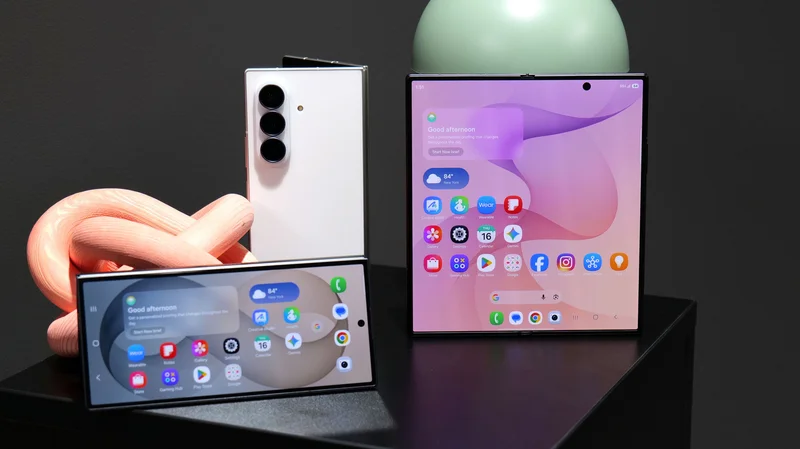
Samsung Galaxy Z Fold 8 Ultra hands-on: Upstaged by the base model
Just give me the wider design of the base model with the same cameras and a larger display.
Sam Rutherford for Engadget
The Galaxy Z Fold 7 was my favorite phone of 2025. It put the versatility of a bendy, tablet-sized display in a chassis that was just as thin and light as a traditional handset without any major compromises to its performance, camera quality or durability. But now for 2026, even with the appearance of a cheaper base model packing a wider design, Samsung is basically running it back by slapping a new Ultra tag on its flagship foldable while providing a handful of smaller tweaks and improvements.
Design
Sam Rutherford for Engadget
For those familiar with the previous model, the Galaxy Z Fold 8 Ultra looks like a carbon copy, aside from a handful of new color options that include violet shadow, cream, graphite and green shadow (the latter of which is an online exclusive on Samsung.com). You still get a super thin aluminum frame with IP48 dust and water resistance and a side-mounted fingerprint reader built into its lock button. Even its dimensions are essentially unchanged, with it measuring 8.9mm thick and weighing 215 grams. However, after picking it up and playing around with it, I did notice some subtle but significant changes.
In order to address complaints about last year's phone being hard to open, Samsung added more rounded corners and tapered edges to the Z Fold 8 Ultra. This does the trick while also making the phone feel a tiny bit thinner than it actually is. And in some ways it is, because when unfolded, due to changes on the inside of its frame, Samsung managed to shave off 0.1mm, which technically makes this the skinniest Z Fold Ever at 4.1mm. The Ultra's 6.5-inch exterior and 8-inch interior displays are also pretty much the same, as they feature rich AMOLED panels with 120Hz refresh rates. But now, peak brightness is a touch higher at 3,000 nits (up from 2,600 nits).
Sam Rutherford for Engadget
Perhaps the biggest change is on the inside of the phone, where Samsung's Flex Titanium tech adds a new titanium alloy layer beneath the phone's flexible OLED display. This works in combination with the existing rigid titanium plate to ensure that the phone's display is better supported while reducing potential air pockets and minimizing the appearance of a crease. That said, there is still a very faint indent that runs down the middle of the screen, but it's so minor now that it's basically an afterthought.
Performance, charging and cameras
Sam Rutherford for Engadget
As expected, the Z Fold 8 Ultra is getting a speed bump thanks to the inclusion of a Snapdragon 8 Elite Gen 5 for Galaxy chip. This is certainly welcome, but it's not like the previous model was hurting for horsepower. Memory options are also staying the same with up to 16GB of RAM and 1TB onboard storage. This is nice because with the current global memory shortage, there was a concern that Samsung might have to make some cuts, but thankfully that's not the case.
Samsung is giving both the base Z Fold 8 and the Ultra a big boost to their charging speeds, which now stands at 45 watts when using a wire (up from 25W) or up to 20 watts wirelessly (up from 15W). The downside is that with Samsung so focused on thinness, the company skipped adding a magnetic ring inside the phone, which means out of the box, it's merely "Qi 2 ready." That said, Samsung says that most of its first-party cases will come with built-in magnets. As long as you don't mind a bit of added bulk, there's still an easy way to make the phone compatible with Qi 2-based accessories like battery packs and grips.
Sam Rutherford for Engadget
Speaking of batteries, by adding a bit of silicon carbon chemistry to the Z Fold 8's traditional lithium ion cells for the first time, Samsung has also delivered a big jump in capacity to 5,000mAh (up from 4,400mAh).
Meanwhile for its camera, there's a new 50-megapixel sensor for the ultra-wide lens, which joins the existing 200MP main cam and 10MP telephoto cam with a 3x zoom. Furthermore, the Z Fold 8 line also supports 8K video recording across both models alongside a new Fan Cam feature that allows you to track subjects and adjust your final clip's aspect ratio for easier post-shot editing. Both of these additions are nice, but to me, they're a bit too niche to be truly exciting.
New software features and updates
Sam Rutherford for Engadget
Some other additions include an expanded role for Samsung's Now Nudge, which is getting a dedicated button and notification support. It's now easier for the phone to surface helpful info without being limited strictly to the Samsung keyboard. And by collaborating with Google, Samsung is including some of the intelligent automation tools we first saw previewed on the S26 Ultra. These allow you to do things like order food or buy concert tickets using voice controls, without manually doing all the little steps in between.
Early thoughts
Sam Rutherford for Engadget
After using the Z Fold 8 Ultra for around two hours, I'm kind of conflicted. Barring something like a recall, I'm confident it will be a great device, mainly because it's so similar to last year's phone — which I love. It's hard to complain about getting a bigger battery, a new ultra-wide cam, a faster processor and much speedier charging. It also feels nicer thanks to little design tweaks like Samsung's new tapered edges.
My main issue is that the base Z Fold 8 now exists, which offers a wider chassis that makes watching movies and shows much more enjoyable. And while the standard model is missing a telephoto camera and has a slightly smaller battery and displays, you still get the same processor, charging capabilities, software and brightness as the Ultra for $200 less. That's a big factor on a phone that starts at over $2,000.
Sam Rutherford for Engadget
I still want to use both phones more before making a final decision. But what I think I really want from the Ultra is for Samsung to use the same basic design as its cheaper sibling while increasing the size of its main display to 8.4 inches or so, and adding back that zoom camera (and S Pen support for that matter). As it is, this phone feels more like a second-gen Galaxy Z Fold 7 instead of being a proper Ultra version of the base Z Fold 8. But if you're the kind of person who cares more about productivity and multitasking than consuming content, the Ultra may still be a welcome option for demanding power users.
The Galaxy Z Fold 8 Ultra is available for pre-order now starting at $2,100, with official sales beginning on August 7.