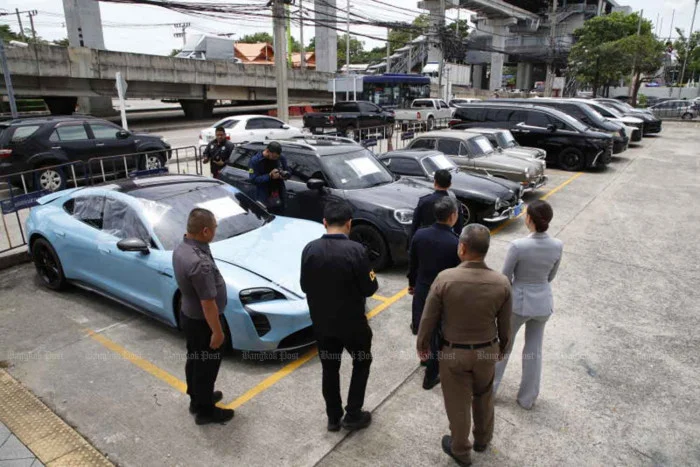
The Department of Special Investigation (DSI) has formally charged four people, including People's Party (PP) list MP Pawoot Pongvitayapanu and actor Rattapoom "Film" Tokongsup, in connection with an alleged online forex investment scheme.
The DSI said the suspects reported to investigators on Monday to acknowledge multiple charges stemming from an ongoing investigation into alleged online investment trading activities.
According to the agency, the allegations include jointly obtaining loans through public fraud, operating unlicensed securities brokerage and derivatives businesses, importing false information into a computer system in a manner likely to cause public harm, conspiracy to commit money laundering and money laundering.
The DSI stressed that informing suspects of the charges is part of the investigation process and that all accused have the right to present evidence in their defence.
The four were released without having to post bail after acknowledging the allegations.
Investigators have issued sum- monses to 47 suspects and other people connected to the case. So far, 10 have appeared before investigators, while the remaining 37 are expected to report during August and September.
The DSI said it would consider legal action against anyone who failed to comply with a summons or was suspected of attempting to evade the investigation.
It also emphasised that all suspects are presumed innocent until proven guilty by a final court ruling.
In a separate development, PP member Ongard Panyachatiraksa called on Mr Pawoot to resign, arguing that he should step down to uphold the standards of both the party and parliament.
In a Facebook post, Mr Ongard said Mr Pawoot's explanation that he had reduced his role in examining the government's 1.621-billion-baht TH-AI Passport project because of heavy committee workloads was insufficient.
He said Mr Pawoot had previously questioned the project's value, origins and procurement process, but later appeared to soften his stance, prompting questions from fellow MPs.
Mr Ongard also said that if new information had changed Mr Pawoot's assessment of the project, he should publicly explain what evidence had addressed his earlier concerns, whether the procurement process had become more transparent and whether the project represented value for taxpayers' money.
Referring to the forex case, Mr Ongard said Mr Pawoot had maintained that he was only involved in trading, had never persuaded anyone to invest and had denied any involvement in money laundering.
He added that Mr Pawoot remained presumed innocent until a final verdict was reached and that there was no public evidence to conclude that his apparent change of stance on the TH-AI Passport project was linked to the criminal case.
However, Mr Ongard argued that the combination of the criminal investigation and Mr Pawoot's reduced role in scrutinising the project warranted greater transparency.