WASHINGTON — The U.S. Space Force awarded contracts totaling $615 million to Rocket Lab, Systems & Technology Research and a third unidentified company to develop technologies for a satellite network intended to track aircraft and missile threats from orbit.
The firm-fixed-price agreements are the latest awards under the Space-Based Airborne Moving Target Indicator, or SB-AMTI, program, which is being developed to provide the military with persistent tracking over areas where surveillance aircraft may be unable to operate safely.
The Space Force did not disclose how the $615 million was divided among the three companies or specify the technologies each would provide. The awards are intended to expand the program’s supplier base and evaluate different approaches to detecting and tracking airborne targets.
“The core focus of this second task order is diversifying our capabilities and ensuring we don’t rely on a single technical solution. With these new partnerships, we are exploring unique innovations and technologies and fundamentally different ways to accomplish the airborne moving target indication mission,” said Col. Ryan Frazier, acting Space Force portfolio acquisition executive for Space-Based Sensing and Targeting.
The new contracts follow a $4.16 billion award to SpaceX to build the initial AMTI satellite constellation. That network is designed to detect, track and maintain custody of airborne targets including fighter aircraft, bombers, cruise missiles and potentially hypersonic weapons.
The SpaceX agreement establishes the program’s initial operational baseline, while the latest awards appear focused on developing alternative or complementary sensing technologies. Space Force officials have said the broader architecture will use multiple vendors rather than rely on a single contractor or sensor design.
AMTI is part of a Pentagon effort to shift some sensing missions traditionally performed by aircraft into space. Large airborne surveillance platforms can provide wide-area radar coverage, but their ability to operate near a conflict zone may be constrained by long-range missiles and advanced air defenses.
A proliferated satellite constellation could provide broader coverage without placing aircraft and crews inside those threat areas. The system would combine space-based sensors, communications links and ground processing to produce updated tracks showing a target’s location, speed and direction.
Space-based AMTI could help detect and track cruise missiles and other airborne threats that may be difficult to follow using existing missile-warning sensors alone.
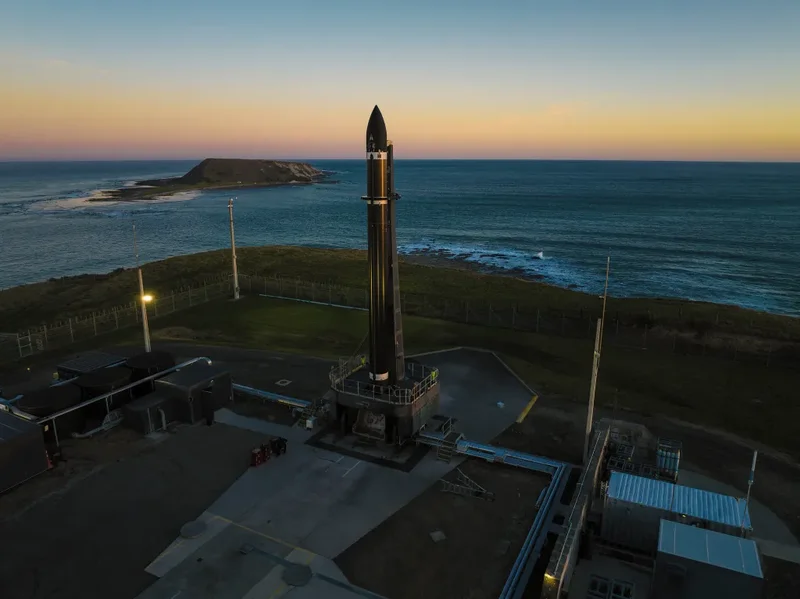
Rocket Lab’s role in the program was not disclosed. The Long Beach, California-based company builds launch vehicles, satellites and spacecraft components for commercial and government customers and has been expanding its work on military satellite constellations.
Systems & Technology Research, known as STR, is a Virginia-based defense technology company specializing in advanced sensors, signal-processing software, artificial intelligence and command-and-control systems for military and intelligence customers.
STR has worked with the Defense Advanced Research Projects Agency on projects that combine commercial spacecraft with advanced signal processing for national-security missions, experience that could be relevant as the Space Force evaluates alternative sensing approaches for AMTI.
The identity of the third contractor was withheld for operational-security reasons.
The Space Force described the $615 million package as its second AMTI task order. Officials said the acquisition strategy is intended to mature emerging technologies, draw on commercial investment and preserve long-term competition as the architecture expands.