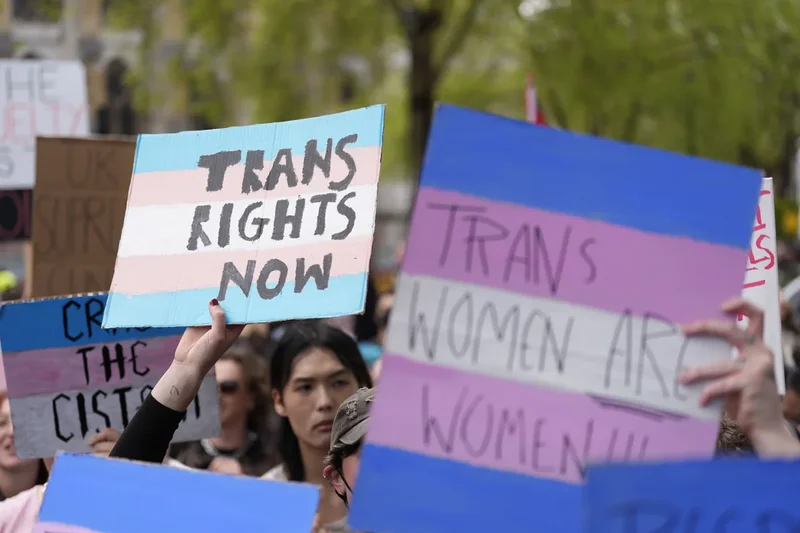
Single-sex toilets, changing rooms and hospital wards must now be used based on a person’s sex at birth and not the gender they identify as, under new guidance that comes into force today.
The changes are being implemented more than a year after a landmark Supreme Court ruling on biological sex, conclude that transgender women are not legally women under the Equality Act.
The new rules will affect restaurants, leisure centres and hairdressers; public services such as those provided by council; and associations such as sports clubs with at least 25 members.
While the April 2025 Supreme Court ruling was hailed by campaigners as a victory confirming “women are women and men are men” – others including trans rights campaigners said it was “incredibly worrying for the trans community”.
Former home secretary Suella Braverman, who is now Reform UK’s equalities spokeswoman, said the government had been “dragged kicking and screaming into adopting simple common sense and protecting women’s-only spaces”.
She added: “The government and Equality and Human Rights Commission (EHRC) now have no excuse in not enforcing and upholding the law.
“That means getting tough with civil servants and public sector bodies who continue to buy into nonsensical woke definitions of gender and threaten the rights and privacy of British women and girls.”
What is the Supreme Court ruling?
In April 2025, the Supreme Court ruled that the legal definition of a woman is based on biological sex.
This means single-sex toilets, for example, must be used based on a person’s sex at birth, instead of their gender.
It has been suggested that unisex services such as self-contained lockable cubicles could ensure the provision of toilets and changing-rooms for all, with the code noting it would be “very unlikely to be proportionate to put a trans person in a position where there is no service that they are allowed to use”.
Described as giving “up-to-date examples of how the Equality Act applies to everyday situations”, it will be something that can be relied on in court if there are legal challenges – which Equalities Minister Bridget Phillipson has previously suggested is expected “because this is a very contested space”.
While Britain’s equalities regulator has stressed that its updated code of practice does not make new law or create new legal obligations, it provides services such as cafes and leisure centres with legally accurate, impartial and up-to-date guidance on existing law.
What changes will need to be made to public spaces?
Nearly 13,000 toilets and more than 5,000 changing rooms could have to be revamped at gyms, hospitals and leisure centres across Britain at a cost of millions as a result of the guidance, analysis suggests.
At least 18,000 signs might also need to be changed, according to figures obtained by a Freedom of Information request to the EHRC earlier this year.
Public-sector bodies, such as local councils, are estimated to face unadjusted costs for cleaning the new-look facilities totalling £20.6m, together with £14.2m per year for building work – though these sums could rise even higher.
What will the change mean for single-sex spaces in hospitals?
Previously, NHS guidance meant trans people were accommodated on wards based on the gender with which they identify. But under the new ruling the NHS wards must accommodate patients based on their biological sex.
The NHS is updating its guidance on “delivering same-sex accommodation", which will now be titled “privacy, dignity and safety in hospital accommodation”, to ensure it aligns with the changes.
What will the change mean for schools?
Single-sex spaces must be protected in schools under the new guidance.
This means no child should be made to feel unsafe through “inappropriate” mixed-sex sport, and there should be no sharing of school and college toilet facilities for children aged over eight years old, or mixed sex sleeping arrangements on trips.
It also highlights that schools and teachers should be aware of any child’s birth sex to be able to take appropriate action where needed and this should be in school and college records.
Are trans people still protected by the Equality Act 2010?
Yes, under the changes trans people are still protected under the Equality Act 2010.
It was made clear by the Supreme Court that these changes do not remove “important protections” under the equality act, according to campaigners at advocacy organisation TransActual.
Trans people are generally protected from discrimination on the grounds of gender reassignment, regardless of whether a person has a Gender Recognition Certificate (GRC) or not.
Can I be asked to 'prove' my sex?
Although there is no clear way to determine whether someone trying to access a single-sex space is trans or cisgendered, under the changes, trans people should not have to produce proof of their sex if requested under the Equality Act 2010, according to TransActual.