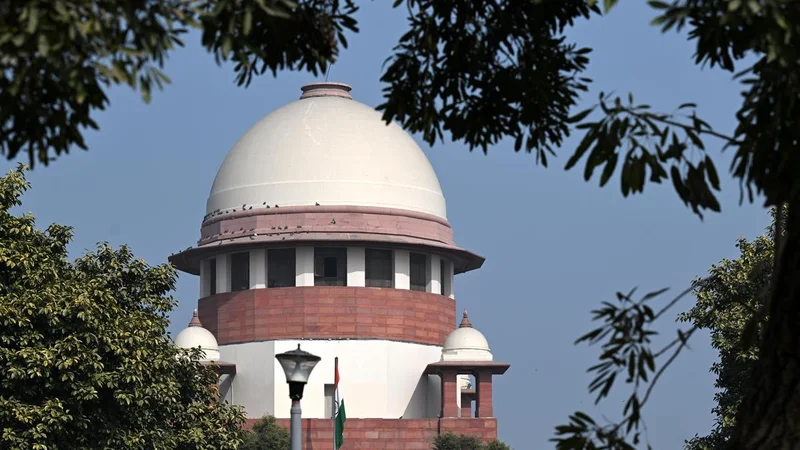
The Supreme Court has clarified on July 31 that recognised news outlets can continue to report on court proceedings, but without “utilising” audio and video clippings of judicial hearings.
This would mean that recognised news outlets cannot post raw or edited audio and video content on social media or digital platforms, ostensibly for commercial purposes.
Also Read | SC bars unauthorised recording, monetisation of court videos on social media
A Bench headed by Chief Justice of India Surya Kant passed the July 31 order to clear the “confusion” over an earlier judicial direction on July 24.
On July 24, the court had passed an interim direction prohibiting extraction, dissemination, monetisation, posting, re-posting, uploading, transmitting, modification, storing, or hosting of the audio-video recording(s) of judicial proceedings on social media or any other digital platforms without prior permission of the Secretary General of the Supreme Court or the Registrars General of the jurisdictional High Courts.
“The paragraph [in the July 24 order] makes it clear that the order is not to be construed as imposing a blanket prohibition on the reporting of court proceedings by recognised news outlets. Such outlets may, therefore, continue to report on the proceedings and inform the general public of legal developments and judicial pronouncements, save that audio or video clips of the court proceedings shall not be utilised in the course of such reportage,” the court order on July 31 clarified.
On July 31, the apex court had flagged its intent to lay down a protocol by which online users who want to post or circulate livestreamed judicial proceedings in the apex court and State High Courts could only access the audio-visual content through the courts’ archives.
Chief Justice Kant had said livestreamed visuals of court proceedings cannot be subject to “misuse” or “commercial exploitation” while responding to an application filed by two activists, Anjali Bhardwaj and Amrita Johri, seeking a modification of a July 24 interim order barring the circulation of livestreamed proceedings on social media and digital platforms.
The applicants, represented by advocates Prashant Bhushan and Cheryl Dsouza, had criticised the July 24 order as a reversal of the ‘principle of open justice’ upheld by the apex court itself in a plethora of judgments.
Objecting to a complete ban on dissemination of court proceedings on digital platforms, the activists had said that open access to justice ensured that the judicial process remained answerable to the public and guards against arbitrariness.
Published - August 05, 2026 11:53 am IST