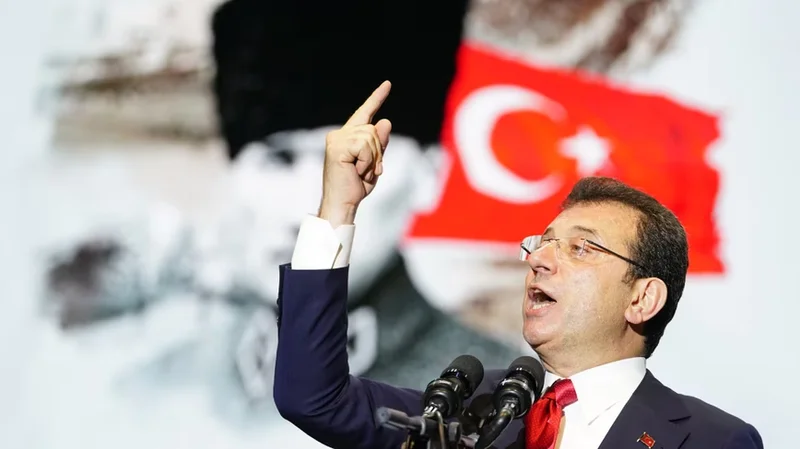
X has been ordered to silence one of the most closely watched accounts in Turkish politics. A court has told the platform to restrict access, within Turkey, to the presidential-campaign account of jailed Istanbul mayor Ekrem Imamoglu.
The company is not going quietly. X said it was complying with the order as required by Turkish law but disagreed with it, and has begun legal proceedings to have the restriction overturned.
The account is a significant one. It served as the campaign channel for Imamoglu’s presidential bid and had around 225,000 followers, a platform the opposition has used to keep his candidacy visible while he sits in prison.
The court’s stated reasoning was broad. It cited national security and public order, the kind of catch-all justification that Turkish authorities have repeatedly used to block prominent accounts on the platform.
Imamoglu’s situation gives the order its charge. Widely seen as President Erdogan’s main rival, he was detained in March 2025 in a case that triggered the largest street protests Turkey had seen in more than a decade.
He remains behind bars pending trial. The charges against him include corruption, espionage and terrorism, all of which he denies, and his supporters cast the prosecution as an effort to remove a serious electoral threat.
The timing around his candidacy has drawn particular scrutiny. He was chosen as his party’s presidential candidate within days of his detention, even as a university diploma required to run was annulled the day before his arrest.
This is not the first account of his to be hidden. His main profile, with close to 10 million followers, was blocked inside Turkey in May 2025, and X challenged that order too.
The episode is awkward for X’s self-image. Under Elon Musk, the platform markets itself as a free-speech champion, yet it routinely complies with government takedown demands while contesting them in court.
That tension is not new in Turkey. The country has a long record of pressuring the platform, at times going as far as blocking the network’s addresses outright to force compliance during politically sensitive moments.
X’s posture elsewhere adds to the ambiguity. It has clashed with regulators over content rules, including pulling out of the EU’s disinformation code, positioning itself against Western oversight while bending to authoritarian courts.
The inconsistency is hard to miss. X resists democratic institutions that ask it to curb harmful content, yet complies with an authoritarian court that asks it to hide an opposition politician, an order far more sweeping in its effect.
For now, the practical effect is that Turkish users cannot see the account. The legal challenge could take months, and even a win may arrive too late to matter for the political moment it concerns.
The pattern in Turkey is well established. Authorities have leaned on social platforms for years, and X has previously fought the government over fines it framed as penalties for hosting so-called propaganda, only to comply in the end.
Critics see a familiar tactic at work. Restricting a campaign account does not erase a politician, but it chips away at the reach an opposition figure needs, especially one who cannot campaign in person from a prison cell.
For the platform, each case sets a precedent. Complying keeps X operating in a large market, yet every takedown it honours makes its free-speech branding harder to square with its behaviour on the ground.
The broader question is who really controls speech on a global platform. When a court can switch off a candidate’s account in one country, the town-square metaphor starts to look like a patchwork of local permissions.
Get the TNW newsletter
Get the most important tech news in your inbox each week.