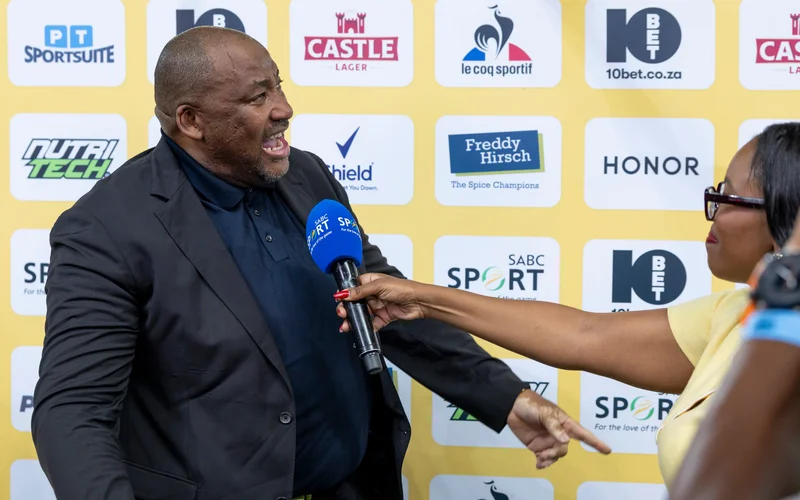
Appearing before Parliament on 4 August, Minister of Sports, Arts and Culture Gayton McKenzie and his department were expected to provide a detailed account of the roughly R31-million spent on activities around the 2026 Fifa World Cup.
However, according to a report by EWN, members of Parliament were left frustrated after the department provided a broad overview rather than the detailed financial breakdown they had requested.
The MPs slammed McKenzieâs department for wasting Parliamentâs time.
âWhat is the basic information that we need as a portfolio committee? Itâs the money. How the money has been spent,â said the committeeâs chairperson, Joe McGluwa. âWe have received a general presentation without finances, and this is not oversight. It is a waste of this committeeâs time; it is a waste of Parliamentâs time.â
McKenzie has been facing increased public scrutiny and criticism from opposition parties over the Department of Sports, Arts and Cultureâs R30,945 370.15 expenditure on a Fifa World Cup nation-building programme.
Although the minister published a breakdown of the expenditure on 19 July, MPs expected him to explain the spending in greater detail, including the reasoning behind sending a delegation of 151 people to the global event.
McKenzie has consistently defended the World Cup expenditure, arguing that promoting SA on the worldâs biggest sporting stage fell within the departmentâs mandate.
âSpending a departmental budget on the departmentâs mandate is not, in itself, a wrongdoing,â said the minister in his statement. âThe Fifa World Cup was the single largest global sports, arts and culture platform of the year, and it comes only every four years.â
Where the money was spent
According to McKenzieâs statement on 19 July, the programme involved 151 participants travelling to Mexico and the US, excluding service providers, with private sponsors covering part of the costs, although that amount has not yet been disclosed.
The department spent close to R8-million on a 14-member delegation, more than R3-million on suite tickets and almost R7-million for the Bafana Bafana 2010 legendsâ exhibition match against the Mexican legends on the eve of the tournament.
The minister said a further R10-million was spent on building âSAâs physical presence at the Fifa World Cupâ which included design, construction and installation of exhibition spaces in Mexico City, Atlanta and Monterrey.
Expenditure also included 294 match tickets worth more than R3-million for the delegation, stakeholders and programme participants, which included fans, influencers and artists.
While it is important to promote the country internationally, questions emerged over whether the expenditure represented value for money at a time when many communities lack basic sporting facilities and national teams continue to face funding constraints.
McKenzie doubles down
The day before appearing before Parliament, McKenzieâs department released a statement in which he said he had âlost patience with the uninformed narrative being spreadâ surrounding government funding of sport.
âThere have been numerous media reports and increasingly vitriolic public opinion largely driven by opportunistic political parties hoping to use every instance of an athlete needing funding to participate in a tournament overseas, or for a local sporting event needing money, to portray the ministry as âdenyingâ them funding,â said McKenzie.
This is partly referring to the R3-million in financial assistance approved by his department on 23 July to ensure SAâs menâs and womenâs hockey teams could compete fully funded at the upcoming Hockey World Cup.
McKenzie emphasised that the intervention should not be interpreted as the government trying to cover federation shortfalls.
However, it was in direct response to the public attention generated by a viral social media post from two-time hockey Olympian Onthatile Zulu.
In her post, Zulu expressed frustration at what she viewed as significant spending on sports tourism (i.e. McKenzieâs R31-million) while she and her teammates were crowdfunding to represent SA at the World Cup.
Zulu revealed that she personally needed to raise more than R68,000 to cover flights, accommodation, meals, transport, medical expenses and training camps.
Her experience resonated with many athletes across South African sport who face similar financial challenges.
The intervention by McKenzie gave the idea that attracting public attention was the only feasible way to garner financial support.
In response, McKenzie, in his statement on 3 August, reiterated that investments are possible but are not guaranteed and are not obligatory on government.
He bashed âlazy federation bossesâ whose job it is to ensure the long-term financial sustainability and commercial viability of federations.
â[They] donât understand their job, and with no ideas on how to further their sport, think this is open season to run to the media to scream the name Gayton McKenzie, hoping it will get them attention, and perhaps even money.â
The department provided financial support to more than 60 national federations, and the fixed allocation primarily served as a funding base to administer some of their basic administrative costs â not the full costs of every aspect of their work, said the statement.
âThis includes the hefty price tags associated with international travel or the organising and hosting of events in SA,â it said.
The responsibility for ensuring the financial sustainability of a sport federation lay with the elected board, said the statement, which must draft business plans and develop commercial products capable of attracting corporate sponsors.
âIf they wish to raise more money, they need to think commercially, and operate commercially,â said McKenzie. âIt is not the role of government to render federations commercially viable or sustainable. Governmentâs responsibility lies in establishing and maintaining the overarching framework that governs sport in SA.
âMore can and must be done to improve the operating environment for sport through policy and legislation, and those discussions are necessary â but the majority of requests the department receives centre on merely wanting more taxpayer money.â
McKenzie may not be able fully fund every federation or international tour. SAâs sporting budget is limited and federations carry responsibility for building commercially sustainable models.
Yet the events over the past few weeks continue to place a spotlight on McKenzieâs spending priorities, particularly after Parliament was left without the detailed financial breakdown it had requested.
Efforts appear largely reactive, and in the meantime athletes continue to shoulder the burden. DM