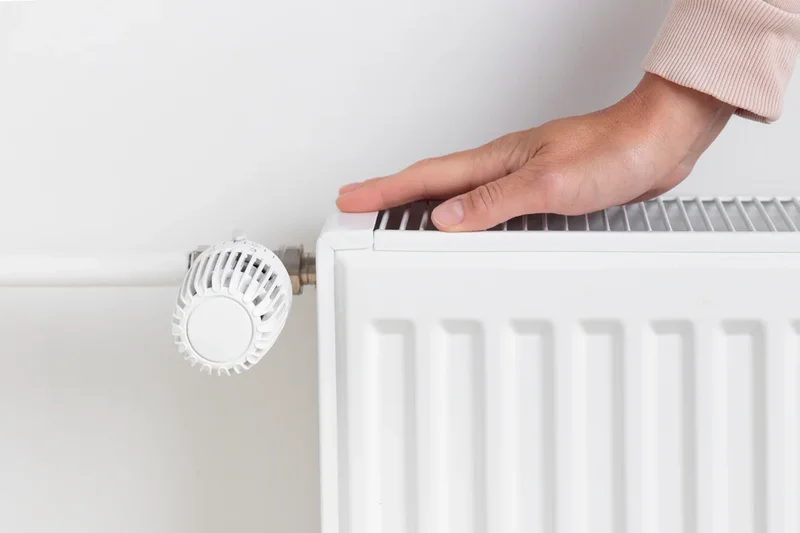
If you’re planning to replace a boiler with a heat pump, it’s worth noting you may also need to replace some of your radiators, if they are unlikely to be compatible with your new system. However, you won’t necessarily need to replace every single radiator in your home. Some existing radiators may already be large enough, but others might need upgrading to deliver enough warmth at the lower water temperatures that are typically used by heat pumps.
Before recommending a system, a heat pump installation specialist should calculate how much warmth each room loses on a cold day and compare that figure with the radiator's output. They’ll also consider the heat pump’s proposed flow temperature, the size and construction of each radiator, and whether the existing pipework can carry enough heated water around the property.
The results may be mixed: some radiators may be able to stay, others may have to be swapped for higher-output models, with the coldest rooms more likely to need the most substantial changes.
Here, we explain what installers check before making a decision about whether any upgrades are needed.
Why heat pumps sometimes need larger radiators
Most heat pumps operate differently from gas or oil boilers. While a boiler can send relatively hot water around the central heating system, enabling your radiators to release a large amount of heat over a short period, heat pumps generally work more efficiently when they produce lower-temperature water.
The Energy Saving Trust says heat pumps commonly send water to radiators at between 35-45C. Instead of delivering short bursts of intense heat, the system runs for longer and maintains a steadier indoor temperature.
A radiator supplied with cooler water releases less heat, so it may need a greater surface area to keep the room at the required temperature. However, some of your current radiators may already be large enough – radiators in smaller or better-insulated rooms may already provide enough output.
Calculating heat loss
The first major check for an installer isn’t the radiator itself but how much heat the room needs.
An installer should carry out a room-by-room heat-loss calculation, taking into consideration factors such as the room’s dimensions, external walls, windows, doors and insulation. Ventilation and air leakage are also assessed, along with the desired indoor temperature and the outdoor temperature the system is being designed to cope with.
The final calculation produces an estimated heat demand for each room, usually expressed in watts. MCS guidance says heat loss should be assessed room by room so that the heating system and individual heat emitters can be sized correctly.
Phil Steele, future technologies evangelist at Octopus Energy, explains: “The method is to calculate the heat loss of the room at the lowest temperature you’re designing for, and then determine what size radiator is needed at the chosen flow temperature to provide enough heat.
“If you reduce the flow temperature, you’ll probably need a bigger radiator to put the same amount of heat into the room.”
This is why two apparently similar bedrooms may receive different recommendations. A room with a large window and two external walls is likely to lose heat faster than an internal room of the same size.
Radiator output
An installer will then compare the room’s calculated heat demand with the output that its existing radiator can provide.
Radiator output depends on its height and width, but also on its construction. A basic single-panel radiator has less heat-emitting surface area than a double-panel model, while the metal convector fins fitted between or behind the panels can increase output further.
The temperature of the water factors in, too. Manufacturers commonly publish radiator outputs based on a particular difference between the average water temperature and the room temperature. An installer has to adjust those figures for the lower temperatures proposed for the heat pump system.
That means simply measuring the radiator or looking up its maximum advertised output isn’t enough. The relevant figure is the amount of heat it can deliver under the conditions in which the new system will operate.
Higher-output radiators may not need more wall space
Where an existing radiator isn’t sufficient, the answer isn’t always to install a noticeably longer or taller replacement.
“If you’ve got a single-panel radiator and replace it with a double-panel radiator of the same size, it doesn’t actually look very different on the wall, but you’ve effectively almost doubled its heat output,” says Steele.
“That’s quite a neat way of changing radiators without having the issue of redecorating the house (because you’ve changed the dimensions) or having pipes in different positions.”
The precise increase will depend on the radiator design, but the Energy Saving Trust identifies upgrading from single-panel radiators to double- or triple-panel models as one way of increasing output without necessarily requiring more wall space.
In rooms with particularly high heat loss, an installer may instead recommend a larger radiator, an additional radiator or, in some cases, underfloor heating or a fan-assisted heat emitter.
Deciding the heat pump’s flow temperature
Radiators can’t be assessed separately from the heat pump. The installer has to choose a design flow temperature and ensure that the whole system can meet the property’s heating requirements at that temperature.
A lower flow temperature can improve heat pump efficiency, but it also reduces radiator output. Increasing the flow temperature may enable more existing radiators to remain, but the heat pump may use more electricity as a result.
The final design should balance efficiency, comfort, installation cost and the practical space available for radiators. The aim isn’t simply to achieve the lowest possible flow temperature, but to design a system that can heat the home reliably without working harder than necessary.
Existing pipework
The initial assessment should also establish whether the existing pipework can move enough heated water around the system.
Because heat pumps usually operate with a smaller temperature difference between the water entering and leaving a radiator, they may require a higher water flow rate than a boiler system delivering the same amount of heat. An installer will therefore check pipe diameters, the system layout, valves and circulation requirements.
Narrow microbore pipes don’t always need replacing, but their suitability has to be calculated rather than assumed. Existing pipework may be retained in some parts of the property and upgraded in others. The system should also be cleaned and balanced so that each radiator receives the correct water flow.
Deciding which radiators need replacing
A small bathroom or well-insulated bedroom may be adequately served by its existing radiator, while a large living room with extensive glazing might need a higher-output model. Octopus says its home survey checks radiator compatibility and identifies any radiator or pipework upgrades required for the installation.
The important question isn’t how old a radiator is, or whether it currently feels hot with a boiler. It’s whether it can release enough heat at the temperature at which the proposed heat pump will run.
A proper room-by-room survey should give homeowners a clear list of which radiators can stay, which need upgrading and what flow temperature the system has been designed to use. That calculation, rather than a blanket rule about replacing every radiator, determines whether the existing heating system is ready for a heat pump.