Israel's army to set up polling stations in occupied Gaza, Lebanon and Syria
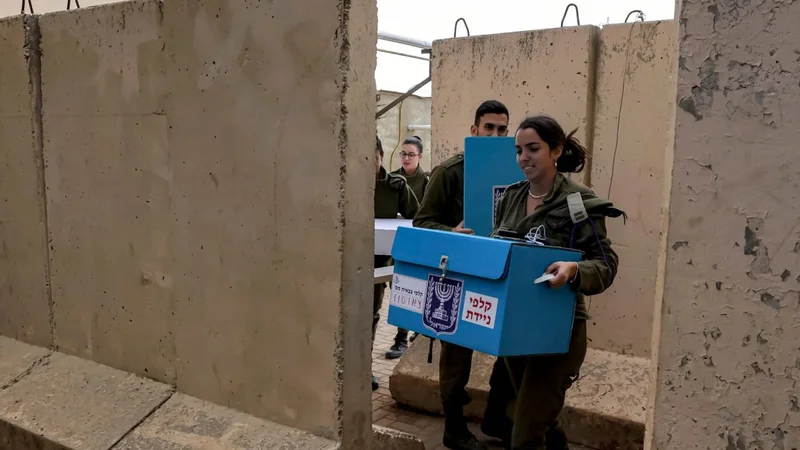
The Israeli military has begun preparing to install polling stations in occupied areas of the Gaza Strip, Lebanon and Syria ahead of the general election on 27 October, Army Radio reported on Wednesday.
According to the report, Israeli army chief Eyal Zamir has instructed military officials to facilitate voting for soldiers deployed beyond Israel's internationally recognised borders.
The military will "deploy polling stations deep in enemy territory - within Lebanon, Syria and Gaza - to enable the right to vote for combat troops stationed beyond the borders", Army Radio said.
The broadcaster described the move as "something that hasn't happened in decades", overlooking the fact that Israeli soldiers have long voted at military bases in the occupied West Bank.
Last week, Israel's Central Elections Committee approved a series of regulations for the election, including measures that would allow soldiers to cast ballots from military positions in Gaza, Lebanon and Syria.
Israeli news site Ynet reported that because soldiers are prohibited from carrying identity cards into Gaza, Lebanon and Syria, those voting at military polling stations will instead be identified using their service number and by another soldier.
The number of Israelis voting outside their local polling stations has risen in recent years, with soldiers and other security personnel making up the largest group eligible to vote at special polling stations.
According to the Israel Democracy Institute (IDI), an independent research centre, around 425,000 people cast ballots at special polling stations during the March 2021 election. The figure includes members of the security services, diplomats, hospital patients and prisoners.
While voting patterns are difficult to determine, the IDI said most voters using the special polling stations are young Israelis serving in the military, with right-wing parties believed to benefit most from their votes.
Protecting army ‘neutrality’
According to the Central Elections Committee, around 7.3 million Israelis are eligible to vote in the upcoming election, including nearly 550,000 first-time voters since the previous election in late 2022.
While the committee publishes details of polling stations in hospitals, prisons and Israeli diplomatic missions abroad, it has not disclosed how many polling stations will be established in Gaza, Lebanon or Syria.
Army Radio also reported that Zamir had instructed commanders to prevent soldiers and officers from campaigning for political parties during the election.
At a meeting with senior officers, he ordered commanders to maintain the military's political neutrality. He instructed them to closely review letters sent to soldiers to ensure they contained no political messaging.
"There is a need to uphold current regulations, orders and instructions on the issue," Zamir said, adding that army staff needs "to avoid innovations that could bring about the undermining of public trust in the IDF [Israeli army]".
Zamir's directive came after the military faced criticism earlier this week for dismissing a reservist who had regularly posted videos expressing support for the government. Israeli Defence Minister Israel Katz later intervened to reinstate the soldier.