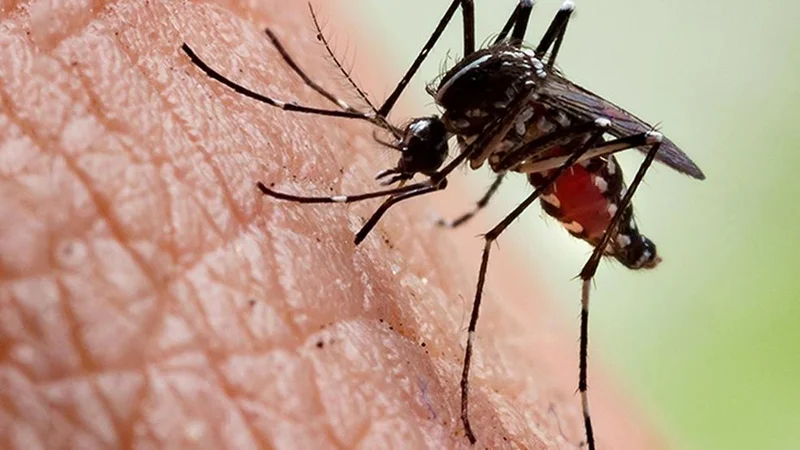
Intense monsoon rainfall interspersed with spells of hot weather has led to an abundance in Aedes mosquitoes and an increased transmission of not just dengue this season but also chikungunya virus (CHIKV) in the State.
After the major epidemics of CHIKV that the State witnessed in 2006-2007 and an outbreak in 2019-20, the State is seeing a spurt in chikungunya cases again this year. Sporadic cases are reported every year in the State but this season, the figure has again touched three digits, showing a rising trend.
As on August 4, a total of 105 confirmed and 62 probable chikungunya cases have been reported from various parts of the State, primarily Thiruvananthapuram.
Public health experts caution that only those cases which underwent testing figures on the State’s surveillance list and that the actual number of cases would be several times over.
“CHIKV does not cause mortality, so patients are not admitted and few are tested. One should remember that it is the same mosquito — the Aedes species — which transmits dengue as well as CHIKV. The spike in both diseases indicate that there is an explosion in the vector population,” says a senior public health expert.
In July 2025, the WHO had issued an urgent global alert about a resurgence in CHIKV. It said that the world risked a repeat of the 2004-05 chikungunya epidemic which originated in the French Reunion islands in the Indian ocean (which hit the Kerala shores in 2006-07), because the recurrence was happening from the same geographical region again.
The threat perception was modified as “moderate” by the WHO in April this year. However, as the virus transmission was continuing, it warned nations that large localised surge in chikungunya cases can overwhelm health systems with high outpatient volumes. It also highlighted that in pregnant women, newborns and those with preexisting diabetes or hypertension, CHIKV can lead to severe illness and complications.
“We have been expecting a resurgence in chikungunya following the WHO alert but so far, there have been no clusters or major outbreaks,” a health official said.
“Monsoon conditions favour increased breeding of Aedes aegypti and Aedes albopictus. High vector indices can lead to sustained and efficient transmission of CHIKV. The virus does not normally cause mortality but the morbidity is high, with patients suffering from joint inflammation, pain, and long-term disability,” points out TS Anish, Professor of Community Medicine, School of Public Health, Kerala University of Health Sciences.
It may be recalled that the 2007 epidemic had left hundreds of thousands of people in Kerala with severe long-term morbidities, such as persistent and crippling joint pain and stiffness, keeping most of them at home, incapable of any physical work. The economic cost of the epidemic and lost productivity/ livelihood had been immense and well-documented in studies.
“The CHK virus is highly immunogenic and renders long-lasting immunity to the affected. Following major outbreaks, large proportions of the community can become immune to the virus. But the population turnover is constant and our last major outbreak was nearly 20 years ago. An entirely new generation has grown up without previous exposure to CHIKV and this leaves a sizeable chunk of the younger population vulnerable to the disease,” says Dr. Anish.
The disease remains under-recognised because it presents as high fever, body pain and rashes in the initial days, just as any viral fever or dengue. In children, CHIKV may not affect the young joints at all and might just be self-resolving.
Only active surveillance will show the actual case numbers. It is also important to keep the number of cases down by controlling the mosquito population because CHIKV can interfere with other diseases and lead to complications.
Published - August 05, 2026 08:34 pm IST