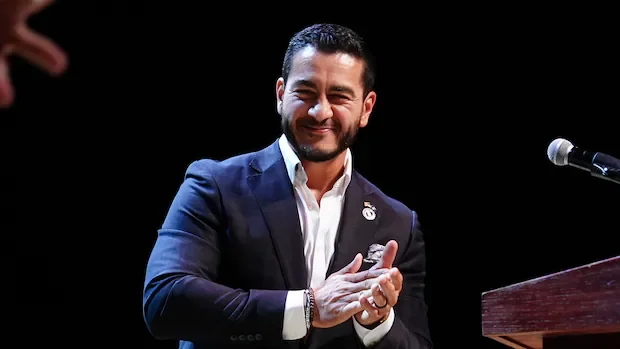
Abdul El-Sayed wins Michigan's Democratic Senate primary, U.S. media outlets project
Marks major victory for party's progressive wing
Abdul El-Sayed has won Michigan's Democratic nomination for the U.S. Senate, defeating Rep. Haley Stevens in a massive victory for the party's progressive wing in a battleground state, U.S. news outlets project.
CNN joined ABC and NBC in projecting El-Sayed's victory on Wednesday morning.
The next and tougher test of El-Sayed's and progressives' strength will come in a November matchup against Republican Mike Rogers, a former congressman who ran unopposed for his party's nomination. The seat is pivotal to Democrats' chances of flipping the Senate and El-Sayed will face the challenge of uniting a divided Democratic base after a bruising primary.
In his final remarks at a primary night party before the race was called, El-Sayed said "tomorrow we begin to mend fences."
His campaign said Stevens called to concede Wednesday.
El-Sayed's win represents a significant shift for the Democratic Party. In 2018 he lost the gubernatorial primary to Gretchen Whitmer, now the governor, by 21 percentage points.
El-Sayed, a former health official, campaigned on "Medicare for All," halting military aid to Israel and campaign finance reform. He had support from progressive leaders including Sen. Bernie Sanders of Vermont and New York Rep. Alexandria Ocasio-Cortez, who framed the race as a grassroots-focused movement and a broader fight against the establishment and big-money spending.
Stevens — a four-term congresswoman and more moderate candidate — was backed by Senate Minority Leader Chuck Schumer and tens of millions in outside spending, including the American Israel Public Affairs Committee's (AIPAC) largest outlay ever in a single race.
Her campaign focused on manufacturing and the economy. She stressed her past victories in tough races, saying she would be best positioned to beat Rogers.
The race for the Senate, during November's midterm elections, will help decide which party controls the chamber in the last two years of President Donald Trump's term. Those stakes added heat to the primary, with moderates arguing that El-Sayed would have a harder time than Stevens against a Republican in the general election.
Stevens won election to Congress in 2018 after serving as chief of staff to President Barack Obama's auto task force, which helped oversee the federal rescue of General Motors and Chrysler. Her campaign and allied groups have repeatedly highlighted that experience.
Clear differences
El-Sayed cast himself as the anti-establishment candidate and argued that Democrats need to reject corporate influence and embrace a more progressive agenda.
While El-Sayed has said he is not a democratic socialist, he found support from some who do. That included Melat Kiros, who recently beat a longtime incumbent in a Democratic primary for a Denver-based House seat, and Hasan Piker, a progressive and controversial influencer online.
The candidates' differences were clear to some voters.
Kenneth Woodside, 87, of West Bloomfield, said he voted for El-Sayed over Stevens because "the nation is ready for someone who wants to take some more action rather than on the road we are now, which is on the road to an oligarchy and authoritarianism."
Nessa Fuller, 51, of Birmingham, said she voted for Stevens because she will "fight to get the right things done, and she'll work with other people, which is really important to me."
National groups poured unprecedented sums into the race, making it one of the country's biggest tests of outside spending.
- Michigan's Democratic Senate primary puts spotlight on big money and pro-Israel lobby
- AnalysisCan Washington force Israel to comply with a U.S.-Iranian deal it rejects?
- PodcastThe U.S. Senate is in turmoil. What does it mean for the midterms?
Groups backing Stevens spent more than $50 million US, led by more than $30 million US from AIPAC and its affiliates.
The spending thrust U.S. policy on Israel into the centre of the race even though the ads never mentioned it. While El-Sayed called for ending military aid to Israel, Stevens maintained strong support for the relationship.
Israel became a contentious issue within the Democratic Party amid a war in Gaza that killed more than 73,000 Palestinians in its retaliatory offensive after about 1,200 people were killed and 251 hostages were taken in attacks by the militant group Hamas in October 2023.
LISTEN | What is AIPAC?:With files from CBC News