When you think of advanced futuristic clothing, what comes to mind?
Perhaps shirts that can detect and alert users to low blood glucose levels or socks that can track your running form, step count and speed? What about pyjamas that observe subtle bodily changes while you sleep leading to early detection of cancer or warn carers of imminent seizures? Imagine if all these were items that required no external power source, just the energy generated by your own body.
Although these products are not in the shops yet that day is not far off.
Researchers are already designing advanced textiles that look exactly like regular clothes or fabrics but come with embedded electronic functions. These are referred to as electronics textiles, e-textiles or smart fabrics.
E-textiles integrate sensing, computation and power into fabrics so that the threads themselves become the sensors and the stitches become the circuits. These textiles can monitor health, temperature, motion and air quality. They can communicate wirelessly and harvest various forms of energy.
University and industry prototypes are currently progressing through clinical trials and are being tested outside labs. The global market for e-textiles is projected to reach over US$15 billion (£11.14 billion) by 2028.
Developments in e-textiles will revolutionise the way humanity views clothing; but at what cost?
A new type of waste
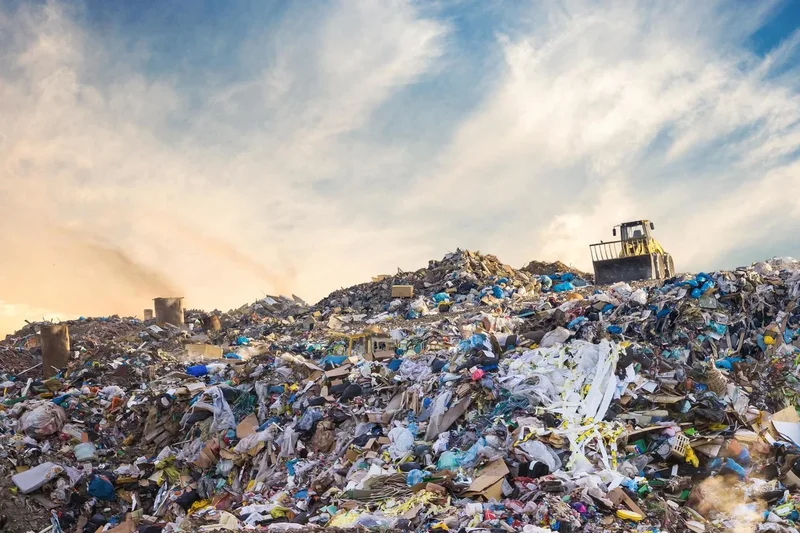
Electronic waste is the fastest growing EU waste stream with a record 62 million tonnes discarded in 2022.
Another 92 million tonnes of waste is generated globally from textiles; a figure expected to reach 134 million by 2030. Textiles alone account for 6.7% of global greenhouse gas emissions with the average European discarding a staggering 11kg of textiles per year.
Electronic textiles will bring a new kind of hybrid waste. E‑textiles commonly use mixed polymers, metal nanoparticle inks, and include components that create fire hazards within conventional textile recycling.
They can release toxic residues if incinerated or landfilled. This results in hazardous and precious materials becoming trapped within garments, leading not only to environmental and health problems, but to a loss of vital resources such as graphene and rare-earth elements. Silver, for instance, is used in conductive yarns, antimicrobial coatings, sensors and electrodes. We need to work out how to recover it because it is valuable as well as toxic to aquatic life in some forms.
So, it’s currently very difficult to recover the valuable materials used in smart clothing, after the shirt or socks are discarded.
At the current rate of e-textile growth, current disposal methods will need to change to cope with these new materials; particularly in the areas of reusability and recyclability.
The EU’s sustainable and circular textiles strategy is part of the EU’s plan to become the first climate-neutral continent. Regulators are now demanding clearer rules on recyclability, chemical safety and product lifespans, and starting to ask how e‑textiles will meet these requirements.
Industry practice is catching up more widely, and placing more responsibility on clothing producers. Digital product passports (these carry information about the materials and their environmental impact) and new recycling technologies are scaling up. These shifts mean manufacturers could face legal and commercial risk if they don’t consider the long-term impact of these products.
Preventing more waste
The good news is that sustainable e‑textiles are an engineering problem with practical solutions. Key measures that industry and funders could adopt now include:
- design for disassembly. Removable electronic parts help separate electronics from textiles for recycling
- material passports and transparency. Digital records of various components (such as polymers, inks and batteries) that enable safe sorting and recovery
- biodegradable and recyclable conductors. Prioritising conductors free from precious metals and using alternatives such as screen printable carbon paste and recyclable conductive inks and yarns
- energy-first design. Integrating textile energy harvesting (for instance, solar, thermoelectric, piezo/triboelectric nanogenerators) to reduce or eliminate batteries. Some garments embed antennas and wireless power receivers to avoid bulky batteries
- standards for washability, durability and end-of-life testing. To ensure products survive real-world use and can be repaired rather than discarded.
None of these are optional extras: they determine whether e‑textiles become a public good or a new environmental liability. University research groups and industry consortia are starting to demonstrate printable, stretchable components and trial wireless power that reduce battery dependence, for instance. Printable, stretchable components are flexible electronic parts printed onto fabric that keep working as the textile bends and stretches. They make smart clothing comfortable, lightweight, washable and able to move naturally with the body.
Unless policymakers and industry players adopt sustainable design now, e-textiles could add a dangerous new layer to our global electronic waste mountain.
Governments need to set clear rules on recyclability and chemical safety for e‑textiles. University researchers must find methods to make e-textiles functional, affordable, sustainable and safe. Brands must publish material details and repair guides and ensure sustainable practices are being adhered to throughout their supply chain.
Investors should not fund throwaway novelty. Standards bodies must define test methods for washing, wear and end‑of‑life recovery.
These steps will steer the market toward durable, repairable and recyclable products that could change lives for the better.