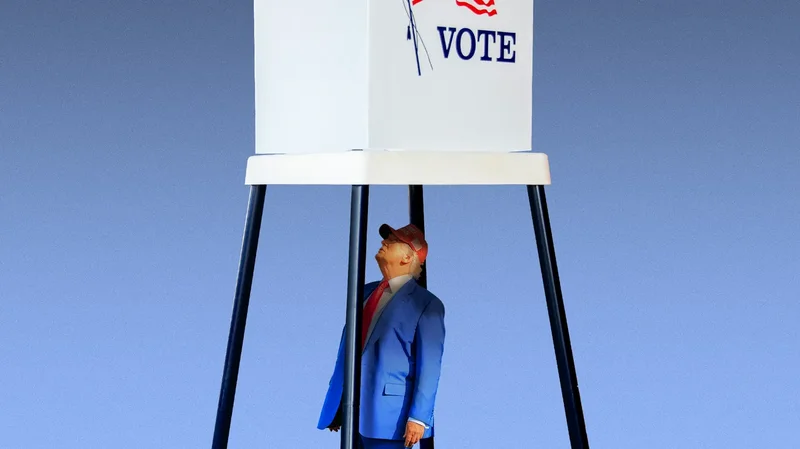
Federal judges, appointed by both Democrats and Republicans, have handed the Justice Department a steady stream of losses in the administration's attempt to obtain sensitive voter information.Why it matters: The DOJ has sued 30 U.S. states, as well as D.C., for rebuffing its demands, all to back President Trump's efforts to reshape voting after years of spreading unproven claims of massive fraud.The latest: U.S. District Judge Philip Brimmer, a George W. Bush appointee, sided with Colorado in dismissing the DOJ's case against the Democratic secretary of state with prejudice Monday.The administration argued that provisions in the Civil Rights Act of 1960 gave the attorney general "sweeping power" to obtain the sought-after records, which included registrants' driver's license numbers and the last four digits of their Social Security identifier. But Brimmer concluded that compelling the release of the state's voter lists did not fall under that authority.By the numbers: He's not alone: Judges in 20 cases, per the Brennan Center for Justice's tracker, have rebuked the DOJ in a consistent losing streak.A judge in California called the request "unprecedented and illegal." In Rhode Island, a Trump appointee named it a "fishing expedition."And in June, a U.S. appeals court joined the growing body of federal judges ruling against the DOJ, handing the administration its first appellate-level loss in its campaign.The other side: Meanwhile, more than a dozen states have agreed to share the data the administration is seeking — while others agreed only to provide data that is publicly available.Zoom out: The DOJ's quest for voter information is far from the only election pressure the administration has put on states. But it hasn't been all smooth sailing on those fronts, either.Trump has claimed hundreds of thousands of unauthorized immigrants are on voting rolls in key states — but the numbers the Department of Homeland Security has publicized in four states (all of which refused to hand over voter rolls) have baffled election officials, NPR reported.He's pushed hard on a proof-of-citizenship voting bill, the SAVE America Act, but its future in the Senate remains murky.And his push to restrict mail-in voting, which has hit legal headwinds, could be heading to the Supreme Court.Between the lines: The broad sweep approach to obtaining voter info isn't shaping up for the administration; some of the information has been received in other ways. ICE investigators obtained individual voter files in at least two counties — one in Texas and one in North Carolina. And the FBI recently obtained the IP address of someone who completed their voter registration online in South Carolina, Axios' Brittany Gibson reports.Go deeper: America gripped by election fears as November nears
DOJ's voter roll crusade hits a courthouse wall