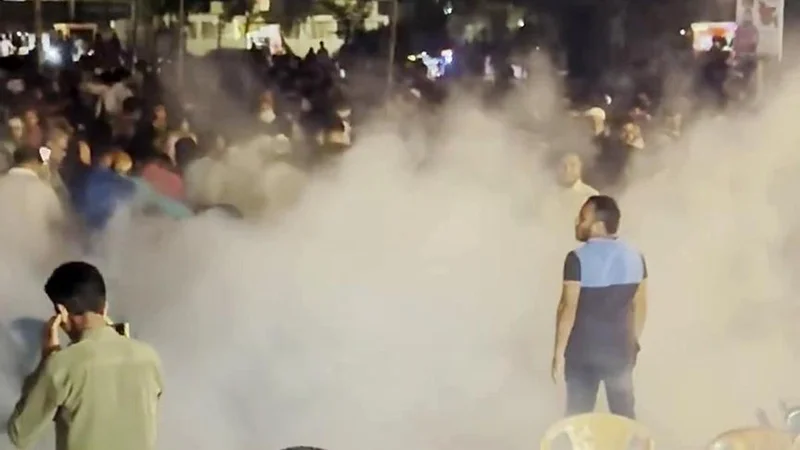
Two years after a mass uprising forced Sheikh Hasina to flee the country, Bangladesh’s campuses and streets are once again witnessing political violence, this time not between the ousted Bangladesh Awami League and its opponents, but among the very parties and student groups that led the movement against her.
Bangladesh’s Prime Minister Tarique Rahman, who leads the Bangladesh Nationalist Party (BNP), had pledged during February’s election campaign to end the pattern of state-backed violence that marked Ms. Hasina’s rule before her ouster in the 2024 uprising. Six months into BNP-led rule, the country’s first elected government since the uprising, that promise is being tested on campuses nationwide, with rights groups blaming political rivalries, weak law enforcement and a culture of impunity for the continuing bloodshed.
The anniversary week itself has been marked by a fresh wave of clashes between the Bangladesh Jatiotabadi Chatra Dal (JCD), the BNP’s student wing, and the Bangladesh Islami Chhatra Shibir, the student wing of the Opposition Jamaat-e-Islami.
On Wednesday (August 5, 2026), at least 30 activists of the two organisations were injured in confrontations in several areas in the country, including Barishal University and Govt. Tolaram College.
A day earlier, on August 4, clashes between the two groups left more than 100 people injured across at least three institutions in the capital, including Jagannath University and Dhaka College. Within two days, the violence spread from Begum Rokeya University in Rangpur to different universities and colleges in the capital, prompting the university authorities to launch investigations and deploy additional police. A clash at Begum Rokeya University two days earlier had set off the chain of confrontations.
Deepening fracture
Political analysts say the clashes underline a deepening fracture within the coalition of parties, student groups and activists that came together to remove Ms. Hasina in August 2024 — one in which control of campuses, rather than ideology alone, has become the central battleground as Bangladesh marks two years since the uprising that reshaped its politics.
The most serious flashpoint was Jagannath University in Dhaka, where the trouble began during an official event to mark July Mass Uprising Day 2026, attended by University Grants Commission chairman Professor Mamun Ahmed as the chief guest, when student leaders of Chhatra Shibir tried to display placards listing their demands before the chairman. Two rounds of clashes followed, the first on the campus and the next outside the National Medical College Hospital where the injured had been taken. Both the JCD and the Shibir claimed that more than 30 of their activists and students, including the university students union’s vice-president, general secretary and assistant general secretary, were hurt. JCD activists were also seen entering the hospital’s emergency ward to assault the injured undergoing treatment. Accompanied by BNP loyalists, they also attacked the activists of the Chhatra Shakti, the student wing of the National Citizen Party (NCP), and on those of the Socialist Students’ Front at Jagannath University. The JCD and the Shibir have accused each other of instigating the violence.
The unrest also spilled over into an official state function at the China-Bangladesh Friendship Conference Centre, where Bangladesh Acting President Hafiz Uddin Ahmad was the chief guest at a programme marking the anniversary of the July uprising. The event was attended by senior government officials, diplomats and political leaders. A controversy erupted after a documentary screened during the programme reportedly credited BNP acting chairman Tarique Rahman with announcing the uprising’s one-point demand for Sheikh Hasina’s resignation. Student leaders objected to the portrayal, maintaining that it was Mr. Nahid Islam, convener of the NCP, who had announced the demand during the uprising. The disagreement led to commotion inside the venue. One student leader of the uprising alleged that he was assaulted by activists of the ruling party inside the programme in front of the President. The disruption prompted several diplomats attending the event to leave before the programme concluded.
Mob violence
Addressing the gathering, the President later expressed regret over the developments. He said that he felt “ashamed and pained” after witnessing the incident that happened in front of him. “This is a national event, but after witnessing what happened today, I lost interest in delivering my speech. I feel ashamed and painted.”
The President said the incident had exposed the divisions in the country’s national unity. He added that he had intended to deliver his speech in English for the benefit of the foreign guests, but decided against it after many foreign guests had left the venue, describing the situation as “unexpected”.
According to the Human Rights Support Society (HRSS), at least 17 people were killed and 51 injured in incidents of mob violence across the country in July 2026, while six more people died and 164 were injured in 45 separate incidents of political violence. The organisation noted that political violence had in fact declined compared with June when nine people were killed and 346 injured in 58 incidents.
In July’s political violence, two people were killed and 48 injured in 14 clashes within the BNP’s own ranks; six BNP-Jamaat confrontations left 44 injured; three clashes between the BNP and the Awami League loyalists left 13 injured; five clashes between the BNP and the NCP, the party formed by former student leaders of the uprising, left 38 injured; and 14 clashes between the BNP and other parties left 16 more injured. Three people were killed in three other incidents. Separately, 9,157 people were arrested in 193 political and other incidents in July, including 318 Awami League members, 28 BNP members, seven NCP members and one Jamaat member.
Meanwhile, the second anniversary of the uprising was marked in the midst of political tensions rather than celebrations. While the government inaugurated the July Mass Uprising Memorial Museum in the capital, opposition parties held separate programmes in the capital.
‘Another revolution’
Addressing a rally organised by an 11-party alliance near the Baitul Mukarram National Mosque, opposition leader and Ameer of Bangladesh Jamaat-e-Islami, Dr. Shafiqur Rahman, said, “We will not sit back and do nothing while the country is heading towards disaster.” He also claimed that, judging by the current situation, “another revolution is imminent”, and urged the people to be prepared.
On the other hand, after the inauguration of the July Mass Uprising Memorial Museum at Sher-e-Bangla Nagar in Dhaka, Prime Minister Rahman cautioned against attempts to create instability in the country. He said some people were “creating issues without reason” in post-authoritarian Bangladesh and urged them to consider whether such actions could inadvertently pave the way for the return of the ousted autocratic regime.
The museum, established by converting the official residence of ousted Prime Minister Sheikh Hasina, Ganabhaban, into a memorial to the 2024 mass uprising, could not be opened earlier due to various complications. It was finally inaugurated by the Prime Minister on the second anniversary of the uprising.
Published - August 05, 2026 11:23 pm IST