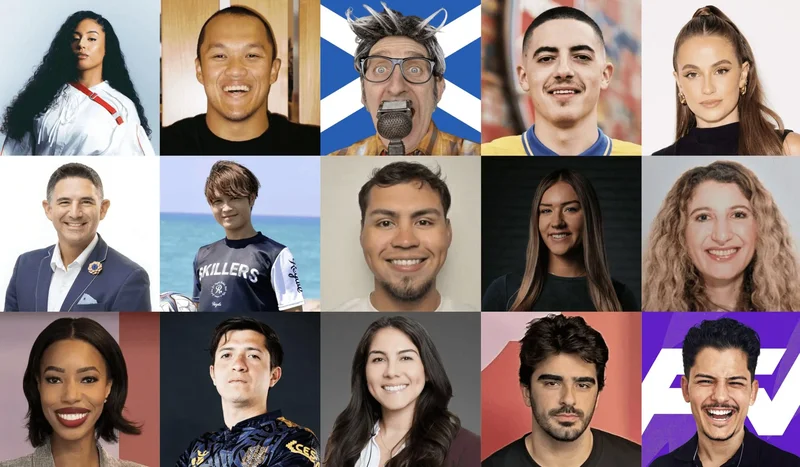
TikTok and FIFA gave 30 creators the run of the 2026 World Cup and stopped them at the touchline. What they did with everything else shows how the tournament was split between the rights holder and the screen in your hand.
The Match They Could Not Film
For the 90 minutes people had crossed the world to watch, the creators TikTok and FIFA had placed inside the 2026 World Cup sat in the press box with their cameras down.
David Gerson was in the media seats, radio and television commentators working the tables around him. He could film the noise, the crowd, the Argentine supporter behind him who had torn his shirt off and spent the match swinging between screaming and weeping. He could not film the game.
Simone Scott had the same instruction. “We weren't going to film anything on the field during the match because Fox and Telemundo have those rights,” she says. “But then as soon as that final whistle was done, we were back at it.”
Scott and Gerson, who each spoke by video call, were two of the 30 Creator Correspondents named in May, under a program built on the Preferred Platform agreement TikTok and FIFA announced on January 8. Gerson, a grassroots referee who makes videos explaining officiating, worked the tournament in his referee kit.
Not because the football was unavailable on TikTok. Broadcast partners streamed the opening 10 minutes of matches into the app and drew 660 million unique views doing it, according to the recap TikTok published on July 23. Those figures are internal platform data as of July 22 and are not independently audited.
The match was in the app. It was simply not the correspondents' assignment. Everything around it was.
Access To Everything Except The Picture
Scott's access ran from training and the press conference the previous afternoon to bus arrivals, warm-ups and the fan fest on matchday, and after the whistle to the field, the mixed zone and the VAR station. She walked her followers around the stadium from the substitutes' bench, under one standing order. “They were very explicit about that,” she says. “Do not get on the grass.”
At referee warm-ups Gerson stood feet from the officials. He names Clément Turpin, Ismail Elfath and Tori Penso, all three of them on FIFA's list of appointed match officials.
TikTok's own announcement in May similarly omits live match play from the access it describes.
Accredited Like Journalists, Working Like Creators
Scott received broadly the same mixed-zone access as traditional journalists but does not describe herself as one. She knows exactly what it is worth. “Not everyone can get onto the bench at the World Cup,” she says. “So if I'm telling you information from the bench, you're gonna pay a little more attention to it.”
Asked how she thought of herself on the ground she answered in percentages: 20% journalist, 20% fan and 60% content creator. “I don't want it to ever seem like content creators are trying to take the role of journalists because those are two completely separate things,” she says.
Gerson is blunter. “I don't identify as a reporter,” he says. The sharpest illustration is a shot he declined. After matches, players find their families in blocked-off sections of the stand. Gerson stood on the pitch and described it instead. “There's no way that I'm going to zoom in on someone crying with their kids,” he says. Nobody had asked him not to.
The Check Before The Post
Both submitted posts for approval before publishing. “And so we would make our content, and then we did get approval before we posted it,” Scott says. Gerson describes the same loop. “Throw it out for approval, and then I get the check mark and I post.”
What came back concerned the picture rather than the point, a credential to blur or something visible in shot, and neither says the subject matter was directed. “I didn't have anyone giving me direction,” Gerson says.
The larger constraint was never written down. “It's to an extent we were in control of our own stuff, but you also want to keep in mind that this is a partnership,” Scott says. “So you don't want to talk badly about FIFA or TikTok.” The work stayed truthful, she adds, and she would not have gone looking for something to attack in any case.
Both were required to produce five pieces per match and published well beyond that minimum, but even limited intervention distinguishes the work from independent editorial coverage.
What The Second Screen Was For
Ask either of them what the assignment was for and they land in the same place.
Scott describes a division of labor in which rights holders tell viewers what they need to know, while creators supply “things maybe you want to know, things you might not think about.” She is precise about where it is watched. “People are watching the match on their TV or their computer,” she says. “Then they also have their phone in their hand at the same time. You're two screen people.”
Drawing on his marketing background, Gerson reaches the same conclusion. He calls the program a brilliant move “to make sure that you're controlling what might be happening on the second screen,” and does not see a fight. “We're not competing with the broadcaster,” he says. “It's different.”
The work followed. By her second and third matches Scott was walking into the winning supporters' section once the result looked settled, and in one post she is in among the England fans singing along to Wonderwall and then Hey Jude, which supporters spent the tournament redirecting at Jude Bellingham.
The boundary is already shifting: a new Disney-TikTok deal will place selected TikTok creator videos inside Verts on Disney+, bringing creator-led fandom onto the content owner's own platform.
When the agreement was announced in January, TikTok’s global head of content, James Stafford, said fans would experience the tournament “beyond the 90 minutes,” and put a figure on what that was worth. Fans, he said, are 42% more likely to tune in to a live match after watching sports content on TikTok.
TikTok counted almost every kind of activity inside the platform. World Cup content reached 1.2 trillion views globally. None of the figures it published measures tune-in.
One number is absent. TikTok says the Creator Correspondents produced thousands of posts and millions of views, and attaches no figure to either claim. Scott was shown no more than her own analytics. Her evidence is a stranger at the WNBA All-Star game who came over to say she had followed the World Cup through Scott's videos, and wanted to know which club to support now.
FIFA chief business officer Romy Gai said the partnership allowed its media partners to amplify their coverage.
What TikTok Was Testing
Asked for the correspondents' figures, TikTok did not supply them. In written answers, Rollo Goldstaub, the company's global head of sport, said the tournament had become TikTok's biggest content moment to date and that the program had brought fans closer to it through creator-led storytelling. He gave the platform-wide totals instead.
His description of what the 30 were there for is one the correspondents would recognize. They were given access to matchday arrivals, fan culture, stadium atmosphere, training sessions, press conferences, warm-ups “and the moments that happen around the game.”
The match rights stayed with the broadcasters. TikTok's experiment was to establish how much of the World Cup audience relationship its creators could build without filming a match at all.